Metal rusts and wood rots, but timber that has survived the Pacific Ocean laughs at a coastal gale. Traditional fencing is a maintenance nightmare in coastal environments. A driftwood ‘dead-hedge’ windbreak actually traps sand and organic matter, becoming a living, breathing part of your ecosystem that never needs a coat of paint.
Building a barrier that survives the salt spray and relentless wind of the shoreline requires more than just brute strength. It requires an understanding of how nature moves. Most homeowners attempt to fight the wind with solid walls, only to watch their investment splinter during the first major storm. This guide explores the art of the coastal dead-hedge—a structure that works with the elements rather than against them.
Coastal Windbreak Diy
A coastal windbreak made from driftwood and organic debris is known as a dead-hedge or a Benjes hedge. This structure consists of two parallel rows of sturdy stakes driven into the ground, with the space between them filled with fallen branches, salt-cured timber, and brushwood. Unlike a solid fence that creates a “sail effect” and catches the full force of a gust, a dead-hedge is semi-permeable. It allows a portion of the wind to pass through, which breaks up the air pressure and prevents the damaging turbulence that often occurs behind solid barriers.
These structures are common in traditional land management and permaculture because they repurpose waste into a functional asset. In a coastal setting, they serve a dual purpose. They act as a filter for salt-laden air and a trap for aeolian sand—sand moved by the wind. Over time, these hedges don’t just stand there; they grow. They catch seeds, trap moisture, and eventually become the foundation for a natural dune or a living hedgerow.
How the Storm-Proof Barrier Works
The physics of a successful windbreak relies on porosity. Scientific studies show that a barrier with 40% to 50% porosity is the most effective at reducing wind speed while minimizing leeward turbulence. If a wall is too solid, the wind hits it, shoots upward, and creates a violent downdraft on the other side that can flatten delicate plants. A driftwood hedge filters the wind, slowing it down and dropping its payload of sand and salt on the windward side or within the structure itself.
Protection extends far beyond the footprint of the hedge. A well-constructed barrier typically reduces wind speed on the leeward side for a distance of up to thirty times its height. If you build a five-foot-high driftwood hedge, you create a microclimate suitable for less salt-tolerant plants for nearly 150 feet inland.
Sourcing Your Materials: The Ethics of Driftwood
Gathering the skeleton of your windbreak is a labor of patience and respect for the shoreline. 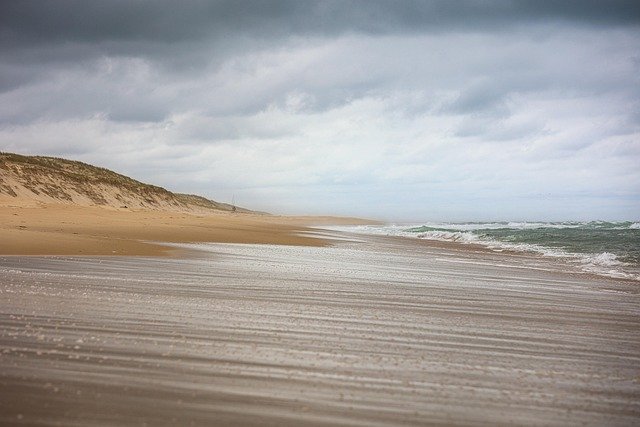 . Driftwood is more than just free lumber; it is a vital part of the coastal ecosystem that provides habitat for insects and birds. . Laws regarding its collection vary significantly depending on your location.
In the United Kingdom, driftwood is generally considered “ownerless,” and small-scale collection for personal use is often permitted, though the 1949 Coastal Protection Act prohibits the removal of large amounts of sand or pebbles. Across the Atlantic, the rules tighten. California state parks often limit collection to 50 pounds or one single piece per day, and the use of power tools or vehicles on the beach is strictly forbidden. Always check with local authorities or the Bureau of Land Management before you start hauling timber from the surf.
Construction: Raising the Dead-Hedge
Building a structure that can survive a fifty-mile-per-hour gale starts with a solid foundation. You do not need nails, screws, or expensive hardware. You need gravity, friction, and a sturdy mallet.
Step 1: Setting the Stakes
Mark two parallel lines where you want your windbreak to stand. The distance between these lines determines the thickness of your hedge; 1.5 to 2 feet is ideal for a stable, sand-trapping barrier. Drive your primary stakes—ideally salt-resistant timber like cedar or locust—at least two feet into the sand or soil. Space these uprights about three to four feet apart along the length of the hedge.
Step 2: The Foundation Layer
Place your heaviest, longest pieces of driftwood at the bottom. These “keel pieces” provide weight and stability. If you have large logs, tuck them into the sand slightly to prevent the wind from whistling underneath and scouring the base of your hedge.
Step 3: Weaving the Body
Fill the “belly” of the hedge with smaller branches, brush, and cured sticks. Weave longer, flexible pieces horizontally between your upright stakes. This “wattle” technique locks the loose material in place and ensures that the hedge won’t simply blow apart when the first winter storm rolls in. Avoid packing the material too tightly; remember the 50% porosity rule.
Step 4: Compressing and Topping
As you add more layers, the weight of the new wood will compress the lower layers. Use your mallet to tap the fill down periodically. Finish the top with a few heavier branches or “locking” sticks to keep the lighter brush from flying away.
Benefits of a Natural Driftwood Barrier
Choosing a dead-hedge over a modern synthetic fence offers several measurable advantages for the coastal steward.
- Resilience: Driftwood has already been seasoned by the sea. It has survived saturation and salt, making it far more durable than pressure-treated lumber in a marine environment.
- Sand Accretion: These hedges are masters at building land. By slowing the wind, they force sand to drop, effectively raising the ground level and creating protective dunes over time.
- Wildlife Sanctuary: The nooks and crannies of a dead-hedge provide nesting sites for birds like wrens and robins, as well as shelter for beneficial insects and amphibians.
- Zero Maintenance: You never need to paint, stain, or treat driftwood. If the hedge settles or a piece rots away, you simply tuck a new branch into the gap.
Challenges and Common Mistakes
The most frequent error in coastal windbreak construction is building too high too fast. A tall, narrow hedge is unstable in high winds. Always prioritize width and a low center of gravity. If your hedge is five feet tall, it should be at least two feet wide at the base.
Another common pitfall is using “green” wood from inland trees that haven’t been salt-cured. Fresh wood may rot quickly when exposed to constant ocean spray, whereas driftwood has had its sap leached out and replaced by salt, acting as a natural preservative. Avoid using thin, lightweight brush exclusively; without heavier logs to anchor the structure, the wind will eventually strip the hedge of its fine material.
Limitations and Constraints
A driftwood dead-hedge is a magnificent tool, but it is not a sea wall. It will not stop a massive storm surge or a localized flood. If your property is below the high-tide line, a dead-hedge may be washed away during an extreme weather event. These structures are designed to manage wind and airborne sand, not the hydraulic force of the Atlantic or Pacific.
Furthermore, these hedges can be a fire hazard in arid coastal regions. If you live in a zone prone to wildfires, avoid placing a large stack of dry wood directly against your home. Keep the windbreak at a safe distance and consider interplanting with succulent, fire-resistant coastal species.
Bent Wire Fencing vs. Storm-Proof Barrier
Many coastal residents opt for BENT WIRE FENCING because it is cheap and fast to install. However, the differences in long-term performance are stark.
| Feature | Bent Wire Fencing | Storm-Proof Driftwood Barrier |
|---|---|---|
| Corrosion Resistance | Low; salt air causes rapid rust. | High; salt-cured wood is naturally preserved. |
| Wind Management | Poor; often collapses under pressure. | Excellent; filters wind and reduces turbulence. |
| Environmental Impact | Synthetic waste at end-of-life. | Regenerative; eventually becomes soil. |
| Sand Accumulation | Minimal; sand passes through large mesh. | Significant; acts as a natural dune builder. |
| Maintenance | Requires frequent replacement. | Requires only occasional topping up. |
Practical Tips for Success
To maximize the lifespan of your windbreak, pay attention to the prevailing wind direction. Position your hedge perpendicular to the strongest gusts. If your wind comes from multiple directions, consider a staggered “zig-zag” layout. This design breaks up the wind regardless of its angle and provides more stability than a single straight line.
After a major storm, walk your line. Check for any gaps where the wind has tunneled through. These “bottlenecks” can actually increase wind speed, creating a jet effect that damages plants. Simply stuffing these gaps with new debris will restore the barrier’s effectiveness.
Advanced Considerations: The Living Dead-Hedge
Serious practitioners often use the dead-hedge as a “nursery” for a permanent living windbreak. The decaying wood provides a rich, sheltered environment for hardy coastal plants. By planting through the hedge, you ensure that as the driftwood eventually breaks down, the living root systems of your shrubs take over the work of holding the soil.
Integrating species like Sea Buckthorn (Hippophae rhamnoides) or Rosa Rugosa into the leeward side of the hedge creates a formidable defense.  . These plants thrive in salt spray and will eventually interweave their branches with the driftwood, creating a barrier that is virtually indestructible.
Example Scenario: The 50-Foot Barrier
Imagine a coastal plot exposed to the North Atlantic. The gardener installs a 50-foot-long dead-hedge using sixty stakes and three truckloads of gathered driftwood. Within one season, the hedge has trapped four inches of sand across its entire length.
Behind this barrier, the salt spray is reduced by nearly 70%. The gardener is now able to grow kale, potatoes, and even a few resilient apple trees—plants that would have perished in the salt-blasted soil of the previous year. The cost of the project was essentially zero, requiring only a few weekends of labor and a sturdy pair of gloves.
Final Thoughts
Building with the debris of the sea is a lesson in patience and pioneer-grit. It acknowledges that the ocean is a powerful force and that our best defense is one that mimics the natural world. A driftwood dead-hedge is more than just a windbreak; it is a legacy project that builds soil, protects life, and settles into the landscape with a grace that no plastic or metal fence can ever achieve.
Experiment with the materials you find on your local shore. Watch how the sand moves around the wood you place. Every coast is different, and every windbreak is a unique conversation between the land and the sea. By the time your hedge has fully settled, you will find that you haven’t just built a fence—you have built a part of the coast itself.
Sources
1 rockspringdesign.com (https://rockspringdesign.com/blog/?p=1115) | 2 gardeningknowhow.com (https://www.gardeningknowhow.com/garden-how-to/info/dead-hedge) | 3 fas.scot (https://www.fas.scot/article/the-benefits-of-dead-hedges-and-how-to-build-them/) | 4 pithandvigor.com (https://pithandvigor.com/2025/02/building-a-dead-hedge/) | 5 apexmetalwork.com (https://apexmetalwork.com/best-fence-types-for-windy-or-storm-prone-areas/) | 6 agvinylfencing.com (https://agvinylfencing.com/durable-fence-windy-areas/) | 7 willowalexandergardeners.co.uk (https://willowalexandergardeners.co.uk/blog/dead-hedging/) | 8 dksstores.com (https://vertexaisearch.cloud.google.com/grounding-api-redirect/AUZIYQFRKPyqRtrBmt28qmSrLJdg383mOw6gXlDZNEJnaHHVYZXzLxUMUtlMRAuX17T8tRWeMCiG8oRQ1VhaYU9BCW1-R4bK-GFh0XrgjBlsMihnfC4faRGhpq4Av7_N2Q==) | 9 theplantsmith.co.uk (https://www.theplantsmith.co.uk/dead-hedging-a-sustainable-garden-practice-which-boosts-wildlife/) | 10 univ-littoral.fr (https://cosaco.univ-littoral.fr/wp-content/uploads/2018/03/RuzAnthony_ZGeom_2008.pdf) | 11 schweizerbart.de (https://www.schweizerbart.de/papers/zfg_suppl/detail/52/65719/Sand_trapping_by_brushwood_fences_on_a_beach_foredune_contact_the_primacy_of_the_local_sediment_budget)