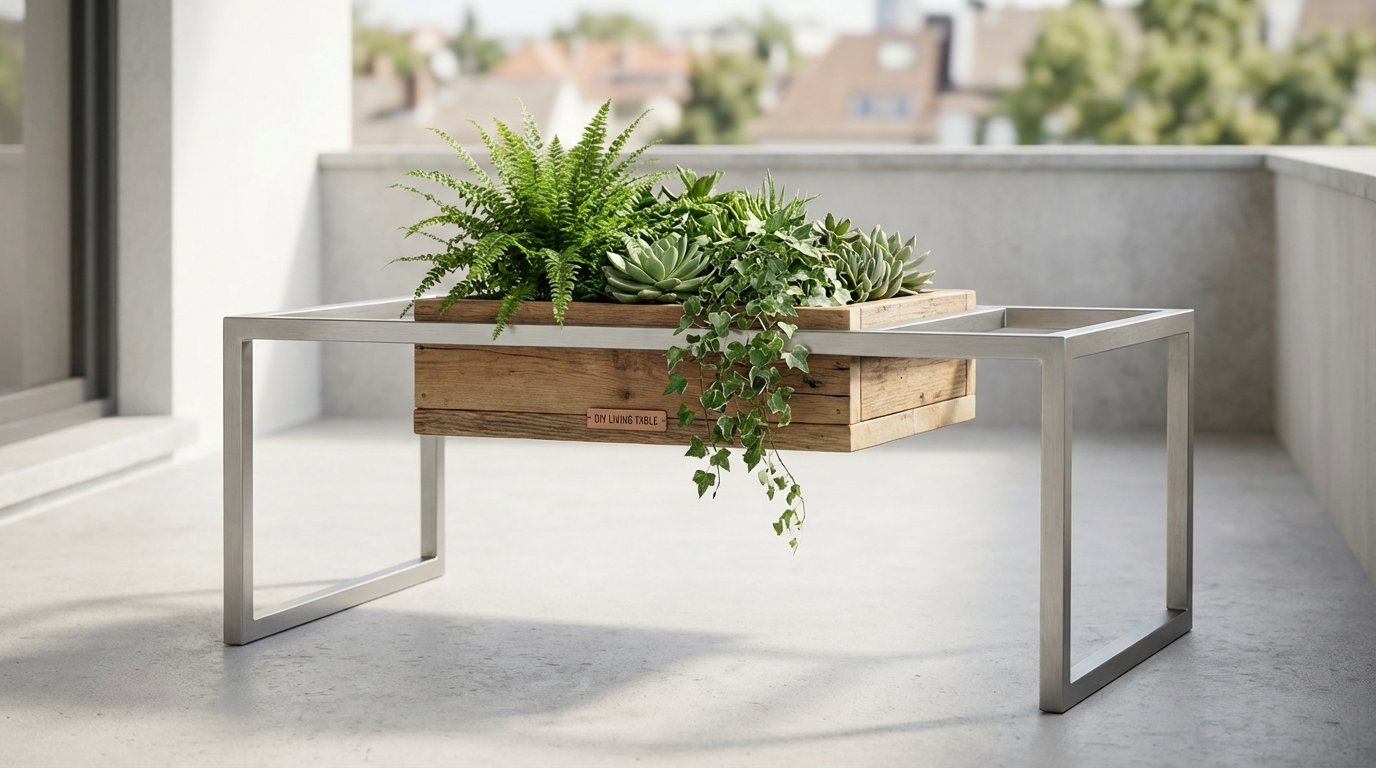
Diy Living Table For Balcony
Why put a plant ON your table when the table can BE the plant?
Most small balconies feel like concrete cages. We’re changing that by integrating biology into the furniture itself. This ‘Living Table’ DIY uses a waterproof liner and native succulents to bring life to your morning coffee spot without taking up extra floor space.
Imagine waking up, stepping outside, and resting your mug on a bed of vibrant, living textures. It is not just about aesthetics. It is about reclaiming your urban environment and turning a sterile balcony into a functional ecosystem.
Diy Living Table For Balcony
A DIY living table is a hybrid piece of furniture that features an integrated planter box directly in the tabletop.  . This design allows you to grow low-profile plants, most commonly succulents, within the footprint of the furniture itself. It merges utility with biology, serving as both a dining or coffee surface and a thriving garden bed.
In urban settings where every square inch of floor space is a premium commodity, these tables provide a “zero-footprint” garden. They are commonly used on apartment balconies, small patios, and rooftop decks to introduce greenery without the clutter of individual pots. The concept is a cornerstone of biophilic design, which focuses on the innate human connection to nature.
Think of it as a shadow box coffee table, but instead of displaying sea shells or vintage coins, you are displaying a living, breathing landscape. This approach changes how you interact with your outdoor space. You are no longer just sitting next to a plant; you are sharing a functional surface with one.
How to Build Your Living Table
Building a living table requires a blend of basic woodworking and horticultural planning. The goal is to create a structure that can support the weight of wet soil while protecting the wood from moisture damage.
1. Select Your Wood
Choose rot-resistant lumber like Cedar, Redwood, or Teak. These species contain natural oils that repel water and resist fungal decay. If you use a budget-friendly softwood like Pine, you must treat it with a high-quality exterior sealant before assembly.
2. Construct the Frame and Trough
Most designs feature a central trough or a recessed section in the middle of the tabletop. Build a wooden box that fits into this opening. Ensure the box is at least 3 to 5 inches deep. This depth provides enough room for succulent root systems without making the table overly bulky.
3. Seal and Line the Planter
Waterproofing is the most critical step. Use a heavy-duty pond liner or a liquid rubber sealant to coat the inside of the planter trough. Staple the liner in place, ensuring there are no tears or punctures. This barrier prevents moisture from seeping into the table’s structural joints, which would otherwise cause warping and rot.
4. . Install a Drainage System
Drill small holes through the bottom of the planter box and the liner to allow excess water to escape. If you cannot drill holes—for example, if the table is used on a balcony where dripping is a problem—install a 1-inch layer of LECA (lightweight expanded clay aggregate) or coarse gravel at the bottom. This creates a reservoir for excess water to sit away from the plant roots.
5. Add the Substrate and Plants
Fill the trough with a gritty, well-draining succulent soil mix. Combine equal parts potting soil, coarse sand, and perlite or pumice. Space your succulents approximately 2 inches apart to allow for growth. Finish the look by covering the exposed soil with decorative pebbles or river rocks.
Benefits of Living Furniture
Integrating nature into your furniture offers measurable improvements to your environment and mental state.
Space Efficiency
Urban balconies often lack the room for both a table and a collection of large pots. A living table eliminates the choice between a place to eat and a place to grow. You get the best of both worlds in a single footprint.
Mental Well-being
Biophilic design has been shown to reduce stress, lower blood pressure, and improve mood. Having a tactile, visual connection to plants while you work or relax outdoors helps combat “nature deficit” often felt in city environments.
Temperature and Air Quality
Plants naturally cool their surrounding area through transpiration. A table filled with succulents can act as a small heat sink, making your balcony feel slightly cooler on hot afternoons. Additionally, plants filter airborne pollutants and release fresh oxygen right where you sit.
Acoustic Dampening
Soft organic matter absorbs sound better than hard, reflective surfaces like metal or glass. A living table helps dampen city noise, creating a quieter, more peaceful atmosphere for your morning coffee.
Challenges and Common Mistakes
Building a living table is rewarding, but many beginners fail due to a few common errors.
Using Standard Potting Soil
Typical garden soil holds too much moisture. Succulents thrive in arid conditions and will experience root rot if the soil remains damp for more than a few days. Always use a dedicated cactus or succulent mix that prioritizes drainage.
Overlooking the Weight
Wet soil is heavy. A medium-sized living table can easily weigh 50 to 100 pounds once watered. Ensure your table legs are structurally sound and that your balcony can support the concentrated load.
Poor Light Management
Succulents need at least 6 hours of bright light. If your table is in a deep shade, the plants will “etiolate,” or stretch out, looking leggy and unhealthy. Match your plant selection to the specific light levels of your balcony.
Neglecting the Liner
Even the most water-resistant wood will eventually rot if it is in constant contact with wet soil. Never skip the liner. A single leak can compromise the entire structure of the table within one or two seasons.
Limitations to Consider
While beautiful, living tables are not suitable for every situation.
Climate Constraints
Most succulents are not frost-hardy. If you live in a region with freezing winters, you must either move the entire table indoors or choose cold-hardy species like Sempervivum (Hens and Chicks). For many, this makes the living table a seasonal piece of furniture.
Maintenance Requirements
A living table requires more care than a standard metal bistro set. You must monitor moisture levels, remove dead leaves, and occasionally prune the plants to maintain the table’s flat surface. It is a commitment to a living organism.
Portability Issues
Because of the weight of the soil and the fragility of the plants, these tables are difficult to move. If you frequently rearrange your balcony or live in a rental where you move often, a heavy living table may be impractical.
Biophilic Design vs. Sterile Metal
Choosing between traditional furniture and biophilic furniture involves a trade-off between convenience and connection.
| Feature | Sterile Metal Table | Biophilic Living Table |
|---|---|---|
| Maintenance | Near Zero (Wipe down only) | Moderate (Watering, pruning) |
| Longevity | High (Decades) | Moderate (Depends on wood care) |
| Sensory Impact | Cold, hard, industrial | Soft, textured, aromatic |
| Eco-Value | None | Supports local pollinators |
| Cost | Low to Moderate | Moderate to High (DIY cost) |
Practical Tips for Best Results
To keep your living table thriving for years, follow these professional-level optimization tips.
- Water by Soaking: Use a long-neck watering can to saturate the soil directly. Avoid misting the leaves, as trapped water can lead to fungal infections.
- Morning Sun is Best: Position your table to catch the morning sun. Afternoon sun on a balcony can be too intense and may “cook” the roots inside the wooden trough.
- Slow-Release Fertilizer: Succulents are light feeders. Mix a small amount of slow-release fertilizer into the soil during assembly to provide nutrients for the entire growing season.
- Rotate the Table: If one side of your table gets more light than the other, rotate the furniture every few weeks. This prevents the plants from leaning awkwardly toward the sun.
Advanced Considerations
For those looking to take their living table to the next level, consider these advanced modifications.
Integrated Irrigation
Install a micro-drip irrigation system hidden beneath the rim of the table. Connect it to a small battery-powered timer. This ensures your plants stay hydrated even when you are away on vacation, preventing the “feast or famine” watering cycle that stresses succulents.
Smart Sensors
Embed a moisture sensor in the soil that connects to your smartphone. This takes the guesswork out of maintenance, alerting you exactly when the substrate has dried out enough for the next watering.
Seasonal Swaps
Design your table with removable inserts. In the spring and summer, use succulent trays. In the winter, swap the plants for a bed of moss, decorative wood, or even a glass-covered display of air plants (Tillandsia) that can be easily brought indoors during frost.
Real-World Example: The IKEA LACK Hack
One of the most popular ways to experiment with this concept is by modifying the ubiquitous IKEA LACK coffee table.
A DIYer in a small London apartment wanted to add greenery to a north-facing balcony. They cut a 10-inch square out of the center of the tabletop. Because the LACK table has a hollow “honeycomb” core, they reinforced the edges with scrap wood and inserted a custom-fit plastic storage bin to act as the planter.
They filled the bin with a layer of LECA, followed by a gritty mix of pumice and coir. Because the balcony was shaded, they chose Haworthia and Gasteria species, which thrive in lower light. The total cost was under $40, and the result was a high-end designer look that transformed their entire outdoor seating area.
Final Thoughts
Building a living table is about more than just furniture construction; it is about changing your relationship with your living space. By merging biology with utility, you create a focal point that breathes, grows, and evolves alongside you.
These tables solve the urban gardener’s greatest dilemma: how to have a lush, green environment without sacrificing the room needed to actually live in it. Whether you are a woodworking pro or a beginner with a hand saw, the process is accessible and deeply rewarding.
Start small, choose the right materials, and don’t skip the waterproofing. Once your living table is established, you’ll find that your morning coffee tastes a little better when it’s served on a piece of the natural world. . Experiment with different textures and colors, and watch as your “concrete cage” becomes a sanctuary.
Sources
1 epicgardening.com (https://www.epicgardening.com/biophilic-gardening/) | 2 balconygardenparadise.com (https://balconygardenparadise.com/biophilic-design-in-balcony-gardens-complete-guide-to-bringing-nature-to-urban-living-spaces/) | 3 newengland.com (https://newengland.com/living/gardening/succulents-tips/) | 4 earthsciencedesign.com (https://earthsciencedesign.com/5-ways-to-incorporate-biophilic-design-into-a-small-space/) | 5 sherburnstone-durham.co.uk (https://www.sherburnstone-durham.co.uk/diy-succulent-table-with-wooden-base/) | 6 highlandslandscaping.com (https://www.highlandslandscaping.com/blog/how-to-keep-raised-bed-wood-from-rotting) | 7 forestplywood.com (https://forestplywood.com/blog/lumber/the-best-types-of-wood-for-outdoor-furniture/) | 8 billyoh.com (https://billyoh.com/extra/garden-furniture/protect-wooden-garden-furniture-from-rot/) | 9 quora.com (https://www.quora.com/What-is-the-most-durable-type-of-wood-for-outdoor-use-cedar-pine-redwood-cypress-or-teak) | 10 rapportfurniture.com (https://rapportfurniture.com/blogs/rapport-furniture/best-wood-for-outdoor-furniture) | 11 quantumbazaar.com (https://www.quantumbazaar.com/teak-wood-vs-cedar-wood-which-is-better-for-outdoor-furniture/) | 12 hometalk.com (https://www.hometalk.com/diy/grow/succulents/diy-succulent-table-step-by-step-instructions-to-do-it-yourself-44323963) | 13 gardendesign.com (https://www.gardendesign.com/succulents/care.html) | 14 mishulgupta.com (https://mishulgupta.com/biophilic-design-for-small-urban-spaces-bringing-nature-to-the-city/) | 15 joyusgarden.com (https://www.joyusgarden.com/planting-succulents-in-a-shallow-succulent-planter/) | 16 westcoastgardens.ca (https://www.westcoastgardens.ca/blogs/tips-inspiration/5-care-tips-happy-healthy-succulents) | 17 thursd.com (https://thursd.com/articles/balcony-microforest-biophilic-design)