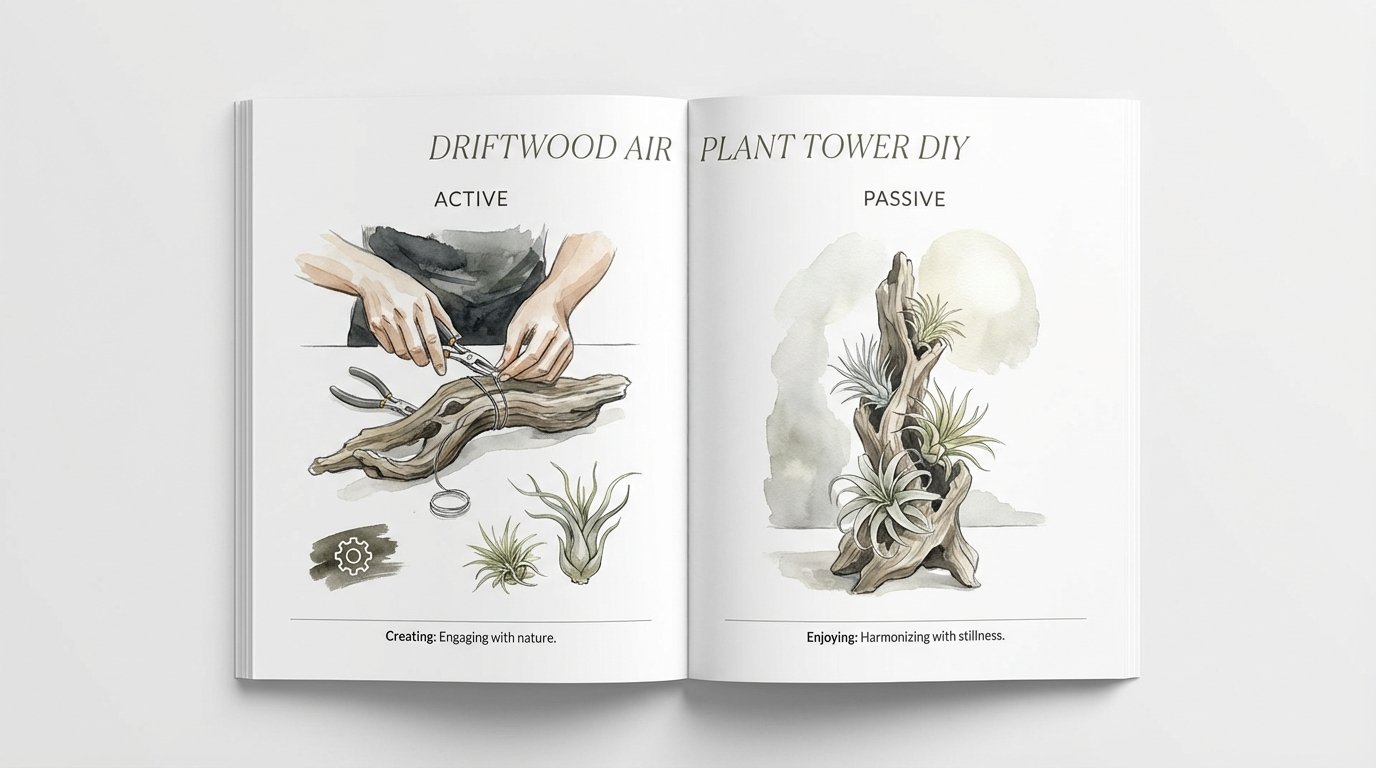
Driftwood Air Plant Tower Diy
Why pay for electricity and filters when the ocean and the air can do the work for free? Small spaces get stuffy fast, but bulky machines aren’t the only answer. A vertical driftwood tower acts as a natural scaffold for air plants, turning your wall into a biological air filter that never needs a filter change or a power outlet.
Building a living tower requires more than just piling up old sticks and sticking plants in the cracks. It is a marriage of weathered timber and resilient epiphytes that transforms stagnant corners into breathing, thriving ecosystems. This project appeals to the pioneer spirit of resourcefulness, using found materials to solve modern problems of air quality and aesthetic clutter.
Air plants, or Tillandsia, are the perfect partners for this vertical endeavor because they have evolved to live without the burden of soil. They cling to rocks and trees in the wild, drawing everything they need from the atmosphere. By mimicking these natural conditions in a vertical format, you maximize your square footage and create a focal point that literally cleans the air around you.
Driftwood Air Plant Tower Diy
A driftwood air plant tower is a vertical display structure made from weathered wood designed to support various species of Tillandsia. These towers range from desktop totems to floor-to-ceiling pillars, depending on the scale of the wood you source. Unlike traditional potted plants, these towers utilize the vertical plane, making them ideal for urban apartments or workshops where floor space is a premium.
These structures exist because air plants require significant air circulation to thrive and prevent rot. Stacking them on a vertical driftwood scaffold ensures that each plant receives 360-degree airflow, just as it would in a tropical canopy. In real-world applications, these towers serve as low-maintenance interior decor, natural humidifiers, and subtle air scrubbers in living rooms, offices, and even bathrooms.
Imagine a skeletal piece of cedar or ghostwood, bleached white by the sun and carved into a series of ridges and hollows by the tides. Each of those nooks becomes a “neighborhood” for a different plant. A large Xerographica might sit at the top like a silver crown, while smaller Ionantha clusters fill the gaps lower down. The tower is not just a piece of furniture; it is a vertical garden that breathes.
The Science of the Biological Filter
Understanding how this tower works requires a quick look at the biology of the air plant. These plants are covered in tiny, silver-grey scales called trichomes. Trichomes are the specialized cells that allow Tillandsia to absorb water and nutrients directly from the air. While most plants use roots to “drink” from the soil, air plants use their roots merely as anchors to hold onto their wooden towers.
This absorption process is what makes them natural air filters. As the plants pull in moisture, they also trap particulate matter and volatile organic compounds (VOCs) like formaldehyde and benzene. Research by NASA and various environmental studies suggests that while a single plant has a small impact, a concentrated vertical tower of dozens of plants can measurably improve local air quality in a room.
The driftwood itself plays a functional role beyond aesthetics. Porous, unsealed wood like grapevine or cedar acts as a hygroscopic buffer. When you mist the tower, the wood absorbs some of the moisture and releases it slowly back into the immediate environment. This creates a micro-climate of higher humidity around the plants, helping them survive in the dry air of climate-controlled homes.
Step-by-Step Construction of Your Tower
Building your tower starts with a solid foundation. You need a piece of wood that is structurally sound and a base heavy enough to prevent tipping. Many builders choose a flat piece of slate or a wider cross-section of wood to serve as the “anchor” for the vertical driftwood branch.
1. Sourcing and Preparing the Wood
Finding the right wood is the most critical step. 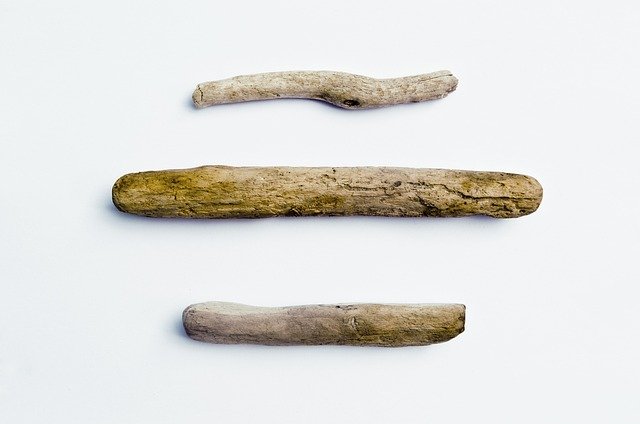 . If you collect driftwood from the beach, it will be saturated with salt and marine microbes. Salt is toxic to air plants because it pulls moisture out of their delicate leaves, essentially “burning” them. You must leach the salt out by soaking the wood in fresh, dechlorinated water for at least 48 to 72 hours, changing the water daily.
Once the salt is gone, the wood needs to be sterilized. Small pieces can be boiled for an hour to kill any lingering pests or fungi. For larger branches that won’t fit in a pot, a thorough scrubbing with a 10% bleach solution followed by a week of sun-drying is necessary. Avoid using pressure-treated lumber or wood that has been painted, as these can off-gas chemicals that harm the plants.
2. Designing the Layout
Before you start drilling or gluing, lay your plants out next to the wood. Consider the light requirements of each species. Plants with thicker, silver-grey leaves (xeric species) can handle more light and should be placed toward the top of the tower. Plants with thinner, greener leaves (mesic species) prefer more shade and should be tucked into lower or more sheltered crevices.
Look for the natural topography of the wood. Deep fissures and knot-holes are perfect “cradles” for the plants. If the wood is too smooth, you may need to use a drill with a spade bit to create small indentations. . These holes should be shallow and wide enough to hold the base of the plant without trapping water, which leads to rot.
3. Mounting the Plants
There are several ways to secure the plants to the tower. The most common “pioneer-grit” method is using 22-gauge floral wire or clear fishing line. Wrap the wire gently around the base of the plant—not the leaves—and thread it through a small hole or around a protrusion in the wood. Avoid using copper wire, as copper is toxic to air plants and will eventually kill them.
For a cleaner look, you can use a plant-safe adhesive like E6000 glue. Apply a dollop about the size of a pinto bean to the base of the plant and press it into the wood. Hold it in place for a few minutes until it sets. Always ensure the plant is completely dry before gluing, and never glue the leaves or the “growing heart” of the plant.
Benefits of the Vertical Approach
Choosing a vertical driftwood tower over traditional potting methods offers several practical advantages. The most obvious is space efficiency. By building upward, you can house 20 or 30 plants in the same footprint that a single 10-inch pot would occupy. This is a game-changer for anyone living in a small apartment or trying to keep surfaces clear of clutter.
Maintenance becomes much simpler when the plants are grouped. Instead of moving dozen pots to the sink, you can mist the entire tower in place. The vertical orientation also ensures better drainage. When you spray the plants, excess water naturally runs down the wood rather than pooling in the center of the plant. This significantly reduces the risk of crown rot, the number one killer of indoor air plants.
The aesthetic value is also unmatched. Each piece of driftwood is a unique sculpture created by nature. As the plants grow and produce “pups” (offsets), they will eventually cover parts of the wood, creating a lush, living column. Over time, the plants will grow their own roots into the wood’s texture, becoming permanently bonded to their tower.
Challenges and Common Mistakes
The biggest mistake beginners make is failing to treat beach-found driftwood. Even if the wood looks clean, the internal salt content will eventually leach out when you mist the tower, slowly poisoning your collection. Always prioritize the leaching and sterilization process to protect your investment in the plants.
Another frequent error is “crown rot” caused by improper mounting or watering. If a plant is mounted so that the base acts as a cup, water will sit in the center and rot the plant from the inside out within days. Always mount plants at an angle or horizontally so that water can easily drain away from the core.
Light starvation is the third major challenge. Because these towers are often placed in corners for decor, they may not receive enough bright, indirect light. Air plants need significant light to photosynthesize efficiently. If your tower is far from a window, you must supplement it with full-spectrum LED grow lights for at least 8 to 12 hours a day.
Limitations and Constraints
While a driftwood tower is a robust system, it is not ideal for every environment. In extremely dry climates or homes with heavy central heating, the plants may dry out faster than you can mist them. In these cases, a “passive” tower might struggle, and you may need to supplement the system by adding pockets of live sphagnum moss around the bases of the plants to hold extra moisture.
Environmental stability is also a factor. Air plants are tropical or subtropical organisms; they do not handle temperature swings well. If you place your tower near an HVAC vent or a drafty door, the rapid changes in temperature and humidity will stress the plants. They thrive best in a consistent range between 50 and 90 degrees Fahrenheit.
The size of the wood also dictates the lifespan of the tower. Softwoods like pine will eventually break down and rot under the constant cycle of misting. Hardwoods like manzanita, cedar, or oak are much more durable. If you want a tower that lasts for decades, invest the time or money in sourcing high-quality, dense hardwood.
Comparison: Found Wood vs. Commercial Mounts
| Feature | Beach Driftwood (Found) | Sandblasted Grapewood (Store-bought) |
|---|---|---|
| Cost | Free / Time-intensive | $30 – $150+ |
| Preparation | Needs leaching/sterilization | Ready to use |
| Longevity | Variable (Depends on wood type) | Very high (Hardwood) |
| Pest Risk | High (if not treated) | Minimal |
| Aesthetics | Raw, rugged, weathered | Refined, clean, sculptural |
Comparing these two options often comes down to your patience. If you enjoy the hunt and the preparation, found wood provides a deeper sense of accomplishment. However, if you are mounting rare or expensive air plants, the safety and predictability of a commercially cleaned piece of grapewood or mopani may be the wiser choice.
Practical Tips for Success
Start by selecting the right plants for your local humidity levels. If you live in a desert, stick to xeric species like Tillandsia tectorum, which is covered in fuzzy white trichomes designed to trap tiny amounts of moisture. If you live in a humid area, you can experiment with “bulbous” species like Tillandsia bulbosa or seleriana, which look like alien sea creatures.
Watering the tower should follow a routine based on observation. In most homes, a heavy misting two to three times a week is sufficient. Every few weeks, if the plants look “thirsty” (indicated by their leaves curling inward or feeling papery), you should consider removing them from the tower if they are wired, or taking the whole tower to the shower for a deep soak.
Always water in the morning. This allows the plants several hours of daylight to dry out completely. Air plants do their respiration at night; if they are wet when the sun goes down, they cannot breathe properly, which leads to slow growth and eventual death. Good air circulation from a nearby fan or an open window will help the tower dry within the required four-hour window.
Advanced Considerations: The Integrated Ecosystem
For those looking to take their tower to the next level, consider adding “helper” elements like preserved or live moss. Tucking small amounts of long-fiber sphagnum moss into the crevices before mounting the plants can provide a moisture reservoir for thirstier species.  . This mimics the way these plants grow in the wild alongside ferns and bromeliads.
You can also incorporate a low-voltage lighting system directly into the tower. Small, waterproof LED puck lights or strips can be hidden in the wood’s recesses. These not only highlight the dramatic shadows of the driftwood at night but also provide the essential light spectrum needed for the plants to bloom.
Scaling is another advanced option. A single “mother” tower can eventually be surrounded by smaller “pup” towers, creating a vertical forest effect. As your plants produce offsets, you can harvest them and move them to new towers, creating a self-sustaining cycle of growth that populates your entire home with fresh, filtered air.
Scenario: The Office Air-Scrubber
Consider a typical home office that feels dry and stagnant by midday. You install a three-foot-tall driftwood tower on a heavy oak base in the corner near a window. On this tower, you mount ten Tillandsia ionantha (small and hardy), two Tillandsia xerographica (large and sculptural), and a few strands of Spanish Moss.
Twice a week, you spend five minutes misting the tower with a pressurized sprayer. The wood turns a darker, richer color as it absorbs the water. The plants perk up, their leaves turning from a muted grey to a vibrant green. Within weeks, the room feels noticeably less “dusty” because the plants are trapping floating particulates. The tower doesn’t just sit there; it works for you, providing a visual “reset” for your eyes and a biological “reset” for the air.
Final Thoughts
The beauty of a driftwood air plant tower lies in its simplicity and its grit. It is a functional piece of art that requires no complex plumbing or expensive replacement parts. By understanding the needs of the plants and the chemistry of the wood, you create a system that thrives on the basics: light, air, and a little bit of water.
This project encourages a slower, more observational style of gardening. You learn to read the subtle signals of the leaves and the way the wood interacts with your home’s environment. It is a rewarding way to reclaim your space and bring a piece of the wild indoors.
Experiment with different wood shapes and plant combinations. The tower you build today will look different in a year as the plants grow, bloom, and multiply. It is a living investment in your well-being and a testament to what can be achieved when we let nature do the heavy lifting. Strong wood and resilient plants are all you need to start your own vertical air-cleaning revolution.
Sources
1 abovesoil.com (https://abovesoil.com/can-you-glue-air-plants/) | 2 merrifieldgardencenter.com (https://www.merrifieldgardencenter.com/air-plant-guide/) | 3 youtube.com (https://www.youtube.com/watch?v=SocvyByxfRc) | 4 airplantsupplyco.com (https://airplantsupplyco.com/blogs/design-blog/air-plant-wood-display) | 5 ucanr.edu (https://ucanr.edu/site/uc-marin-master-gardeners/article/fabulous-air-plants) | 6 alibaba.com (https://lifetips.alibaba.com/plant-care/air-plants-on-driftwood-without-glue-or-wire) | 7 houzz.com (https://www.houzz.com/discussions/2162823/how-to-sterizilize-driftwood) | 8 air-plants.com (https://www.air-plants.com/blogs/air-plant-care-and-design-articles/mounting) | 9 airplantexpert.com (https://www.airplantexpert.com/mount-air-plants-to-wood/) | 10 airplantcity.com (https://www.airplantcity.com/pages/air-plant-care) | 11 air-plants.com (https://www.air-plants.com/blogs/tillandsia-info-care/avoid-soaking) | 12 airplantshop.com (https://airplantshop.com/blogs/air-plant-care/misting-air-plants) | 13 pistilsnursery.com (https://pistilsnursery.com/blogs/journal/air-plant-care)