Nature’s breakwater isn’t made of concrete; it’s made of what the ocean discards. Why build a wall when you can build an ecosystem? Driftwood isn’t just debris; it’s the skeletal structure of a healthy beach. These salt-cured timbers provide more than a rustic aesthetic. They act as the primary anchors for a shoreline that refuses to wash away.
Strategically placing or preserving these salt-cured timbers creates micro-shelters for pioneer plants that stop erosion in its tracks. This process transforms a barren, wind-swept slope into a resilient fortress of sand and root. You are not just moving wood; you are facilitating a biological partnership that has stabilized coastlines for millennia.
This guide explores how to harness the power of large woody debris to protect your shoreline. We will move beyond the surface-level beauty of silver-grey logs and look at the physics of sand capture. You will learn why a single well-placed root wad can be more effective than a dozen tons of riprap.
Driftwood For Beach Erosion Control
Driftwood for beach erosion control refers to the use of large woody debris—logs, root wads, and branches—to stabilize shorelines and promote dune formation. This is a form of “soft engineering” or “nature-based solution” that works with coastal dynamics rather than fighting against them. While a concrete wall reflects wave energy and often worsens scouring at its base, driftwood absorbs and dissipates that energy.
When wood washes up on a beach, it acts as a physical obstacle. Wind-blown sand hits the wood and loses velocity, causing the grains to drop and accumulate around the structure. Over time, these small mounds grow into primary dunes. The wood provides a stable “nursery” where seeds can settle without being immediately washed back out to sea.
Coastal engineers and ecologists recognize that a beach with abundant driftwood is significantly more stable than a “groomed” beach. The presence of wood creates a complex topography that slows down surface winds and breaks the force of incoming swash. It is the first line of defense in a multi-layered coastal defense system.
The Mechanics of Natural Sand Capture
Understanding how driftwood functions requires a look at the interplay between wind, water, and wood. Every piece of timber on the sand is a miniature windbreak. As the wind moves across the flat expanse of a beach, it carries sand in a process called saltation. When that wind encounters a log, a low-pressure zone forms on the leeward side.
The sand drops in this quiet zone, forming a tail or a “shadow dune.” These small accumulations are the building blocks of the entire shoreline. Large logs also act as “ground anchors” for the beach profile. They weight down the sand and prevent the wind from stripping away the surface layers during dry spells.
In the intertidal zone, driftwood serves a different purpose. It interrupts the laminar flow of water retreating from the beach. This disruption causes suspended sediment to settle rather than being sucked back into the ocean. The wood becomes partially buried, effectively “weaving” itself into the fabric of the beach. 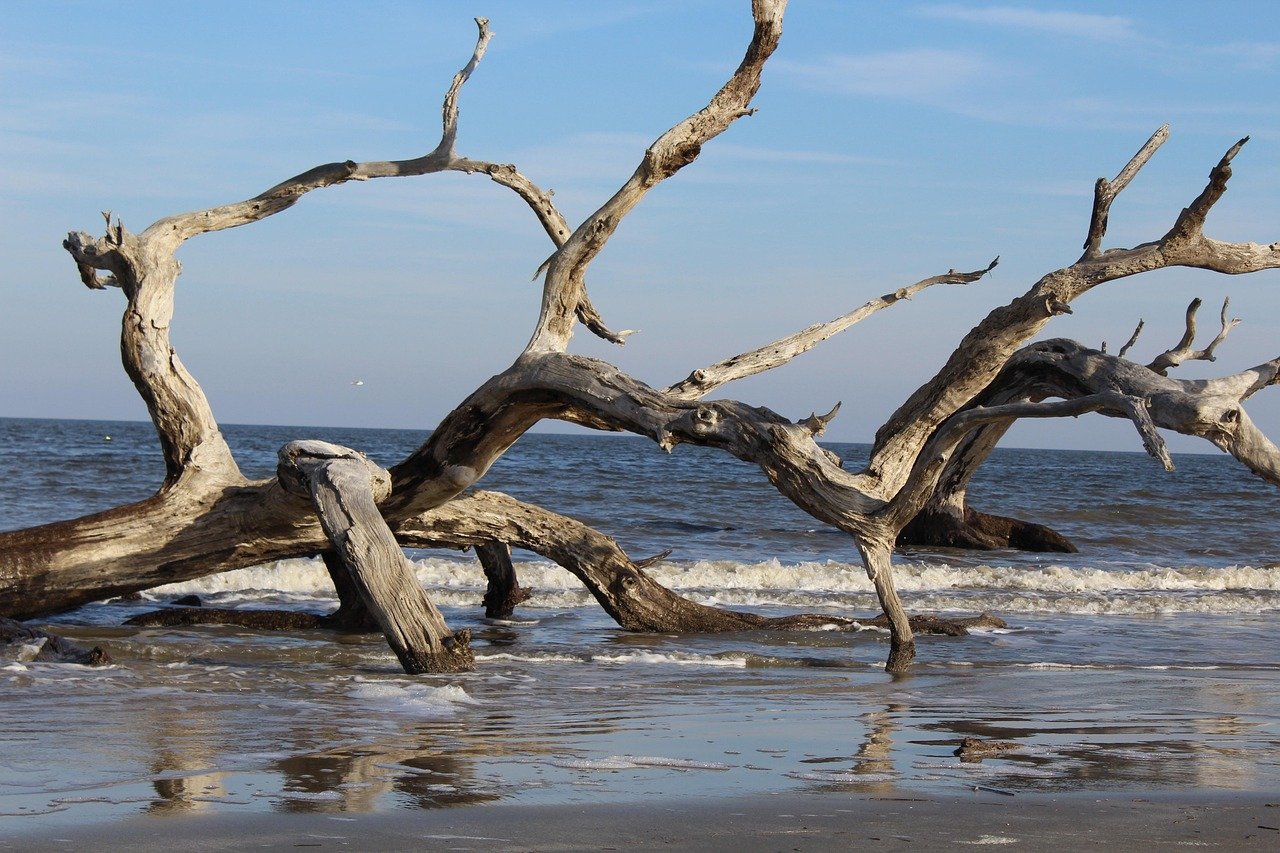 .
.
Micro-Shelters and the Pioneer Effect
The most critical role of driftwood is the creation of micro-shelters. The salt-scoured environment of a foredune is one of the harshest on Earth. High salinity, extreme heat, and constant physical abrasion make it impossible for most plants to survive. Driftwood provides the only respite in this wasteland.
The shade of a log reduces surface temperatures, allowing delicate seedlings to survive their first summer. The wood also traps moisture from sea spray and rain, acting like a natural mulch. As the wood eventually decays, it releases organic carbon and nutrients into a nutrient-poor sandy environment. This “nurse log” effect allows pioneer plants like beach grass (Ammophila breviligulata) or sea lyme grass to establish deep root systems.
How to Strategically Place Driftwood
Effective erosion control isn’t about tossing logs randomly onto the sand. It requires an observation of the prevailing winds and typical tide lines. If you are managing a private shoreline or working on a permitted restoration project, placement should mimic the natural “rack line” where debris naturally settles.
Start by identifying the high-tide mark. Placing wood too low in the intertidal zone usually results in the wood being swept away during the next high-energy event. Instead, focus on the area just above the spring tide line. This is where the transition from “eroding sand” to “shoreline anchor” begins.
Position logs perpendicular to the dominant wind direction to maximize sand capture. If the wind primarily blows from the northwest, the logs should be oriented northeast-to-southwest. This creates the largest possible wind-shadow for sand to accumulate. For large root wads, ensure the “root plate” is facing the water. 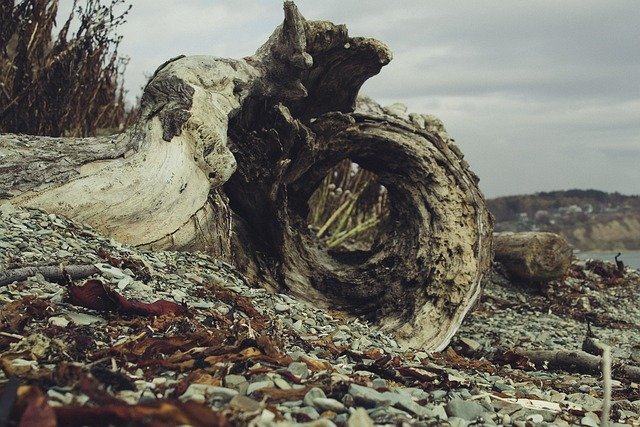 . This structure is incredibly effective at breaking wave energy.
The Wattle Technique
For areas with smaller debris, you can employ a technique known as driftwood wattling. This involves partially burying smaller branches in a lattice or row pattern. These “mini-fences” act as a permeable barrier that allows water through but traps sand.
Dig a shallow trench and stand the branches upright, burying them at least one-third of their length. Space them closely together. This creates a high-surface-area trap that builds dunes much faster than a single large log. It is a labor-intensive but highly effective method for restoring “blowouts” where the wind has carved a hole in an existing dune.
Benefits of Using Nature’s Debris
Choosing driftwood over hard infrastructure offers several measurable advantages for both the landowner and the local ecosystem. The most immediate benefit is cost. Driftwood is often a free resource provided by the ocean itself. Even if you must source large logs from elsewhere, the transport and placement costs are a fraction of what a concrete seawall requires.
Environmental resilience is the second major benefit. Hard structures are rigid. When they fail, they fail catastrophically, often requiring total replacement. Driftwood systems are flexible. If a massive storm moves the wood, you can simply reposition it or wait for the next tide to bring more. The system “self-heals” as more debris arrives and plants grow over the existing wood.
Ecological biodiversity is also vastly improved. Driftwood provides habitat for a staggering array of life. Shorebirds like the snowy plover use wood for camouflage and nesting. Insects that live in the decaying wood provide a food source for fish and birds alike. You are creating a living, breathing landscape rather than a sterile barrier.
Common Pitfalls and Mistakes
The most frequent mistake is “over-tidying” the beach. Many people see driftwood as messy or unsightly and choose to stack it in piles or burn it. Removing wood is a direct invitation for erosion. A clean beach is a vulnerable beach. Even small sticks contribute to the overall stability of the sand.
Another common error is failing to anchor the wood properly. If you place a large log on top of the sand without partially burying it, a moderate storm surge will turn that log into a battering ram. Floating logs can destroy existing vegetation or damage nearby structures. Always ensure that at least a portion of the log is “set” into the sand to prevent it from becoming a projectile.
Using treated lumber is a critical error. Pressure-treated wood contains chemicals like copper or arsenic that are toxic to the very pioneer plants and marine life you are trying to protect. Only use “raw” driftwood or untreated logs from inland sources. The salt-curing process provides all the protection the wood needs to last for years on the shoreline.
Limitations of Driftwood Systems
Driftwood is not a universal solution for every coastline. High-energy shorelines with massive, frequent storm surges may be too volatile for wood to remain stable. In these environments, the wood is often moved so frequently that it never has a chance to trap sand or support plant growth.
Environmental constraints also play a role. If your beach has no natural source of sand—perhaps due to upstream dams or nearby jetties—the wood will have nothing to trap. Driftwood helps manage sand that is already in the system; it cannot create sand where none exists. In these “starved” beach scenarios, you may need to combine wood placement with beach nourishment.
Space is another limitation. Building a healthy dune system with driftwood requires a wide beach. If your property is already losing land to a cliff or a high-tide line that hits the bluff, there may not be enough room for wood to do its job. Driftwood is most effective on gently sloping beaches where there is room for the foredune to expand and contract with the seasons.
Hard vs. Soft Engineering Comparison
When deciding how to protect a shoreline, it helps to compare the two main philosophies: hard engineering (seawalls) and soft engineering (driftwood/plantings).
| Factor | Seawalls (Concrete/Steel) | Driftwood (Soft Engineering) |
|---|---|---|
| Upfront Cost | High ($500 – $2,000 per foot) | Low (Often free or minimal) |
| Maintenance | Low until failure occurs | Moderate (Repositioning needed) |
| Longevity | 30 – 50 years | Variable (Indefinite if self-replenishing) |
| Eco-Impact | Negative (Habitat loss/Scouring) | Positive (Habitat creation) |
| Permitting | Very complex/Restricted | Easier (Check local laws) |
Practical Tips for Shoreline Management
Working with driftwood requires a shift in mindset. You are not a builder; you are a facilitator. These best practices will help you get the most out of your efforts.
- Observe the natural rack line. Look at where the ocean already drops debris. This is the “sweet spot” for placement. Replicating this line ensures the wood is at the correct elevation to resist normal tides while still being high enough to trap sand.
- Secure wood with sand, not anchors. Avoid using metal cables or plastic ties. Instead, bury the bottom half of large logs. This “sand-anchoring” is surprisingly strong and doesn’t introduce non-biodegradable materials into the environment.
- Combine with plantings. Driftwood and beach grass are a powerhouse duo. Plant your pioneer species on the landward side of the wood. The log protects the young plants from the wind, and as the plants grow, their roots will wrap around the wood, locking it into the dune.
- Leave the “small stuff.” Don’t just focus on the massive logs. Twigs, bark, and smaller branches provide the surface area needed to trap finer sand grains. They also provide the initial organic matter that jumpstarts the soil biology.
Advanced Considerations for Practitioners
For those looking to take restoration further, consider the concept of “porosity.” A solid wall of wood is actually less effective than a permeable one. If a barrier is too solid, the wind will simply go over the top of it, creating a “scour hole” on the other side. A porous barrier—like a jumble of logs or a wattle fence—slows the wind down while allowing it to pass through. This “filtering” effect results in a much more even deposition of sand.
Scaling this approach involves looking at the entire “cell” of the beach. Coastal areas are often divided into littoral cells where sand moves in a specific direction along the shore. Understanding where your sand is coming from and where it is going allows you to place wood in a way that “harvests” passing sediment. 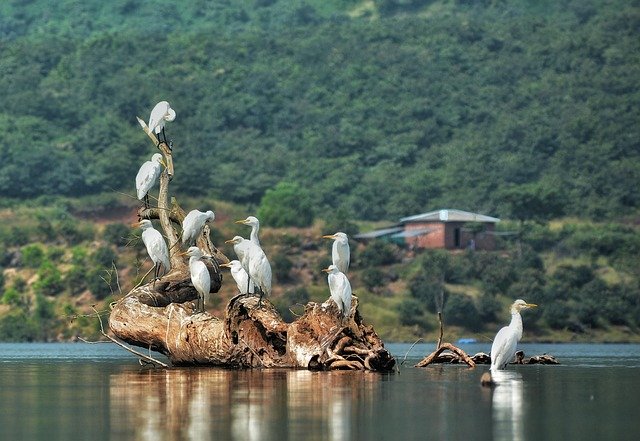 .
.
Long-term monitoring is also essential. A driftwood-stabilized beach is a dynamic system. You should expect the wood to move, decay, and be buried. This is not failure; it is the system working. When a log is completely buried, it has fulfilled its purpose. You should then consider adding a new layer of wood on top of the newly formed dune to continue the vertical growth.
Scenario: Restoring a Shoreline “Blowout”
Imagine a section of your shoreline where the wind has carved a deep notch in the dunes, known as a blowout. Left unchecked, this gap will allow storm surges to penetrate deep into the uplands, threatening structures.
To fix this using driftwood, you would start by placing a large “anchor” log across the mouth of the blowout. This log should be heavy and partially buried. Next, you would create a series of “V” shaped wattle fences inside the notch, with the point of the “V” facing the wind.
Over the course of a single winter season, you will observe sand filling the “V” structures. As the notch fills, you introduce native beach grass. Within two years, the gap is no longer a vulnerability; it has become a reinforced part of the dune line. This scenario demonstrates the power of using the ocean’s own energy and materials to solve a structural problem.
Final Thoughts
Harnessing the power of driftwood is about rediscovering a natural wisdom that modern engineering often ignores. By recognizing these timbers as the “skeletal structure” of the beach, you move from fighting the ocean to partnering with it. This approach provides a resilient, cost-effective, and ecologically vibrant solution to the growing problem of coastal erosion.
Patience is the most important tool in this process. Unlike a concrete wall that is “finished” the day it is poured, a driftwood-stabilized shoreline grows and strengthens over time. It requires a watchful eye and a willingness to let the natural cycles of the tide and wind do the heavy lifting.
If you are facing an eroding shoreline, start small. Stop removing the wood that washes up. Observe how the sand responds to a single log. You will soon see that the most effective way to anchor a shoreline is to work with the materials the ocean has already provided. Experiment, observe, and let the ecosystem build itself.
Sources
1 windermerewhidbeyisland.com (https://windermerewhidbeyisland.com/2024/11/04/driftwood-that-line-the-beaches-of-whidbey) | 2 ontarioparks.ca (https://blog.ontarioparks.ca/why-driftwood-matters/) | 3 doc.govt.nz (https://dxcprod.doc.govt.nz/globalassets/documents/science-and-technical/casn165.pdf) | 4 kuer.org (https://www.kuer.org/podcast/treenote/2025-09-11/how-driftwood-connects-the-forests-to-the-seas) | 5 sos.state.or.us (https://vertexaisearch.cloud.google.com/grounding-api-redirect/AUZIYQHm80I5P8rOpnjkdhRb5Cr58lzjOqoTL-wbvhW5GRHo4ckN5ITPR39Gmc6ISZawRkVdh3hIjBDpKx3AeGFfb2H1sK8o96KE_GM-TUAx23PvRTschEOy30dcxfNdxjy18ggroa27imT_Hg6twXw-uyjVf6627VvTkUih1TKUvOd_TpU0iQHSQrCT-x2sw_1u8lM=) | 6 gaspepurplaisir.ca (https://gaspepurplaisir.ca/en/driftwood-a-valuable-ally-against-shoreline-erosion/) | 7 coastseawall.com (https://www.coastseawall.com/comparing-seawalls-and-other-coastal-protection-structures/) | 8 geosyntec.com (https://megamanual.geosyntec.com/npsmanual/woodydebrismanagement.aspx) | 9 researchgate.net (https://www.researchgate.net/figure/Driftwood-in-front-of-the-artificial-sand-dunes-after-Fanapi_fig1_309783173) | 10 ontarioparks.ca (https://blog.ontarioparks.ca/driftwood-shaping-shorelines/) | 11 hrwc.org (https://www.hrwc.org/wp-content/uploads/2013/03/LWD%20Manual%20Final.pdf) | 12 kebrazaconstruction.com (https://www.kebrazaconstruction.com/ct-construction-blog/seawall-construction-materials)