Heirloom Quality Diy Wall Desk
Why build something for today when you can build something for the next generation? Most DIY projects are about “right now.” This one is about “forever.” Using traditional joinery and premium hardwoods, we’re building a folding desk that doubles as a piece of fine furniture. It’s not just a place to work; it’s an heirloom in the making.

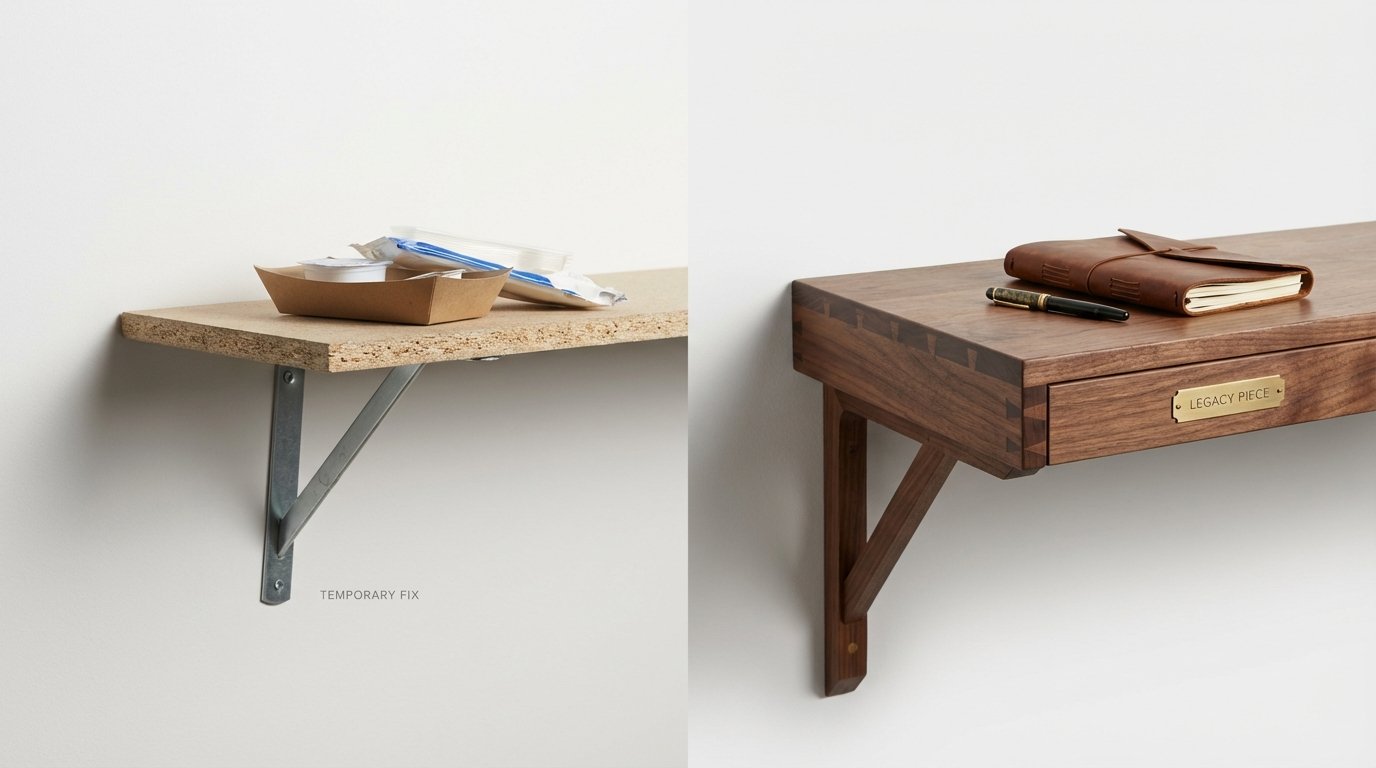
Most modern furniture is designed for a dumpster. It’s held together by plastic cams and particle board. We are taking a different path. This guide focuses on the “Legacy Piece”—a wall-mounted workstation that uses the same techniques found in museums and high-end galleries. It is a fusion of space-saving utility and master-level craftsmanship.
Whether you have a dedicated workshop or a small garage setup, the principles remain the same. Precision matters. Material selection matters. Patience matters most. Let’s dive into how you can transform a few slabs of premium timber into a functional work of art.
Heirloom Quality Diy Wall Desk
An heirloom quality DIY wall desk is more than a simple shelf. It is a wall-anchored furniture piece constructed primarily from solid hardwoods using mechanical wood-to-wood joinery. Unlike “throwaway” furniture, this desk is designed to handle the stresses of daily use while accommodating the natural expansion and contraction of wood over decades.
In the real world, these pieces serve as high-efficiency workstations in small apartments or luxury accents in modern home offices. They are often called “secretary desks” or “floating bureaus” when they include storage. The defining characteristic is the folding desktop, which provides a generous workspace when open and a slim, decorative profile when closed.
Think of it like a vintage steamer trunk merged with a modern architectural element. It exists because space is a premium, but style shouldn’t be. You aren’t just mounting a board to the wall; you are engineering a cantilevered surface that must remain perfectly stable under the weight of a laptop, books, and the occasional leaning arm.
How It Works: The Path to Craftsmanship
Building a legacy piece requires a shift in mindset. You are moving away from the “screw and glue” method toward mechanical interlocking. This process ensures that the desk remains tight even as the wood breathes through the seasons.
Phase 1: Selecting the Right Hardwood
Start with the best materials. Softwoods like pine are too prone to denting and lack the structural integrity for fine joinery. Look for “Select” or “FAS” (First and Seconds) grade hardwoods.
American Black Walnut is the gold standard for luxury. It offers deep, chocolate tones and incredible stability. White Oak is another fantastic choice, known for its extreme durability and the beautiful “ray fleck” patterns seen in quartersawn cuts. Cherry is a “living” wood that darkens into a rich, reddish patina over time, making it a favorite for those who want a piece that matures.
Phase 2: Master the Joinery
The joints are the soul of the desk. For the main carcass, use Dovetails or Mortise and Tenon joints. Dovetails are famous for their “locking” ability; they are physically impossible to pull apart in one direction. This is perfect for the corners of a wall-mounted box.
For the folding mechanism, avoid cheap utility hinges. Instead, use solid brass “Butler” hinges or Soss-style invisible hinges. These are mortised directly into the wood. The goal is for the hardware to disappear or look like jewelry, not like something from a hardware store’s bargain bin.
Phase 3: The Support System
A folding desk needs a “stay” or a support arm. You can use traditional wooden “loper” arms—slats of wood that slide out from the carcass to support the lid. This is the most “heirloom” approach. Alternatively, high-quality brass folding stays provide a sleek, mechanical look.
Phase 4: Wall Integration
The desk is only as strong as its connection to the wall. This is a critical safety step. You must bridge the gap between fine furniture and structural engineering. Use a “French Cleat” system made from the same hardwood as the desk. One half is screwed into the wall studs with heavy-duty lag bolts, and the other is integrated into the back of the desk carcass. This allows the desk to “hang” with incredible strength while remaining removable if you move houses.
Benefits of the Heirloom Approach
The most obvious benefit is durability. A well-made mortise and tenon joint can last 200 years. If the wood gets scratched, you can sand it and refinish it. You can’t do that with laminate or veneer.
Space efficiency is the second major win. In a “work from home” world, not everyone has a spare room. This desk allows you to reclaim your living space at 5:00 PM. You close the lid, and your work life is hidden behind a beautiful wood grain.
There is also the “Value of the Maker.” Building an heirloom piece creates a tangible connection to the past. Every time you touch the smooth, oiled surface of the wood, you feel the effort of your own hands. This creates a sense of pride that no store-bought item can replicate.
Challenges and Common Mistakes
Precision is the biggest hurdle. In heirloom woodworking, a gap the thickness of a human hair is visible. Beginners often rush the “milling” phase. If your boards aren’t perfectly flat and square (S4S), your joinery will never line up.
One common mistake is ignoring wood movement. Wood is like a sponge; it expands across the grain when it’s humid. If you glue a solid wood desktop inside a rigid frame with the grain running in opposite directions, the desk will eventually crack. You must use “floating” panels or breadboard ends to allow for this movement.
Another pitfall is using underpowered mounting hardware. A solid walnut desk can weigh 40 to 60 pounds before you even put a laptop on it. Standard drywall anchors will fail. You must hit the studs.
Limitations to Consider
This method is not ideal for renters who cannot drill into walls. Because of the weight and the requirement for a French cleat or lag bolts, it leaves significant holes that need professional patching.
Environmental factors play a role too. If you live in an area with extreme humidity swings and don’t have climate control, a solid wood desk will move significantly. You might find the folding lid sticks in the summer and has gaps in the winter.
Finally, there is the cost. Premium hardwoods have tripled in price over the last few years. A single 8-foot board of 4/4 Walnut can cost more than a complete desk from a big-box store. This is a financial investment in a long-term asset.
The Comparison: Legacy vs. Temporary
It helps to see the data when deciding if the heirloom path is right for you. The differences in material and construction lead to very different life cycles.
| Feature | Heirloom Wall Desk | Mass-Market Wall Desk |
|---|---|---|
| Material | Solid Hardwood (Walnut/Oak) | MDF or Particle Board |
| Joinery | Dovetails / Mortise & Tenon | Cam Locks / Staples |
| Finish | Hardwax Oil / Shellac | Plastic Laminate / Paper Veneer |
| Repairability | High (can be sanded/glued) | Low (once broken, it’s done) |
| Longevity | 50 – 100+ Years | 3 – 7 Years |
| Skill Level | Intermediate to Advanced | Beginner |
Practical Tips for Success
Invest in a high-quality sharpening system. A dull chisel is a dangerous and frustrating tool. Your joinery depends on the ability to pare away micro-shavings of wood. If your tools can’t shave the hair off your arm, they aren’t ready for walnut.
Use a “Story Stick” instead of a tape measure for your layout. A story stick is a scrap piece of wood where you mark all your dimensions directly. This eliminates “math errors” and ensures that the left side of your desk is a perfect mirror of the right side.
Pre-finish your internal parts. It is much easier to apply oil to the inside of a cabinet before it’s assembled. Just make sure to keep the “glue surfaces” clean. Use painter’s tape to mask off the areas where the joints will meet.
Advanced Considerations for the Serious Builder
For those looking to push the boundaries, consider “Draw-Boring” your tenons. This involves drilling an offset hole through the mortise and the tenon, then driving a wooden peg through it. The offset “pulls” the joint together with massive mechanical force. No clamps are required, and the joint will never, ever come apart.
Hidden cable management is another hallmark of a pro build. Instead of a messy hole in the top, rout a “wire channel” behind the back panel. You can even build a “false back” that hides power strips and charging bricks, keeping the aesthetic clean and uncluttered.
Think about lighting. Modern LED strips are thin enough to be recessed into a groove under the top shelf. This provides “task lighting” for your workspace without an external lamp taking up valuable real estate.
Scenario: The “Small Apartment” Executive
Imagine a professional working from a 600-square-foot studio. A traditional desk would swallow the room. By building an heirloom wall desk, they install a 36-inch wide cabinet made of Quartersawn White Oak.
When the workday starts, the lid drops down to reveal a 24-inch deep workspace. The “loper” arms slide out with a satisfying wooden “thunk,” providing a rock-solid foundation. Inside, custom cubbies hold a fountain pen and a leather-bound notebook.
At night, the lid is raised. The quartersawn grain catches the light, showing off the “tiger stripe” ray flecks. The office has disappeared. What remains is a piece of art that looks like it has been in the family for generations.
Final Thoughts
Building an heirloom quality DIY wall desk is a journey into the heart of traditional woodworking. It forces you to slow down and respect the material. You aren’t just “assembling” a product; you are “crafting” a legacy.
This project offers a rare combination of modern utility and ancient technique. It solves the very real problem of space in our digital age while honoring the tactile beauty of solid wood. Even if you make a few mistakes along the way, the result will be a piece that tells a story—your story.
Take your time. Buy the good lumber. Sharpen your chisels. The next generation will thank you for the desk you built today. Experiment with different hardwoods and don’t be afraid to try a new joint. Woodworking is a skill that only deepens with every shaving you take off the bench.
Sources
1 urbancollectionsohiousa.com (https://www.urbancollectionsohiousa.com/blog/the-importance-of-old-fashioned-joinery-in-modern-furniture/) | 2 youtube.com (https://www.youtube.com/watch?v=y-ZDy8WEuio) | 3 youtube.com (https://www.youtube.com/watch?v=H2_BmvqEmcA) | 4 ashdeco.com (https://ashdeco.com/blogs/wood-knowledge/best-wood-species-furniture-guide) | 5 withinthegrove.com (https://withinthegrove.com/diy-floating-desk/) | 6 reperch.com (https://reperch.com/blog/the-best-wood-types-for-long-lasting-furniture-investments) | 7 woodandshop.com (https://woodandshop.com/how-to-make-through-mortise-tenon-part-12-of-build-a-dovetail-desk-with-hand-tools/) | 8 youtube.com (https://www.youtube.com/watch?v=-jFKfKy-h7I) | 9 bayandbent.com (https://www.bayandbent.com/wood-joinery)