Multi-functional Diy Balcony Furniture
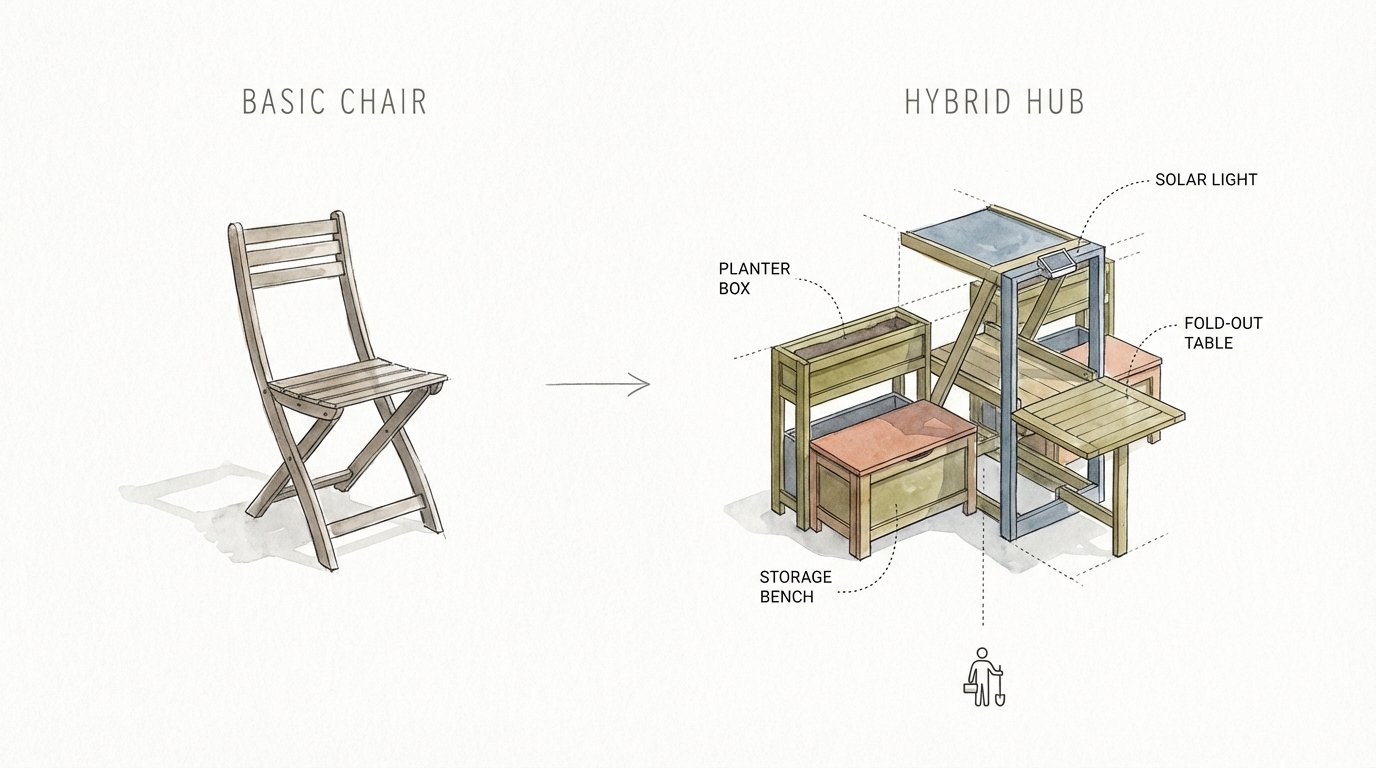
One piece of wood, four different ways to enjoy your outdoor space. Why settle for just a chair when you can have a workspace, a garden, and a storage locker in the exact same footprint? Multi-use design is the only way to live small.


Urban balconies are often treated like an afterthought. Most people shove a rusty bistro set in the corner and call it a day. That is a wasted opportunity. Your tiny slab of concrete can become a high-performance sanctuary if you stop thinking in single-use terms.
Creating a “Hybrid Hub” allows you to rotate your environment based on the time of day. Morning requires a coffee nook. Afternoon demands a standing desk. Evening calls for a garden retreat. This guide walks you through the philosophy and the physics of making it happen with your own two hands.
Multi-functional Diy Balcony Furniture
Multi-functional DIY balcony furniture is a design strategy focused on maximizing the utility of every square inch through modularity and transformation. This concept exists because urban living spaces are shrinking, yet our need for outdoor connection is growing. Instead of crowding a patio with three separate items, you build one core structure that adapts.
In real-world terms, this usually looks like a piece of furniture with moving parts or hidden compartments. A storage bench that features a flip-up lid is the classic example. However, modern multi-functional pieces go further. They might use folding wings to become a desk or integrated troughs to hold a vertical herb garden.
Think of it like a Swiss Army knife for your patio. A standard chair does one thing. A Hybrid Hub, on the other hand, serves as a foundation for your entire lifestyle. It provides a place to sit, a surface to work, a vessel for life, and a vault for your gear. This approach solves the “clutter crisis” that ruins most small balconies.
How to Build Your 4-in-1 Hybrid Hub
Building a multi-functional unit requires a solid plan and a focus on structural integrity. The most effective design is a modular box base with an integrated vertical backrest. This backrest serves as the mounting point for your workspace and your garden.
Start by constructing a sturdy base frame using 2×4 pressure-treated lumber or cedar. This box will serve as your storage locker. Ensure the frame is perfectly square by measuring diagonally from corner to corner. Once the frame is solid, skin the sides with cedar pickets or slats, leaving 1/8-inch gaps for airflow. Air circulation prevents the wood from rotting and stops your stored cushions from smelling like mildew.
The second step involves the “Transformer” wing. Use heavy-duty folding brackets rated for at least 100kg.  . Mount these to the side of your main structure. When flipped up, this wing creates a 24-inch deep workspace. When flipped down, it sits flush against the side, disappearing entirely.
For the garden element, integrate a planter trough along the top of the backrest. Use a plastic liner inside the wooden trough to prevent constant moisture contact with the frame. This vertical garden provides a “green screen” for privacy while keeping your herbs at arm’s reach.
The final transformation is the seating. Add a hinged lid to the top of your base box. Use stainless steel piano hinges for maximum durability. Toss on a weather-resistant cushion, and your storage locker becomes a comfortable lounge chair. You now have a workspace, a garden, and a locker in one 4-foot footprint.
Choosing the Right Materials for Longevity
Selection of materials determines whether your furniture lasts two seasons or twenty years. Teak is the gold standard for outdoor wood. It contains natural oils that repel moisture, rot, and insects. While expensive, teak ages into a beautiful silver-gray patina that looks high-end with zero effort.
Cedar is a more accessible alternative for most DIYers. It is naturally rot-resistant and significantly lighter than hardwoods, making it easier to move around a small balcony. Western Red Cedar is particularly popular because it remains stable and doesn’t warp easily when exposed to direct sun.
Hardwoods like Acacia and White Oak offer incredible density and strength. Acacia is far less expensive than teak but requires regular sealing to prevent cracking in dry climates. White Oak is a classic “boat-building” wood that handles humidity like a pro.
Fasteners are the most overlooked part of the build. Never use standard interior screws. They will rust and streak your wood within months. Use stainless steel or high-quality coated exterior screws. Pocket-hole joinery, specifically using a Kreg Jig, allows you to hide these fasteners for a professional, “store-bought” look.
Benefits of Multi-Functional Design
Space efficiency is the most obvious advantage. Most balconies are less than 50 square feet. A traditional chair and table set leaves no room to move. A multi-functional unit hugs the wall or the railing, opening up the floor for movement.
Cost-effectiveness is another major driver. Buying a high-end outdoor desk, a separate planter, and a storage bench can easily exceed $1,500. Building a single Hybrid Hub usually costs between $200 and $400 in materials. You are getting four pieces of furniture for the price of one.
Personalization makes the DIY route superior to retail. You can adjust the height of the desk to your specific ergonomic needs. You can size the storage box to fit your exact cushion dimensions. Most retail furniture is “one size fits none,” but your custom build will fit your balcony like a glove.
Challenges and Common Mistakes
Moisture traps are the number one killer of DIY outdoor projects. Many beginners screw boards tight against each other with no gaps. Water gets trapped in these seams, leading to rot even in treated wood. Always use spacers to create small gaps for drainage and expansion.
Ignoring weight distribution is another frequent error. Balconies have load limits. Building a massive, solid-oak planter bench might look great, but it adds significant stress to the structure. . Keep your design “light but strong” by using a skeleton frame with thin decorative skins.
Poor hardware choices can ruin a functional piece. Standard hinges often seize up after a winter outdoors. If your “multi-functional” furniture can no longer fold or open because the hinges are rusted shut, it loses its purpose. Spend the extra $10 on marine-grade or stainless steel hardware.
Limitations of DIY Balcony Units
Structural constraints are a reality for any wood-based project. While wood is versatile, it has limits on how far it can span without sagging. If you are building a long bench, you must include mid-span supports. Wood will eventually “creep” or bend under a constant load if not engineered correctly.
Environmental exposure is the ultimate enemy. No matter how well you build it, a wooden piece on a South-facing balcony in Arizona will face more stress than one in a shaded London garden. Extreme temperature swings cause wood to move. This can lead to drawers sticking or folding desks becoming misaligned over time.
Rental restrictions may limit your options. Many apartment complexes forbid drilling into the walls or the railing. In these cases, your multi-functional piece must be entirely self-supporting. You cannot rely on wall-mounted folding desks; everything must be integrated into the furniture’s own frame.
Comparison: Basic Bench vs. Multi-Functional Hybrid Hub
| Feature | Basic Garden Bench | DIY Hybrid Hub |
|---|---|---|
| Total Functions | 1 (Seating) | 4 (Seat, Desk, Garden, Storage) |
| Floor Space Usage | Fixed footprint | Adaptable/Folding wings |
| Cost to Build | $80 – $120 | $200 – $400 |
| Skill Level Required | Beginner | Intermediate |
| Durability | Standard | High (Reinforced for movement) |
Practical Tips for Best Results
Apply your finish before you assemble the final product. Reaching the inside of a storage box with a paintbrush is a nightmare. Sanding every board to 120-grit and applying a coat of high-quality oil like Australian Timber Oil before assembly ensures every surface is protected.
Use rubber feet on the bottom of your furniture. Balcony floors often hold standing water after a storm. If the end grain of your wood sits directly in a puddle, it will act like a straw and suck moisture up into the legs. Rubber standoffs keep the wood dry and prevent staining on your balcony tiles.
Integrated lighting adds a professional touch with minimal effort. Battery-operated LED strips under the “desk” wing provide task lighting for night work. Solar-powered lanterns nestled in the planter section create a warm glow without the need for outdoor outlets.
Advanced Considerations for Serious Makers
Hidden joinery elevates a project from “DIY” to “Craftsman.” Instead of visible screw heads, use plug cutters to create wooden caps from the same material. Gluing these over your screws and sanding them flush makes the fasteners virtually invisible.
Automated irrigation is a game-changer for the garden component. Small, battery-powered drip kits can be hidden inside the storage locker. Run thin tubes up into the planter trough. This keeps your herbs alive even if you travel for a week, turning your furniture into a self-sustaining ecosystem.
Weight load calculations are essential for the folding workspace. If you plan on using a heavy monitor setup, the folding brackets must be bolted through the main frame, not just into the thin siding. Use carriage bolts with large washers to spread the load across a wider surface area.
Scenario: A Full Day on the Hybrid Hub
At 8:00 AM, you step outside with a laptop. You flip up the side wing and lock the brackets. Your balcony is now a quiet home office. The vertical garden behind you acts as a professional, green background for your morning video calls.
By 1:00 PM, the sun is high. You fold the desk down and open the hinged lid of the base. You pull out a yoga mat and a couple of outdoor pillows. You close the lid, toss the cushions on top, and spend your lunch break lounging in the “garden retreat” mode.
At 6:00 PM, friends arrive. You move the pillows back into the storage locker. The hub now provides stable seating for two people. You use the top of the planter ledge as a narrow bar for drinks. The space feels open and inviting because the bulky desk and storage are tucked away.
Final Thoughts
Building multi-functional DIY balcony furniture is about more than just saving money. It is about reclaiming your space from the constraints of urban architecture. When you design for versatility, you stop seeing your balcony as a “small area” and start seeing it as a series of possibilities.
The Hybrid Hub approach proves that you don’t need a massive yard to have a functional lifestyle. One well-built piece of furniture can handle your professional needs, your gardening hobbies, and your relaxation goals simultaneously. . This level of efficiency is the hallmark of modern DIY culture.
Experiment with different wood types and hardware configurations to find what works for your climate. Start with a solid base, focus on quality fasteners, and don’t be afraid to add moving parts. Your outdoor space is waiting to be transformed. Apply these principles today and watch your tiny balcony become the most useful room in your home.
Sources
1 youtube.com (https://www.youtube.com/watch?v=bKizF4g5qhY) | 2 instructables.com (https://www.instructables.com/Excellent-Easy-Garden-Storage-Bench/) | 3 nelidesign.com (https://nelidesign.com/diy-outdoor-modular-bench-with-storage/) | 4 youtube.com (https://www.youtube.com/watch?v=kRUWbUxr8_k) | 5 minimalandmodern.com (https://www.minimalandmodern.com/best-wood-for-outdoor-furniture-weather-proof-picks/) | 6 forestplywood.com (https://forestplywood.com/blog/lumber/the-best-types-of-wood-for-outdoor-furniture/) | 7 decoroutdoor.com (https://decoroutdoor.com/blog/outdoor-furniture-materials-guide-frames-tabletops-wood/) | 8 camodernhome.com (https://camodernhome.com/blogs/news/the-best-wood-for-outdoor-furniture) | 9 terraoutdoor.com (https://blog.terraoutdoor.com/outdoor-balcony-furniture/) | 10 woodcentral.com (https://www.woodcentral.com/-/best-wood-for-outdoor-furniture-in-wet-climates/) | 11 thehandcraftedhaven.com (https://www.thehandcraftedhaven.com/how-to-build-an-outdoor-storage-bench/)