Natural Fiber Sails For Driftwood Boats
Does your boat look like a child’s toy or a timeless maritime relic? Synthetic sails fight the wind; natural fibers breathe with it. When you pair ocean-aged wood with sun-bleached linen, you aren’t just building a model—you’re recreating a thousand years of seafaring history.
[affiai]Authentic maritime modeling relies on the marriage of materials that shared a lifespan. Driftwood hulls, seasoned by salt and current, demand a rigging that feels equally weathered. Plastic-based fabrics often look too stiff or too shiny, breaking the illusion of a miniature vessel that has truly seen the sea.
Creating natural fiber sails involves understanding the weight of history and the physics of fabric. This guide explores how to select, treat, and mount sails made from the earth’s original fibers to give your driftwood boat the soul of a true voyager.
Natural Fiber Sails For Driftwood Boats
Natural fiber sails are miniature replicas of traditional sailcloth made from organic plant materials like flax (linen), cotton, or hemp. These fibers were the backbone of global commerce for millennia before the advent of petroleum-based synthetics. In the world of driftwood boat building, these materials are chosen because they mirror the organic texture and “lived-in” quality of the wood itself.
Linen, derived from the flax plant, was the primary sailcloth of European navies for centuries. It is celebrated for its strength and historical accuracy. Cotton eventually supplanted it in the 19th century because it was lighter and easier to weave into large, uniform bolts. For a modeler, these fibers offer a specific “drape”—the way the fabric hangs under its own weight—that plastic fabrics cannot replicate.
These sails are used primarily in decorative maritime art and high-end scale modeling. Because driftwood is often irregular and rugged, a perfectly smooth synthetic sail looks out of place. Natural fibers can be frayed, stained, and wrinkled to match the hard-earned character of a piece of wood found on a beach.
Think of the difference between a new polyester flag and an old canvas tarp. The tarp carries the stories of the weather; the flag just resists it. When you choose natural fibers, you are choosing to work with a material that accepts the environment rather than just sitting on top of it.
How to Select and Craft Natural Fiber Sails
The process begins with selecting the right “hand” of the fabric. In textile terms, “hand” refers to the feel and weight of the material. For most driftwood boats, which range from 12 to 30 inches in length, you need a fabric that is thin enough to look realistic but sturdy enough to hold a shape.
Step 1: Material Selection
Choose your fiber based on the era you want to evoke. Finely woven linen is the gold standard for realism, offering a tight weave that looks historically accurate. Lightweight cotton “lawn” or muslin is a more accessible alternative that is very easy to cut and handle. Some modelers prefer “Navara Fine Lawn,” a 70gsm cotton that provides the perfect translucence for a scale model.
Step 2: Template Creation
Never cut your expensive fabric without a pattern. Use heavy craft paper or cardboard to trace the shape of the sail against your driftwood mast and boom. Leave an extra 1/4 inch on all sides if you plan to sew a hem. If you want a “raw” edge look, you can cut exactly to the line.
Step 3: Preparing the Fiber
Natural fibers will shrink. Always wash, dry, and iron your fabric before cutting. This removes the “sizing”—a starchy coating used in manufacturing—and ensures that any future humidity won’t cause your sails to pucker or warp your mast.
Step 4: Weathering and Staining
Sails at sea are rarely bright white. To achieve an aged look, submerge your fabric in a bath of black tea or strong coffee. Black tea tends to produce a yellow-orange “sun-bleached” patina, while coffee results in a browner, more earthy tone. Soak the fabric for at least an hour, then rinse it in cold water with a splash of vinegar to set the color.
Step 5: Cutting and Edge Treatment
Precision is key. For a rugged driftwood look, you can “rip” the fabric along the grain to create a naturally frayed edge. If you prefer a cleaner finish, use a rolled hem. A popular trick for preventing unwanted fraying on small models is to apply a thin coat of diluted PVA glue or Mod Podge along the cut lines before the final assembly.
Benefits of Using Natural Fibers
Choosing natural materials over synthetic alternatives provides several practical and aesthetic advantages that elevate a project from a simple craft to a piece of art.
- Authentic Drape: Natural fibers have a “memory” and a weight that allows them to hang realistically. They don’t have the springy, elastic quality of plastic fibers that can make a sail look like it’s made of paper.
- Chemical Compatibility: These fibers absorb dyes and stains deeply into their core. You can use wood-based tannins, tea, or even crushed walnuts to color them, creating a perfect tonal match with the driftwood hull.
- Tactile Texture: The weave of linen and cotton provides a micro-texture that catches the light. This creates depth and shadows that make the model look larger and more imposing than it actually is.
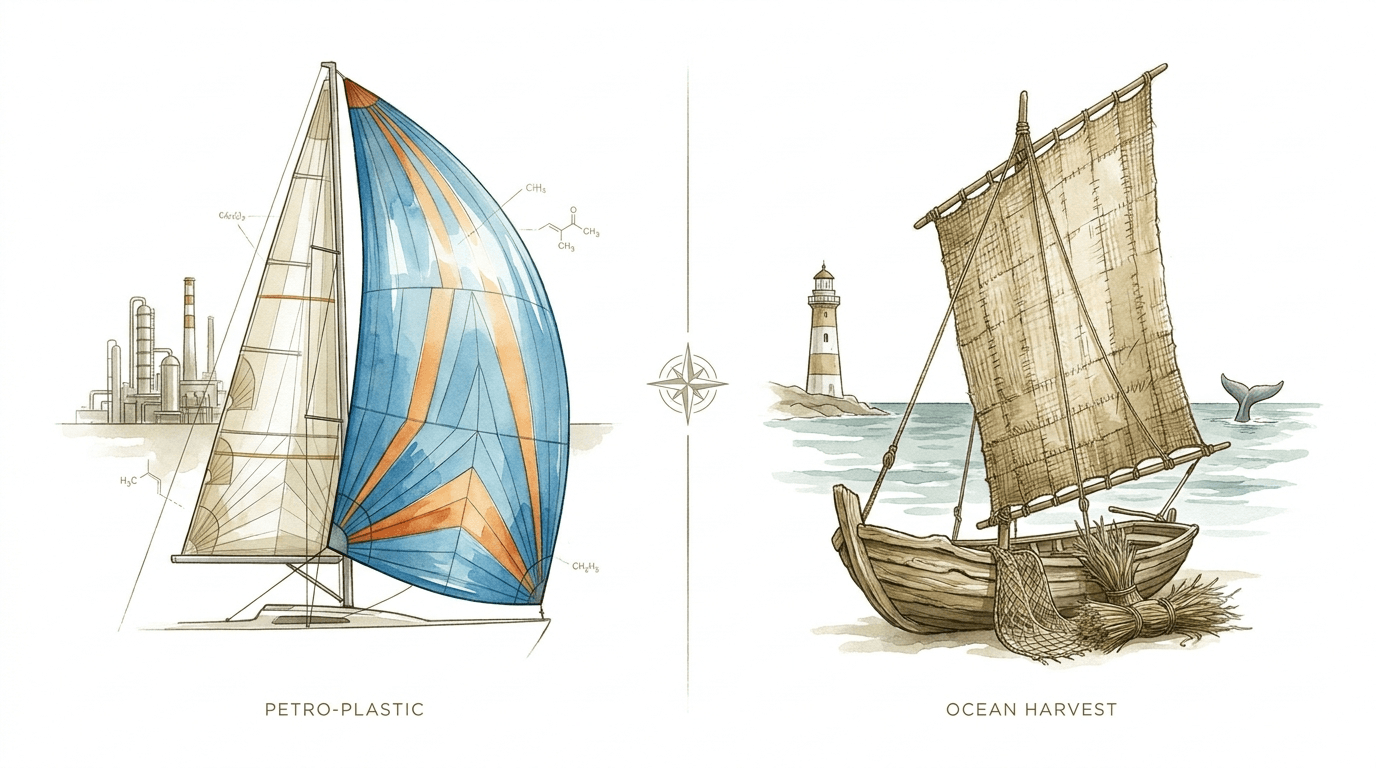
- Historical Soul: There is a psychological weight to using the same materials that built the “Age of Sail.” It honors the traditions of maritime history in a way that “PETRO-PLASTIC” simply cannot.
Challenges and Common Mistakes
Working with organic materials brings a set of variables that require patience to master. Most failures in driftwood boat modeling come from rushing the preparation phase.
Over-stitching at Scale: One of the most common errors is trying to sew realistic seams on a small model. At a 1:50 scale, a standard sewing stitch looks like a thick rope. Many advanced practitioners find that simulating seams with a fine-tipped draftsman’s pen or a very thin line of fabric glue is more convincing than actual thread.
Ignoring the Grain: Fabric has a grain, just like wood. If you cut your sails “on the bias” (diagonally across the weave), they will stretch and sag unevenly over time. Always align the long edge of your sail—usually the luff, which attaches to the mast—with the vertical grain of the fabric.
Failing to Seal the Wood: Driftwood is often porous and contains residual sea salts. If you attach a natural fiber sail directly to unsealed driftwood, the salt can migrate into the fabric, causing unsightly white blooming or “tide marks” during humid months. A light coat of shellac on the wood before rigging prevents this.
Limitations of Natural Fibers
While natural fibers are beautiful, they are not invincible. Understanding their limits will help you decide where and how to display your boat.
Natural fibers are highly “hygroscopic,” meaning they absorb moisture from the air. In a very damp room, a linen sail might slacken and lose its shape. Conversely, in a very dry environment, it might tighten and pull against the rigging. This “breathing” is part of the material’s charm, but it can be frustrating if you require a perfectly static display.
Furthermore, these materials are susceptible to UV degradation. If you place your boat in direct sunlight, a tea-stained sail will fade significantly over a few years. Unlike synthetic Dacron, which is engineered for UV resistance, cotton and linen will eventually become brittle under constant solar radiation. They are best suited for indoor displays away from harsh, direct window light.
Natural Fibers vs. Synthetic Fabrics
When deciding between traditional materials and modern alternatives, it helps to compare the measurable outcomes of each.
| Feature | Natural Fibers (Linen/Cotton) | Synthetic Fibers (Dacron/Polyester) |
|---|---|---|
| Aesthetic | Matte, textured, organic | Slightly shiny, smooth, uniform |
| Workability | Easy to dye, can fray easily | Hard to dye, edges must be heat-sealed |
| Durability | Prone to rot and fading | Highly resistant to UV and rot |
| Authenticity | High (Historic/Artisanal) | Low (Industrial/Modern) |
| Drape | Heavier, soft folds | Light, crisp, stiff folds |
Practical Tips and Best Practices
If you want your sails to look like they are catching a breeze even when they are sitting on a shelf, follow these tuning techniques.
- The Starch Trick: After mounting your sails, spray them lightly with a mixture of water and fabric starch. While they are still damp, use a hairdryer or a small fan to blow them into a “billowed” shape. As the starch dries, the sail will hold that aerodynamic curve.
- Beeswax Your Thread: When rigging the sails to the masts, run your thread through a block of beeswax first. This prevents the thread from tangling and gives it a slightly tacky surface that holds knots better.
- Boltropes for Detail: Real sails have a rope sewn around the edge called a boltrope. You can simulate this on a model by gluing a very thin piece of tan twine around the perimeter of your sail. It hides the cut edge and adds structural “heft.”
- Sun Bleaching: If your tea stain comes out too dark, don’t throw the fabric away. Lay it out in the direct sun for a few hours. The UV rays will naturally mellow the color, creating the uneven fading seen on real working vessels.
Advanced Considerations for Serious Practitioners
For those looking to move beyond simple triangle sails, consider the complexity of multi-panel construction. Large historical sails were not made from a single sheet of cloth; they were sewn from long, narrow strips of canvas. To replicate this, you can overlap thin strips of linen by about 1/16th of an inch and use a very fine “French hem” technique.
Another advanced technique is the “wet-setting” of sails using diluted PVA glue. Instead of starch, some modelers soak the finished sail in a 50/50 mix of water and white glue. They then rig the sail while wet and use sandbags or balloons to push the fabric out into a permanent, wind-filled shape. Once dry, the sail is as hard as a shell and will never sag, regardless of humidity.
Consider also the weight of the rigging cordage. A common mistake is using thread that is too thick for the scale. A heavy jute rope on a small driftwood boat makes the boat look like a toy. Use the thinnest possible cotton thread for the “running rigging” (the parts that move the sails) and slightly thicker cordage for the “standing rigging” (the parts that hold the mast up).
The Driftwood Schooner: A Practical Example
Imagine you have found a 15-inch piece of cedar driftwood with a natural “V” shape that looks like a hull. You have cleaned it, sanded it to a smooth 220-grit finish, and sealed it with clear wax.
For the masts, you use two weathered twigs of equal thickness. You decide on a “gaff rig,” which features four-sided sails rather than triangles. You select a piece of off-white cotton muslin. After washing and ironing, you stain the muslin in a mix of Earl Grey tea and a pinch of salt.
The sails are cut with a 1/8-inch allowance. Instead of a sewing machine, you use a steady hand to apply a microscopic bead of fabric glue to the edges, folding them over to create a clean hem. You then take a tan sewing thread and lash the sail to the masts every half-inch.
Finally, you add “reef points”—tiny pieces of thread hanging from the middle of the sail—to simulate the ropes used by real sailors to shorten the sail in a storm. The result is a piece that doesn’t just sit on a shelf; it tells a story of the North Atlantic.
Final Thoughts
Natural fiber sails do more than just complete a boat; they complete a sensory experience. The rough texture of the linen against the salt-worn grain of the driftwood creates a harmony that synthetic materials simply cannot achieve. By choosing flax, cotton, or hemp, you are working with the same elements that defined human exploration for centuries.
The beauty of this craft lies in its imperfection. A slightly frayed edge or an uneven tea stain isn’t a mistake—it’s a detail that adds realism and grit. These materials allow the model to age gracefully alongside the wood, eventually developing a unique character that reflects the environment of your home.
Experiment with different weights and staining times to find the look that speaks to you. Whether you are building a simple two-stick skiff or a complex three-masted schooner, let the natural fibers breathe. You’ll find that when the materials are right, the boat almost seems to wait for a breeze to take it back to the water.
Sources
1 textileranger.com (https://textileranger.com/2017/12/05/a-compendium-of-sail-information/) | 2 instructables.com (https://www.instructables.com/Natural-Dying-With-Tea-Coffee/) | 3 1millionwomen.com.au (https://www.1millionwomen.com.au/blog/natural-dying-tea-coffee/) | 4 amatimodel.com (https://www.amatimodel.com/en/blog/post/how-to-make-sails-for-model-ships-complete-guide) | 5 longsew.com (https://www.longsew.com/news/mastering-the-art-of-sewing-model-ship-sails-a-comprehensive-guide.html) | 6 quora.com (https://www.quora.com/Whats-the-best-way-to-seal-a-piece-of-driftwood-for-an-art-project) | 7 dutchtextiletrade.org (https://dutchtextiletrade.org/textiles/sail-cloth/) | 8 mainecav.org (http://todd.mainecav.org/model/sail-making/) | 9 modelshipworld.com (https://modelshipworld.com/topic/1750-sail-question/) | 10 cascototes.com (https://cascototes.com/blog/what-type-of-materials-are-sails-made-from/) | 11 hempco.net.au (https://hempco.net.au/hemp-at-sea-the-forgotten-staple-of-maritime-history/blog) | 12 wikipedia.org (https://en.wikipedia.org/wiki/Sailcloth) | 13 shipsofscale.com (https://shipsofscale.com/sosforums/threads/which-sail-cloth-to-buy.11942/) | 14 suburbanshipmodeler.com (https://suburbanshipmodeler.com/2017/12/03/making-sails-for-model-ships/) | 15 gcwmultimedia.com (https://www.gcwmultimedia.com/diy-driftwood-sailboat/)