Retail Coastal Lamps Vs Professional Driftwood Art
Stop lighting your home like a generic office cubicle and start lighting it like a one-of-a-kind coastal sanctuary. Standard lighting is designed for everyone, which means it’s perfect for no one. Professional-grade driftwood lighting respects the ‘character’ of the timber, turning a simple utility into a conversation-starting sculpture.
If you have ever walked along a shoreline, you have seen the raw potential of sun-bleached, salt-cured timber. 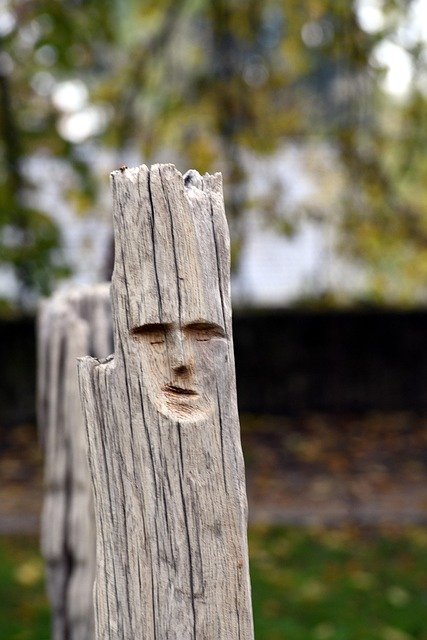 . Most people see a piece of debris; a maker sees a structural skeleton for a light fixture that bridges the gap between the wild outdoors and a refined interior. To do this right, you have to move past the idea of “decorating” and start thinking about engineering nature.
This guide will walk you through the grit and the glory of driftwood lighting. We will cover the technical differences between a store-bought imitation and an artisan-crafted original, the biological reality of preparing wild wood, and the electrical precision required to keep your home safe.
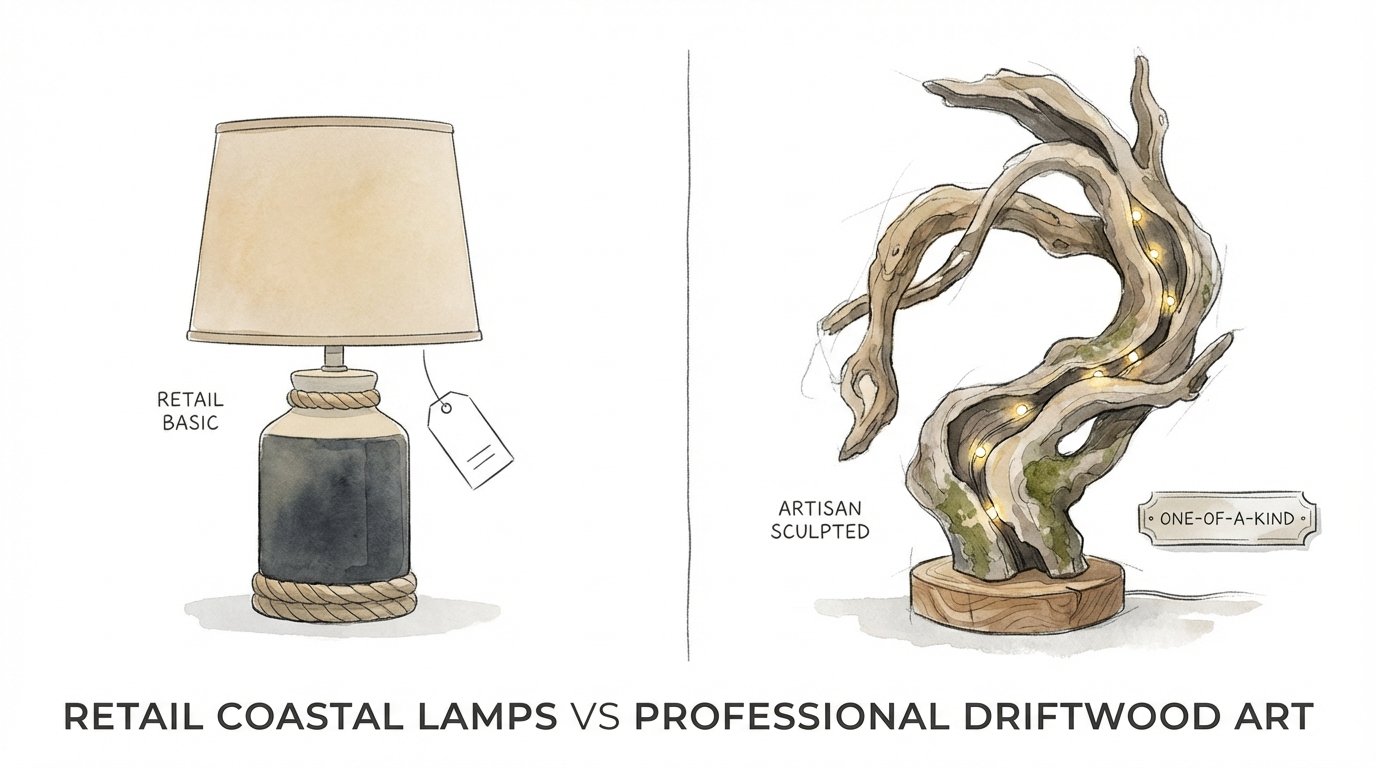
Retail Coastal Lamps Vs Professional Driftwood Art
Retail coastal lamps are built for efficiency, not for soul. When you buy a mass-produced “driftwood-style” lamp from a big-box store, you are often getting a resin cast or a collection of small, chemically-treated scraps glued to a central dowel. These pieces exist to fill a space on a shelf and meet a price point, resulting in a look that feels thin and repetitive.
Professional driftwood art, by contrast, starts with a single, dominant specimen or a curated assembly of high-integrity timber. These are pieces of wood that have survived years of tidal battering and UV exposure. They possess a density and “movement” that cannot be faked in a factory. An artisan respects the original architecture of the wood, allowing the natural twists and knots to dictate the placement of the bulb and the base.
Real-world applications for professional-grade pieces range from minimalist beach houses to high-desert cabins where the goal is to introduce organic texture. While retail lamps fade into the background, an artisan-sculpted piece demands attention. It acts as an anchor for the room, grounding modern furniture with a reminder of the ancient, relentless sea.
How the Professional Process Works: From Tide to Table
Creating a high-end driftwood lamp is not a weekend craft project; it is a multi-stage preservation and engineering process. You cannot simply pull a wet log out of the sand and stick a socket on it. If you do, you are inviting rot, mold, and wood-boring insects into your living room.
The process begins with the harvest. Professionals look for “hard-cured” wood—pieces that have had the soft outer pulp stripped away by the ocean, leaving behind the dense, skeletal heartwood. Once collected, the wood must undergo a rigorous cleaning and stabilization phase.
1. Biological Decontamination
Wild driftwood is a biological mystery box. To make it safe for indoor use, it must be soaked in a solution of water and bleach or a professional-grade fungicide. This soak, which can last 24 to 48 hours, kills any dormant larvae, bacteria, or mold spores deep within the grain. After the soak, the wood is rinsed and moved to a controlled drying environment.
2. The Curing Stage
Moisture is the enemy of stability. A professional maker will often use a moisture meter to ensure the wood has reached an internal equilibrium of 10% or less. Drying can take weeks in a natural environment or days in a low-heat kiln. If you skip this, the wood will crack or warp after you have already installed the electrical components, potentially snapping wires or loosening the base.
3. Sculpting and Boring
This is where the art happens. To hide the electrical cord, the maker must drill a “wire chase” through the center of the wood. This often requires long-reach aircraft bits and a steady hand. The goal is to follow the natural curve of the timber so the wire remains invisible from all angles. If the wood is too gnarled for a straight hole, the maker may carve a channel into the back and inlay a matching piece of wood to seal it.
Benefits of Artisan-Grade Driftwood Lighting
The primary advantage of choosing a professional-grade piece over a retail alternative is the inherent value of the materials. Each piece of authentic driftwood is a biological record of its environment. No two pieces will ever share the same grain pattern, salt-bleach hue, or structural silhouette.
Practical benefits include:
- Structural Integrity: Cured heartwood is incredibly dense and stable, often outlasting the hardware it supports.
- Eco-Friendly Luxury: This is the ultimate form of upcycling. No new trees are felled to create these fixtures.
- Visual Depth: Real wood reacts to light. The way shadows fall into the deep crevices of a salt-weathered knot creates a 3D effect that flat, manufactured bases cannot replicate.
Beyond the aesthetics, there is a psychological benefit to bringing “wild” elements into a structured home. It breaks up the monotony of right angles and synthetic materials, providing a “soft” focal point that reduces visual stress.
Challenges and Common Mistakes
The most common mistake made by beginners is failing to account for weight and balance. A beautiful piece of wood is useless as a lamp if it tips over the moment someone brushes against it. High-end makers solve this by using heavy, counter-weighted bases—often made of steel, slate, or thick hardwood like maple—to lower the center of gravity.
Electrical safety is the second major challenge. Wood is a combustible material. If a DIYer uses cheap, non-polarized sockets or fails to use a “nipple” (a threaded metal tube) to separate the heat-producing socket from the dry wood, they are creating a fire hazard. Professionals use UL-listed components and ensure that no bare wire ever touches the timber.
Another pitfall is “over-finishing.” If you coat a piece of driftwood in high-gloss polyurethane, you kill its character. It ends up looking like plastic. The best approach is a matte sealer or a simple wax finish that protects the wood without changing its light-diffusing properties.
Limitations: When This Approach May Not Work
While driftwood lighting is versatile, it isn’t a universal solution. In extremely high-humidity environments, like an unventilated bathroom, even cured driftwood can begin to absorb moisture and expand. This can cause the internal wiring to pinch or the wood to develop “fuzz” or surface mold over time.
Scale is another limitation. A massive, floor-to-ceiling driftwood branch looks incredible in a loft with 20-foot ceilings, but it will suffocate a standard 8-foot-high suburban living room. Because you cannot easily “trim” a piece of driftwood without losing its natural weathered ends, you must find a piece that fits the scale of your room perfectly from the start.
Finally, consider the maintenance trade-off. Driftwood is porous. It collects dust more readily than a smooth ceramic or metal lamp. If you are not prepared to use a soft brush or compressed air to clean the nooks and crannies once a month, a highly textured piece may eventually look dull.
Artisan Sculpted vs. Retail Basic: A Comparison
| Feature | Retail Basic | Artisan Sculpted |
|---|---|---|
| Material | Resin, Plastic, or Low-Grade Scrap | Hard-Cured Shoreline Timber |
| Uniqueness | Mass Produced (Identical Copies) | 1-of-1 Original Sculpture |
| Wiring | External or visible in cheap joints | Internal “Invisible” Wire Chase |
| Weight | Lightweight (Prone to Tipping) | Heavy, Counter-Weighted Stability |
| Longevity | 5-10 years (Trend-Based) | Lifetime (Heirloom Quality) |
Practical Tips for Integrating Driftwood Lighting
If you are ready to add a piece to your home, start with the shade. A driftwood lamp is a piece of art, and the shade is its frame. Avoid shiny, synthetic fabrics. Instead, opt for linen, burlap, or raw cotton. These materials share a similar organic DNA with the wood and will diffuse the light in a way that highlights the timber’s texture.
Use a “warm” LED bulb—look for something in the 2700K to 3000K range. The blue-white light of “daylight” bulbs will make driftwood look sterile and grey. A warm glow mimics the golden hour at the beach, bringing out the amber and silver tones in the grain.
For placement, do not crowd the piece. A driftwood lamp needs negative space around it to be effective. Placing it against a busy wallpaper or next to a cluttered bookshelf will diminish its sculptural impact. A clean, neutral-colored wall is the best backdrop.
Internal Linking Opportunities
When planning your coastal interior, it is essential to look at how lighting interacts with other natural materials. You might want to explore weathered wood furniture or organic textile choices to create a cohesive environment. If you are interested in the DIY route, researching UL listing requirements for handmade lamps is a mandatory safety step before you begin.
Advanced Considerations: Preservation and Stabilization
For serious practitioners, the challenge is often working with “punky” wood—wood that is visually stunning but structurally soft. To save these pieces, professionals use wood hardeners or deep-penetrating epoxy resins. These liquids are drawn into the fibers of the wood, hardening into a plastic-like matrix that preserves the “rotted” aesthetic while providing the strength of solid oak.
Scaling the design is another advanced technique. Instead of a single lamp, consider a “floating” driftwood chandelier. This requires a deep understanding of weight distribution and “balance points.” You must find the center of gravity for a large, irregular branch so it hangs level without looking forced. 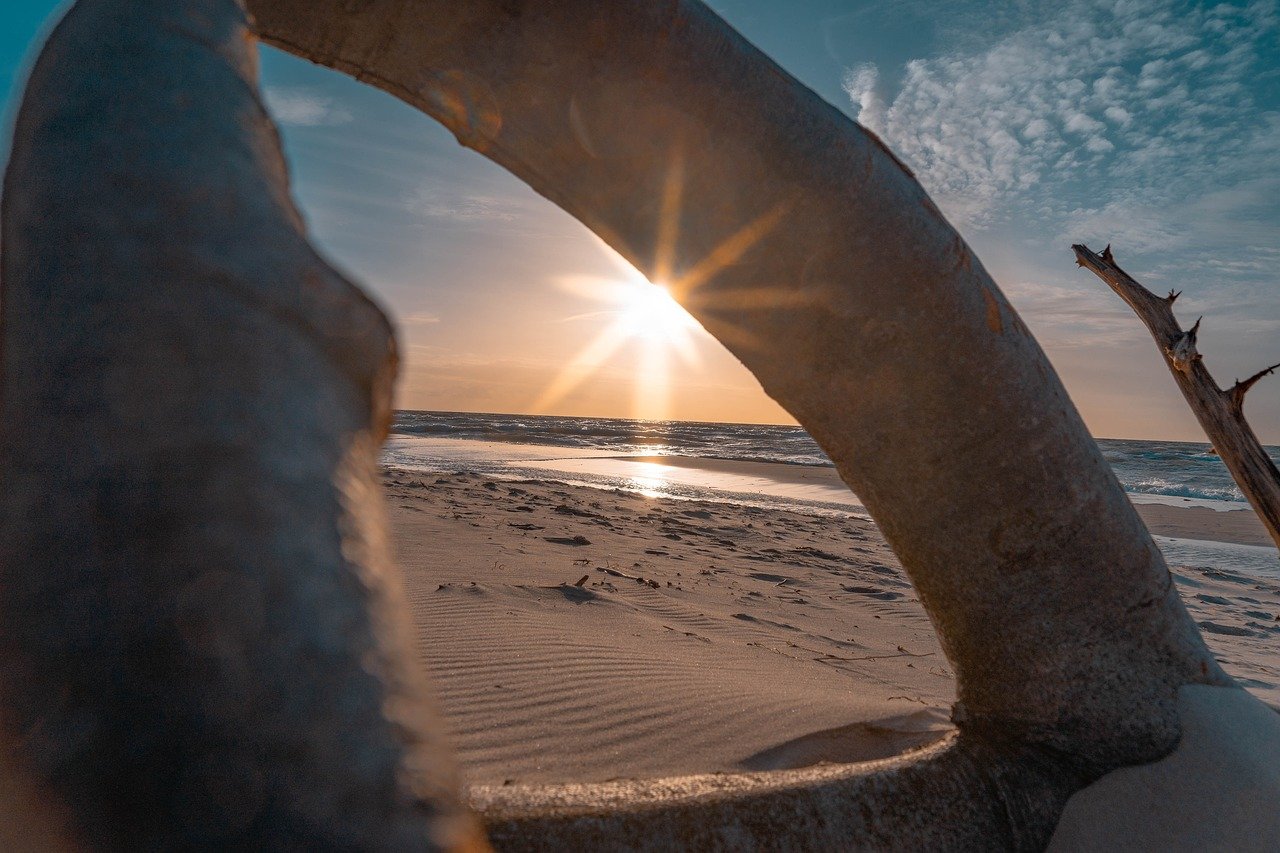 . Using thin aircraft cables for suspension creates the illusion that the wood is drifting in mid-air.
Finally, consider the environmental impact of your source. In some regions, removing driftwood from beaches is restricted to protect local ecosystems. Always check local regulations or source your timber from reputable suppliers who specialize in ethically harvested “found wood.”
Real-World Scenario: The Coastal Modern Redesign
Imagine a living room with white walls, a navy blue linen sofa, and large windows overlooking the water. A standard floor lamp with a brass pole looks out of place here—it feels too “city.”
By introducing a 5-foot-tall piece of Manzanita driftwood, converted into a floor lamp with a hidden steel base, the room undergoes a fundamental shift. During the day, the lamp acts as a piece of sculpture, its twisting red and grey branches echoing the shoreline outside. At night, the warm light from the linen shade catches the edges of the wood, casting long, dramatic shadows that make the room feel intimate and alive. This isn’t just a light; it is a piece of the landscape brought indoors.
Final Thoughts
Driftwood lighting is the ultimate expression of “pioneer grit” in modern interior design. It requires a willingness to get your hands dirty, a respect for the slow work of the ocean, and the technical skill to marry wild timber with modern electricity.
Moving away from the “generic office” look of retail lighting allows you to tell a story with your home.  . Whether you are building your own or investing in an artisan-made piece, remember that the “flaws” in the wood—the cracks, the salt-burns, and the gnarled knots—are actually its greatest strengths.
Experiment with different wood types and textures. Start small with a desk lamp, then work your way up to a statement piece. The more you work with natural materials, the more you will realize that nature is the best designer we have. Apply these principles, respect the process, and you will transform your space into a true coastal sanctuary.
Sources
1 homelighterinc.com (https://homelighterinc.com/lighting-showroom/coastal-style-lighting-fixtures/) | 2 scavengerchic.com (https://scavengerchic.com/2018/07/25/maine-driftwood-lamp-diy/) | 3 hawk-hill.com (https://www.hawk-hill.com/how-to-clean-driftwood/) | 4 threepsandq.com (https://threepsandq.com/2018/08/07/projects-driftwood-part-i-sorting-and-cleaning/) | 5 dksstores.com (https://vertexaisearch.cloud.google.com/grounding-api-redirect/AUZIYQECqhxPa-W7OcM14XsPDAiwlZDGaidR6SNDPB1BCMefWnH_xus7f1qsUllXl1C8JDpWx3zRKtPomWuZoqdNLWjzONpqIqooxl0_Z5m1HJkmhvWO1skNBLXBo5tLSaM=) | 6 mymumthedreamer.com (https://mymumthedreamer.com/how-to-clean-driftwood-for-crafting/) | 7 lightingnewyork.com (https://lightingnewyork.com/on/demandware.store/Sites-lny_us-Site/en_US/Longtail-keywords?id=lighting-wall-lights-lamps-drift-wood-lamps) | 8 fabdivine.com (https://www.fabdivine.com/blogs/home-decor/coastal-vibes-how-to-style-your-beach-house-in-2025) | 9 theislandsofrockport.com (https://theislandsofrockport.com/news/2024/05/30/seaside-glow-illuminating-your-home-with-coastal-lighting-trends/)