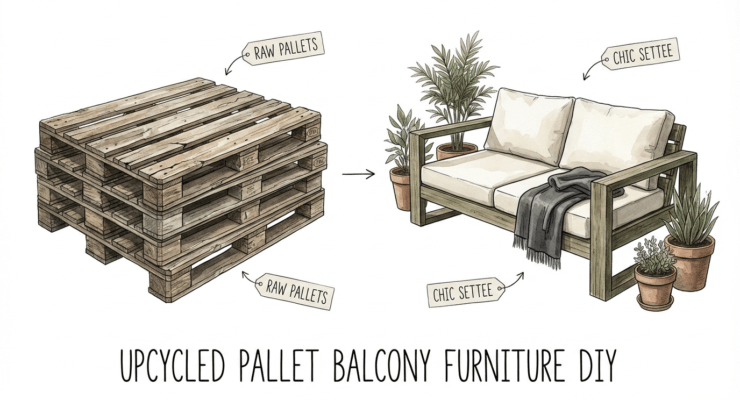
Your neighbor’s trash is actually your new favorite morning reading nook. Don’t let shipping pallets end up in a landfill. With a sander and some creativity, industrial waste becomes high-end outdoor luxury. Here is the transformation process.
Imagine sipping your morning espresso on a bespoke, weather-resistant sofa that cost you less than a single dinner out. This isn’t just a dream for the ultra-frugal; it is the reality of modern upcycling. Most people see a stack of splintered wood behind a grocery store and think of waste. You are about to see the skeleton of a five-star balcony retreat.
The magic of pallet furniture lies in its raw, structural integrity. These wooden frames are built to haul thousands of pounds across oceans, meaning they offer a level of durability most “flat-pack” retail furniture cannot match. Whether you have a sprawling terrace or a tiny urban fire escape, upcycling allows you to customize every inch of your space.
Upcycled Pallet Balcony Furniture Diy
Upcycled pallet balcony furniture DIY is the practice of reclaiming wooden shipping platforms and converting them into functional outdoor seating, tables, or storage solutions. This movement gained massive traction because it bridges the gap between industrial grit and residential comfort. It is more than just a craft project; it is a sustainable design philosophy that prioritizes resourcefulness over consumption.
Shipping pallets are typically made from sturdy hardwoods or softwoods like oak and pine. Because they are designed for the logistics industry, they come in standardized sizes that make them surprisingly easy to stack and modularize. In a real-world setting, a DIY enthusiast might stack two pallets to create a coffee table or stand them vertically to build a space-saving herb garden.
This approach works exceptionally well for balconies because these spaces often have awkward dimensions. Store-bought furniture is frequently too large or the wrong shape for narrow outdoor areas. By building with pallets, you can create “L-shaped” sectionals or slim benches that hug your railing perfectly, maximizing every square foot of your outdoor oasis.
How to Source and Prepare Your Pallets
The first step in any successful build is finding the right raw material. Not all pallets are created equal, and some can actually be hazardous if used for furniture. You should look for the International Plant Protection Convention (IPPC) stamp, which is usually burned into the side of the wood.
Understanding the Stamps:
- HT (Heat Treated): These are your gold standard. The wood was heated to a specific core temperature to kill pests without the use of chemicals. They are safe for indoor and outdoor furniture.
- DB (Debarked): This means the bark was removed. It is a neutral marking and generally safe.
- KD (Kiln Dried): Similar to heat treatment, these have been dried in a kiln to reduce moisture. They are safe and less likely to warp.
- MB (Methyl Bromide): Avoid these at all costs. This is a toxic pesticide used to fumigate wood. It is harmful to breathe and touch, making it completely unsuitable for furniture.
Once you find safe “HT” pallets, the preparation phase begins. Start by inspecting the wood for “protruding nails” or “deep splits.” Use a pry bar to remove any unnecessary boards, but be careful not to crack the wood. Sanding is the most labor-intensive part of the process. Use a 40-grit sandpaper for the initial pass to remove the rough industrial texture, then move to 80 and 120-grit for a smooth, touchable finish.
Step-by-Step Construction Process
Building a basic balcony settee requires minimal tools: a drill, some wood screws, and a saw. The beauty of the “cracked pallets vs chic settee” transformation is that the structure is largely already built for you. You are essentially just modifying the height and adding support.
First, determine the height of your seat. A standard chair height is about 17 to 18 inches. If you are stacking pallets, two or three units usually reach the perfect height. Secure the stack by drilling long wood screws through the “stringers” (the thick interior blocks) to ensure the base won’t shift.
Second, create the backrest. You can use a single pallet leaned against a wall, but for a professional look, attach it at a slight 15-degree angle. This “recline” makes the seating significantly more comfortable. Use heavy-duty metal L-brackets to secure the backrest to the base.
Third, reinforce the joints. Because pallets are designed for vertical pressure, their lateral stability can be weak. Adding “mending plates” or extra wood scraps across the seams will prevent the furniture from wobbling over time. Always pre-drill your holes to prevent the aged wood from splitting when you drive in the screws.
Essential Finishing and Weatherproofing
Balcony furniture faces the harshest elements: direct UV rays, rain, and fluctuating temperatures. Without a proper finish, your hard work will grey and rot within a single season. You have two primary paths: film-forming finishes or penetrating oils.
Spar Urethane: This is the top choice for maximum protection. Unlike standard indoor polyurethane, spar urethane contains UV blockers and remains flexible once dry. This flexibility is crucial because wood expands and contracts with the weather; a rigid finish would simply crack and peel.
Tung Oil or Teak Oil: If you prefer a natural, matte look, penetrating oils are excellent. They soak deep into the fibers to repel water from the inside out. While they require re-application every year, they don’t flake, meaning you won’t have to sand the piece down to bare wood when it’s time for maintenance.
Exterior Paint: For a modern, “chic settee” look, high-quality exterior latex paint works wonders. It provides a solid barrier against the sun. Bold colors like navy blue or charcoal grey can make industrial pallets look like expensive designer pieces.
Benefits of Pallet Furniture
Choosing upcycled pallets over retail options offers several measurable advantages. Cost is the most obvious factor, as pallets are often free or cost less than five dollars at local warehouses. This allows you to allocate your budget toward high-quality cushions and decor instead of the frame itself.
Durability is another major plus. Most cheap outdoor furniture is made of thin plastic or hollow aluminum that can blow away in a storm. A pallet sofa is heavy and structurally sound. It can withstand high winds and heavy use without showing signs of wear.
Environmental impact cannot be overstated. By reclaiming these materials, you are directly preventing wood from entering a landfill. Furthermore, you are reducing the demand for new timber, which helps lower your overall carbon footprint. It is a rare “win-win” where your personal style aligns perfectly with ecological responsibility.
Challenges and Common Mistakes
The most frequent error beginners make is skipping the “safety check.” Using a pallet that previously carried leaking chemicals or pesticides can lead to skin irritation or respiratory issues. Always verify the source and the HT stamp before you bring the wood into your home.
Another common pitfall is poor sanding. Pallet wood is notoriously “thirsty” and rough. If you don’t sand it properly, the wood will soak up excessive amounts of stain, leading to a blotchy, unattractive finish. More importantly, poorly sanded wood presents a splinter hazard, which is the last thing you want on a relaxation-focused balcony.
Finally, ignore weight distribution at your peril. While a single pallet can hold 2,500 pounds of bricks, a DIY chair with poorly attached legs might collapse under a single person. Ensure that the weight of the sitter is transferred directly to the floor through solid vertical supports, rather than relying solely on the shear strength of a few screws.
Limitations and Constraints
While pallet furniture is versatile, it isn’t the perfect solution for every scenario. Weight is a significant consideration for balcony owners. A large, three-tiered pallet sectional can weigh hundreds of pounds. Before you build a massive installation, check the weight capacity of your balcony, especially if you live in an older building.
Space is another constraint. Standard pallets are 48 inches by 40 inches. In a small apartment balcony, a single pallet might take up the entire floor. You will likely need to “section” the pallets using a circular saw to fit them into tight corners. This requires more advanced tools and a higher skill level than a simple stacking project.
Maintenance is the final trade-off. Unlike high-end synthetic wicker or powder-coated steel, pallet wood is an organic material. It will eventually decay if neglected. If you aren’t prepared to spend a weekend every year or two cleaning and re-sealing the wood, you might find the longevity of upcycled furniture disappointing.
Pallet vs. Store-Bought Balcony Furniture
| Feature | Upcycled Pallet DIY | Store-Bought Retail |
|---|---|---|
| Cost | $10 – $50 (Finish & Screws) | $200 – $1,500+ |
| Customization | Total control over size/shape | Limited to standard sizes |
| Durability | High (Solid wood) | Variable (Plastic/Thin Metal) |
| Effort | High (Building/Sanding) | Low (Assembly only) |
| Eco-Friendliness | Exceptional (100% Recycled) | Low to Moderate |
Practical Tips for Best Results
To elevate your project from “industrial scrap” to “boutique chic,” focus on the details. Use “stainless steel” or “galvanized” screws to prevent ugly rust streaks from forming on the wood after the first rain. These screws are slightly more expensive but are mandatory for outdoor longevity.
Invest in high-quality cushions. The frame is the foundation, but the comfort comes from the padding. Look for “Sunbrella” or similar solution-dyed acrylic fabrics that won’t fade in the sun. If you are on a budget, you can use standard foam and wrap it in waterproof shower curtains before adding a decorative fabric cover.
Add caster wheels to the base of your tables and chairs. Balconies often require frequent cleaning or rearranging to accommodate guests. Heavy-duty locking casters allow you to glide your furniture around effortlessly while keeping it firmly in place when you are seated.
Advanced Considerations for Serious Builders
If you want to move beyond basic stacking, consider “dovetail” joints or hidden fasteners.  . By disassembling the pallet entirely, you can use the wood as “raw lumber” to build more intricate designs, such as folding bistro tables or integrated storage benches with hinged lids.
Think about “lighting integration.” You can drill holes into the underside of the pallet slats and install battery-operated LED strips. This creates a “floating” effect at night, making your balcony look like a high-end lounge. It also improves safety by lighting up the floor area without the need for harsh overhead lights.
Structural reinforcement is vital for hanging pieces. If you are building a “pallet porch swing” for your balcony, you must ensure you are anchoring into the building’s structural beams, not just the decorative trim. Use heavy-duty eye-bolts and chains rated for at least twice the expected weight capacity.
Practical Scenario: The Compact Balcony Settee
Let’s look at a real-world application.  . A resident in a tight urban apartment wants a reading nook. . They find two HT-stamped pallets. Instead of leaving them at the full 48-inch width, they cut them down to 36 inches to allow room for a potted plant on the side.
They stack the two bases and secure them. For the back, they remove the bottom boards of a third pallet to make it thinner and attach it at an angle using four-inch carriage bolts. After a thorough sanding and three coats of “Early American” exterior stain, the piece looks like solid oak.
To finish the look, they add a custom-sized outdoor mattress topper and several throw pillows. Total cost for the frame and finish: $35. The result is a cozy, weather-resistant retreat that fits the space perfectly and provides more comfort than any $300 folding chair ever could.
Final Thoughts
Upcycling shipping pallets into balcony furniture is one of the most rewarding DIY projects you can undertake. It transforms a mundane outdoor space into a personalized sanctuary while keeping functional materials out of the waste stream. By following safety guidelines and investing time in proper sanding and weatherproofing, you create pieces that are as beautiful as they are durable.
The process teaches you more than just woodworking; it fosters a mindset of “creative reuse” that applies to all areas of home improvement. Whether you start with a simple coffee table or a complex corner sectional, the skills you gain will serve you for a lifetime of sustainable living.
Now is the time to look at the world with new eyes. Next time you see a discarded pallet, don’t see trash. See the potential for your next favorite morning reading nook. Grab your sander, find an HT stamp, and start your transformation today.
Internal Linking Suggestion: If you are interested in more outdoor projects, you might also enjoy our guide on building vertical herb gardens or choosing the best outdoor lighting for small spaces.
Sources
1 reddit.com (https://www.reddit.com/r/HomeDecorating/comments/gkzeb0/trying_to_recreate_this_for_my_balcony_any_ideas/) | 2 easypalletideas.com (https://www.easypalletideas.com/diy-balcony-design-ideas/) | 3 gardenbenches.com (https://www.gardenbenches.com/blog/pallet-furniture-ideas/) | 4 associated-pallets.co.uk (https://associated-pallets.co.uk/blog/pallet-safe-reuse/) | 5 quicargo.com (https://quicargo.com/blog/markings-on-a-pallet-what-do-they-mean-an-extended-guide/) | 6 interlakemecalux.com (https://vertexaisearch.cloud.google.com/grounding-api-redirect/AUZIYQFqOtBM_DWMK4LcJHtq19YkS_ZDwTcJVZruaKRqPZ-v1thkXEDHff6FF61oNy2NaNF2V47lRVojCzV9t2p-KAkJSergo05NcNh46RlmUOkfVRNLp3ra9lTxCVnMVU4MiGiDZeDxlOXNu1PKQPzEHmjd) | 7 universalpallets.com (https://www.universalpallets.com/2018/01/ultimate-guide-pallet-markings/) | 8 storageequipmentsystems.com (https://storageequipmentsystems.com/complete-pallet-markings-guide/) | 9 gardenbenches.com (https://www.gardenbenches.com/blog/pallet-garden-furniture-diy/) | 10 youtube.com (https://www.youtube.com/watch?v=iLdN6MGc6Go) | 11 flowyline.com (https://flowyline.com/blogs/for-diy-ers/best-finish-for-outdoor-wood-furniture) | 12 awiqcp.org (https://awiqcp.org/news-and-blog/the-best-outdoor-wood-finish-how-to-protect-your-wood-like-a-pro/) | 13 aaapalletco.com (https://aaapalletco.com/pallets-types-standard-pallet-sizes-dimensions-and-more/) | 14 phsinc.com (https://www.phsinc.com/news/what-is-the-standard-pallet-size/) | 15 hellocreativefamily.com (https://hellocreativefamily.com/diy-dads-diy-outdoor-pallet-couch-weekend-project/) | 16 cdgfurniture.com (https://www.cdgfurniture.com/knowledge/what-are-the-safety-standards-for-balcony-furniture) | 17 youtube.com (https://www.youtube.com/watch?v=vE1SJvEq0vE)