Plants don’t want a pretty pot; they want a living neighborhood. A standard pot is a prison of sterile soil. A driftwood planter is a thriving metropolis of fungi, microbes, and moisture-retaining fibers. Watch your garden explode with health when you give your plants a partner instead of just a container.
Most gardeners spend their lives fighting against the natural cycle of decay. They bleach their pots, bake their soil, and scrub away every trace of “grit” in search of a sanitized environment. But nature doesn’t work in a vacuum. Out in the wild, the most vibrant life often springs from the oldest, most weathered remnants of the forest or the sea. This is the difference between a STERILE CERAMIC container and a BIOLOGICAL HUB. One is a box; the other is a life-support system.
If you are ready to stop being a warden and start being a partner to your plants, it is time to look at the skeletal beauty of driftwood. These twisted, sun-bleached fragments are more than just lawn ornaments. They are porous, carbon-rich structures that hold onto moisture and host a silent army of beneficial organisms.
Natural Driftwood Planter Ideas
Natural driftwood planters come in as many forms as the trees they once were. At its simplest, a driftwood planter is any piece of salvaged wood used as a host for living plants. Unlike a plastic pot that serves only as a physical barrier, wood is a participant in the plant’s life. It breathes, it absorbs water, and it provides a surface for roots to cling to with visceral intensity.
In the real world, you see this concept in the way orchids grow on tropical branches or how moss blankets a fallen log in the Pacific Northwest. We are simply bringing that rugged efficiency into our homes and gardens. You can use large, hollowed-out stumps for a focal point in a flower bed, or small, branchy fragments of Manzanita to create “air plant” sculptures for a mantle.
Some of the most successful applications include:
- The Desktop Micro-Forest: Small pieces of Cholla wood with their natural honey-combed structure, perfect for succulents that need sharp drainage.
- The Hanging Epiphyte Gallery: Large cedar or cypress branches suspended from a porch ceiling, covered in Staghorn ferns and Bromeliads.
- The Riverbed Centerpiece: Heavy, dark Mopani wood positioned on a dining table, with delicate mosses tucked into its gnarled crevices.
These aren’t just decorations. These are small-scale ecosystems. When you plant into wood, you are inviting the biological process of decomposition to feed your plants. It is a slow, steady release of nutrients that mimics the forest floor.
How to Build Your Biological Hub
Building a driftwood planter requires a shift in perspective. You aren’t just “potting” a plant; you are mounting a living organism to a host. The process involves selecting the right wood, preparing it for its new role, and securing the plants so they can eventually take over the structure.
Step 1: Selection and Preparation
Hardwood is your best friend. Woods like Cedar, Cypress, Manzanita, and Mopani are prized because they resist rot for years, even in high-moisture environments. Avoid softwoods like Pine or Spruce if you want the planter to last more than a single season; they tend to turn into mush under the constant watering required for indoor plants.
Freshly found driftwood—especially from the ocean—needs a thorough cleaning. Salt is a silent killer for most terrestrial plants. Submerge your wood in a tub of fresh water for at least a week, changing the water daily to leach out salts and tannins. If you are worried about hitchhiking pests, you can boil the wood for two hours or bake it in an oven at 250°F (121°C) for several hours. This ensures you start with a clean slate without destroying the wood’s structural integrity.
Step 2: Creating Planting Pockets
Nature often provides the perfect crannies, but sometimes you have to lend a hand. Use a spade bit or a Forstner bit to drill shallow, wide holes into the wood. Do not drill all the way through unless you want a “flow-through” drainage system. A depth of one to two inches is usually enough for succulents or small ferns.
If the wood is particularly hard, a Dremel tool with a carving bit can help you sculpt natural-looking basins. The goal is to follow the existing grain and knots of the wood so the final product looks like it grew that way.
Step 3: Mounting and Anchoring
Epiphytes like orchids and air plants don’t need soil; they need an anchor. Wrap the roots of the plant in a generous clump of damp Sphagnum moss. This moss acts as a bridge between the plant and the wood, holding moisture and providing a soft medium for the roots to penetrate.
Secure the plant to the wood using clear fishing line, floral wire, or even a few dabs of non-toxic floral glue (like E6000). Over time, the plant’s roots will grow into the wood’s texture, and you can eventually remove the artificial ties. For succulents, fill your carved pockets with a mix of cactus soil and moss before tucking the plant in tightly.
Biological Benefits of Wood-Based Planting
The primary advantage of a driftwood planter is its role as a BIOLOGICAL HUB. In a sterile ceramic pot, the roots hit a cold, hard wall and begin to circle, eventually strangling themselves. In a driftwood planter, the roots encounter a porous, living surface.
Wood is a carbon source. As it slowly breaks down, it encourages the growth of mycorrhizal fungi. These fungi form a symbiotic relationship with the plant’s roots, extending their reach and helping them absorb nutrients that would otherwise be unavailable. This is the “living neighborhood” in action.
Practical benefits include:
- Natural pH Buffering: Many types of driftwood, particularly those rich in tannins, naturally lower the pH of the water. This creates the slightly acidic environment that orchids, ferns, and many tropical plants crave.
- Enhanced Aeration: Wood is naturally fibrous. Even when saturated, it allows for gas exchange, preventing the “suffocation” of roots that often happens in plastic or glazed ceramic pots.
- Moisture Management: Wood acts as a sponge. It absorbs excess water and releases it slowly as the surrounding air dries out, providing a more stable humidity level for sensitive plants.
Challenges and Common Mistakes
Working with raw wood is not as predictable as working with factory-made plastic. The most common pitfall is salt toxicity. If you scavenge wood from a beach and fail to leach the salt out, your plants will shrivel within weeks. The salt draws moisture out of the plant tissues through osmosis, regardless of how much you water.
Another frequent error is over-watering. Because driftwood is organic, it will eventually decay. If you keep the wood constantly waterlogged, you will accelerate this process into “wet rot,” which smells foul and can harbor harmful anaerobic bacteria. The wood should be allowed to breathe and partially dry out between waterings.
Failure to secure the plants properly is the third major mistake. Beginners often just “rest” the plant in a crevice. If the plant moves every time it’s watered or touched, the delicate root tips will break, and the plant will never establish a permanent bond with the wood.
Limitations: When Wood Isn’t the Answer
Driftwood planters are not a “set it and forget it” solution for every plant. Large, heavy-feeding vegetables like tomatoes or pumpkins will not thrive in a driftwood setup. They require a volume of soil and nutrient density that a piece of wood simply cannot provide.
Environmental limitations are also real. In extremely dry, desert climates, a driftwood planter might dry out too fast to support anything but the hardiest air plants. Conversely, in a dark, poorly ventilated basement, the wood may mold before the plant has a chance to grow.
Finally, remember that wood is temporary. While a ceramic pot might last centuries, a driftwood planter has a lifespan. 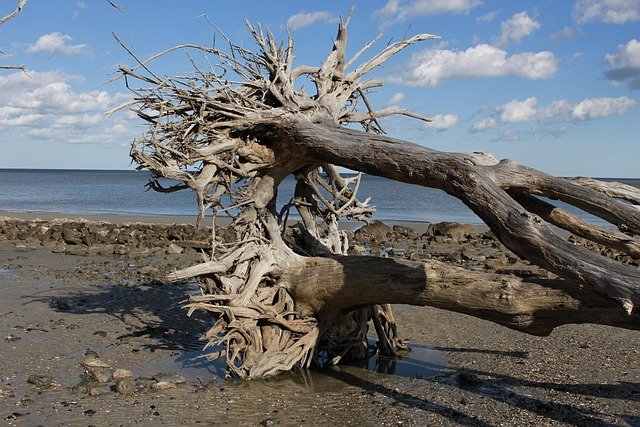 . Depending on the wood type and the environment, you may get three years or ten years, but eventually, the “neighborhood” will be consumed by the “tenants.” This is a feature of the natural cycle, but it is a limitation for those seeking a permanent, unchanging display.
Sterile Ceramic vs. Biological Hub
To understand why this method is superior for many species, we have to look at the measurable differences in the root environment.
| Feature | Sterile Ceramic Pot | Driftwood Biological Hub |
|---|---|---|
| Microbial Life | Minimal; often suppressed by fungicides. | Thriving; hosts fungi and beneficial bacteria. |
| Root Attachment | Roots circle the smooth walls. | Roots penetrate and anchor into fibers. |
| Gas Exchange | Limited to the top surface and drainage hole. | Occurs through the entire porous body. |
| Nutrient Profile | Dependent entirely on added fertilizer. | Slow-release of lignin and cellulose. |
| Longevity | High; does not decay. | Moderate; eventually decomposes. |
Practical Tips for Success
Start with epiphytes if you are a beginner. Plants like Tillandsia (Air Plants) or Phalaenopsis orchids are evolutionarily designed to live on wood. They make the transition much easier than a plant used to deep, rich soil.
For watering, do not just splash water at the planter. Use a spray bottle or a syringe to target the root-to-wood interface. This ensures the moisture gets into the moss and the wood fibers rather than just running off the surface. If the piece is small enough, a weekly “dunk” in a bucket of rainwater is the most effective way to hydrate the entire biological hub.
Use rainwater or distilled water whenever possible. Tap water often contains chlorine and minerals that can build up on the wood’s surface over time, creating a white, crusty film that blocks the wood’s pores and can harm sensitive roots.
Advanced Considerations: Inoculation
Serious practitioners don’t just wait for nature to show up; they invite it. You can inoculate your driftwood planter with specific mycorrhizal spores or beneficial liquid compost tea. By soaking the wood in a nutrient-rich “compost bath” before planting, you jump-start the colonization of the wood by the right kind of microbes.
Consider the direction of the grain. When mounting plants that climb, like Monstera adansonii, position the wood so the grain runs vertically. This allows the aerial roots to follow the natural channels of the wood, mirroring how they would scale a tree in the rainforest. 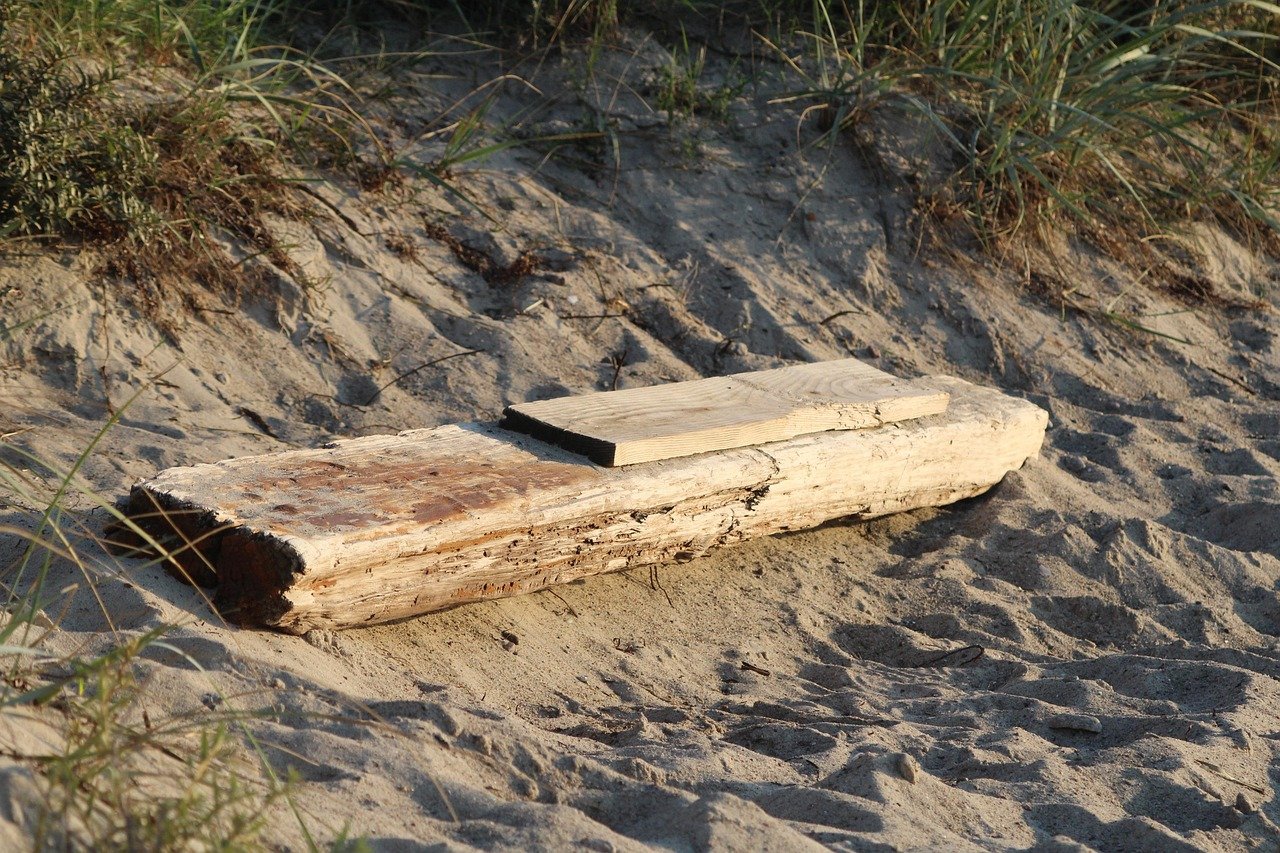 .
.
Scaling this idea to a “living wall” involves securing multiple pieces of driftwood to a backing board. This creates a massive vertical biological hub where moisture and nutrients can cycle from the top pieces down to the bottom, creating a self-sustaining irrigation system of sorts.
Example Scenario: The Resurrection of a “Rescue” Orchid
Imagine a standard grocery store orchid, sitting in a plastic pot of soggy bark. Its roots are turning mushy and grey. To save it, you could repot it in more bark, but the environment remains the same—a stagnant box.
Instead, you take a jagged piece of Ghostwood or weathered Cedar. You trim the dead roots, wrap the remaining green ones in fresh, long-fiber Sphagnum moss, and wire the plant firmly to a natural depression in the wood. Within weeks, you will notice the new root tips aren’t just growing down; they are reaching for the wood. They flatten themselves against the grain, seeking out the micro-moisture trapped in the wood’s fibers.
A year later, that orchid isn’t just “surviving” in a pot; it has become part of the wood. The wood provides the acidic tannins that keep pathogens away, while the porous surface ensures the roots never sit in stagnant water. This is the difference between keeping a plant alive and letting a plant live.
Final Thoughts
The move toward driftwood planters is more than an aesthetic choice. It is a return to a more honest form of gardening—one that accepts decay as a precursor to growth. When we stop trying to isolate our plants from the “dirt” of the world, we give them the tools they need to thrive on their own terms.
A driftwood planter is a testament to the pioneer spirit of gardening. It requires a bit more effort to start and a bit more wisdom to maintain, but the reward is a plant that looks and acts like its wild ancestors. It is a small piece of the forest floor brought into the home, a reminder that life is best lived in a neighborhood, not a cell.
Experiment with the wood you find. Watch how different plants respond to different textures. . You will soon find that the “pretty pot” was never the goal—the thriving, buzzing, living metropolis of the driftwood hub is where the real magic happens.
Sources
1 tedsgardens.com (https://tedsgardens.com/how-to-make-a-driftwood-succulent-planter/) | 2 splashyfishstore.com (https://splashyfishstore.com/blogs/fish-keeping-101/how-to-prepare-cure-and-place-driftwood-in-your-freshwater-aquarium) | 3 aqua-fish.net (https://en.aqua-fish.net/articles/aquarium-driftwood-faq-guide) | 4 aquafy.com.au (https://aquafy.com.au/blogs/news/aquarium-driftwood-benefits) | 5 splashyfishstore.com (https://splashyfishstore.com/blogs/all-thing-aquarium-related-blog/benefit-of-adding-driftwood-to-aquarium) | 6 lostcoastplanttherapy.com (https://www.lostcoastplanttherapy.com/blogs/news/gardening-mistakes) | 7 hygger-online.com (https://www.hygger-online.com/choose-the-best-driftwood-before-building-aquariums/) | 8 aquascapingsupply.com (https://aquascapingsupply.com/visual-guides/f/the-advantages-of-driftwood)
 . This makes it ideal for bedrooms, libraries, or recording studios where acoustic purity is a priority. You are trading a noisy mechanical system for a quiet biological one.
 . By choosing materials that have weathered the storm, you are building a home that is as resilient as the coast itself.