Stop fighting gravity and start using the moon to move your building materials for you. If you’re trying to haul driftwood by hand, you’re doing it wrong. The smartest coastal builders use tidal logistics. By rigging your timber at low tide and waiting for the water to return, you can use the ocean’s buoyancy to transport massive structural beams miles down the coast with almost zero physical effort. Work with the planet, not against it.
Coastal construction has always been a battle of logistics. Moving massive timbers across soft sand, jagged rocks, and uneven terrain is a recipe for injury and exhaustion. 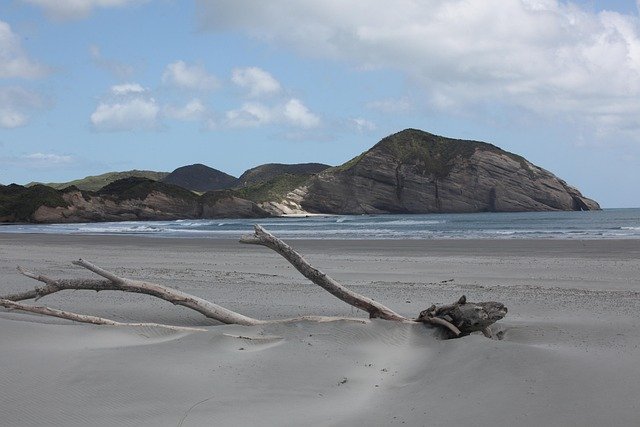 . Ancient mariners and early pioneers understood a secret that modern builders often forget: the ocean is the world’s most powerful forklift. Harnessing the lunar cycle allows a single person to move tons of material that would otherwise require heavy machinery and a massive budget. This guide explores the art of water-borne transport, focusing on the techniques required to master the coastal landscape.
How To Move Giant Driftwood Logs Alone
Moving giant driftwood logs alone is less about muscle and more about timing. This method relies on the predictable rise and fall of the tide to lift and carry heavy timber. Instead of fighting the friction of the earth, you leverage the fluid dynamics of the sea. This approach has been used for centuries by salvors and coastal settlers who needed to build cabins, docks, and outbuildings without the help of a work crew or a team of oxen.
Tidal logistics is the practice of scheduling your labor around the high and low points of the ocean’s cycle. You perform the heavy rigging while the wood is high and dry on the shore. Once the tide returns, the water provides the necessary lift to float the timber. One person can then guide a multi-ton log through the water with a simple rope or a light pole. This is the difference between a high-stress mechanical operation and a rhythmic, natural process.
Visualize a forty-foot Douglas fir log. On land, this object is an immovable monument. It weighs thousands of pounds and possesses a surface area that creates massive drag against sand. In the water, however, that same log becomes a buoyant vessel. Salt water is significantly denser than fresh water, providing a 2.5% increase in upward force. This extra lift makes the ocean an ideal medium for moving structural-grade timber.
The Science of Buoyancy and Salt Water
Understanding why this works requires a quick look at the physics of the intertidal zone. Buoyancy is the upward force exerted by a fluid that opposes the weight of an immersed object. According to Archimedes’ principle, the buoyant force on an object is equal to the weight of the fluid it displaces. Because seawater has a density of approximately 1,025 kg/m³, compared to the 1,000 kg/m³ of fresh water, objects float significantly higher in the ocean.
Wood density varies by species and moisture content. A dry cedar log has a much lower specific gravity than a waterlogged oak beam. Most coastal driftwood consists of softwoods like fir, hemlock, and cedar. These species generally possess a specific gravity between 0.35 and 0.50 when dry. Even when partially saturated, they remain highly buoyant. A log that has been floating at sea for months will eventually become “water-heavy,” but it rarely loses its ability to float entirely unless the cellular structure has completely collapsed.
The moon’s gravitational pull creates the “lift” you need. Twice a day, the ocean swells and recedes. This movement is a massive transfer of energy. Positioning your timber at the low-tide mark ensures that the full power of the incoming “flood tide” is directed toward lifting your material. You are effectively using the rotation of the earth and its relationship with the moon to perform the heavy lifting.
Rigging Your Timber at Low Tide
Success in tidal logistics begins hours before the water arrives. You must scout the beach at low tide to identify your target timber. Once a suitable log is found, the rigging process begins. You will need a few basic tools: a high-quality cant hook or peavey, several lengths of floating polypropylene rope, and a few heavy-duty anchors or “deadmen.”
Preparation involves clearing a path for the log to slide toward the water. Remove any large rocks or smaller debris that might snag the timber as it begins to float. If the log is buried in sand, use a shovel to expose the underside. Wrap your main transport line around the thickest part of the log, ideally near the center of gravity. A “timber hitch” is the preferred knot here because it tightens under tension but remains easy to untie once the wood is wet.
Establishing a tether is critical. If you leave a log unattached, the incoming tide will simply carry it away, often in a direction you don’t want. Secure the other end of your rope to a stationary object higher up the beach, such as a large stump or a deeply driven stake. This tether ensures that as the log floats, it stays within your reach. You are setting a trap, and the bait is the timber itself.
The Advantage: BACK-BREAKING DRAG vs TIDAL LIFT
The choice between traditional hauling and tidal transport is a choice between exhaustion and efficiency. Most people attempt the BACK-BREAKING DRAG. They use winches, come-alongs, and sheer human effort to pull logs across the beach. This method creates massive friction. Every inch of movement is earned through sweat. The risk of cable snaps, hardware failure, and physical injury is high.
Compare this to the TIDAL LIFT. In this scenario, the builder does the “brain work” while the tide is out and lets the water do the “muscle work” when the tide comes in. The friction of the sand is replaced by the low resistance of the water. Guidance becomes the primary task. Instead of pulling the log, you are simply steering it. This method allows for the transport of much larger pieces than would ever be possible on land.
| Feature | BACK-BREAKING DRAG | TIDAL LIFT |
|---|---|---|
| Physical Effort | Extreme | Minimal |
| Equipment Needs | Winches, Trucks, Fuel | Rope, Cant Hook, Patience |
| Max Load Size | Limited by Machinery | Virtually Unlimited |
| Environmental Impact | High (Trenching, Emissions) | Zero |
| Speed | Fast (Once Rigged) | Slow (Tide Dependent) |
Challenges and Common Pitfalls
Ignoring the wind is the most common mistake in tidal logistics. While the tide provides the lift, the wind provides the direction. A strong offshore breeze can push your floating log out to sea faster than you can paddle or pull. Always check the local marine forecast before attempting a move. If the wind is blowing against your intended direction, it is often better to wait for a calmer day.
Calculations of tide height are also a frequent source of failure. Not every high tide is the same. Neap tides (lower high tides) may not provide enough water to clear a rocky shelf or a sandbar. Conversely, a king tide might lift the log so high that it clears your shore-side anchors. Using a reliable tide chart is non-negotiable. You must know exactly how many feet of water to expect and at what time the “slack water” period occurs.
Saturated wood can also present a challenge. A log that has been submerged for years may have reached “near-neutral buoyancy.” These logs float very low in the water, sometimes with only a sliver of wood showing above the surface. These “deadheads” are dangerous because they can strike submerged rocks or sandbars that a higher-floating log would clear. They are also harder to spot and steer.
Limitations: When Tidal Transport Fails
Geography dictates the feasibility of this method. If your coastline is dominated by high cliffs or sheer drop-offs with no accessible beach, tidal logistics becomes nearly impossible. You need a gradual slope—a “launching ramp” provided by nature—to make this work. Rocky coastlines with heavy surf are also problematic. The power of the waves can batter your timber against the stones, shattering the wood or snapping your rigging.
Environmental regulations and property rights are another significant constraint. In many jurisdictions, driftwood is technically the property of the state or the crown. Some areas require salvage permits, especially for large “boom-logs” that may have escaped from commercial logging operations. These logs often have stamped markings or “brands” on the ends. Taking these without permission can lead to legal trouble. Always verify the local laws before you start “beachcombing” for structural materials.
Distance is the final limitation. While you can move a log miles down a coast, you are limited by the duration of the high tide. Once the water begins to recede, your “window of transport” closes. If you haven’t reached your destination, you will have to anchor the log and wait for the next cycle. This makes long-distance moves a multi-day commitment that requires constant monitoring.
Best Practices for Coastal Salvage
Safety must be your primary concern when working around floating timber. A log in only six inches of water can weigh several tons. If a wave rolls that log over your legs, the result is catastrophic. Never stand between a floating log and the shore. . Always work from the “seaward” side or from a position where you have a clear path to retreat if the log moves unexpectedly.
Floating polypropylene rope is the gold standard for this work. Unlike nylon or polyester, polypropylene stays on the surface. This prevents the rope from getting snagged on submerged rocks or kelp forests. It also makes the rope easier to see in the churning surf. Use high-visibility colors like yellow or orange so you can track your lines at a distance.
Investing in a proper peavey or cant hook will save your back. These tools use leverage to roll logs on the sand. This allows you to position the log perfectly before the tide comes in. A slight adjustment of a few degrees can be the difference between the log floating freely or getting wedged into a crevice as the water rises. Precision at low tide leads to ease at high tide.
Advanced Techniques: Building a Log Boom
Serious practitioners don’t just move one log at a time; they build booms. A boom is a floating enclosure made of logs chained together. This allows you to transport dozens of smaller pieces or even piles of lumber inside a protective ring of “boom sticks.” Historic Benson rafts, developed in the early 20th century, were cigar-shaped giants that moved millions of board feet across the ocean. While you won’t be building a Benson raft, the principles are the same.
Linking your logs together requires heavy-duty “dogs” or boom chains. These are iron spikes with attached chains that are driven into the ends of the logs. By creating a flexible chain of timber, you can navigate around headlands and into sheltered coves. . The raft acts as its own vessel. You can even mount a small outboard motor or a rowing station on a temporary platform atop the logs to provide steering and propulsion.
Stability in a raft comes from the “swifter” lines. These are ropes or cables that run across the width of the boom to keep the logs from spreading too far apart. If your raft is too loose, it will “snake” in the water, making it impossible to steer. If it’s too tight, the logs might bind and snap the connectors. Finding the right balance of tension is an art form that comes with experience.
The 40-Foot Fir Joist: A Practical Scenario
Imagine you have found a perfect, straight-grain Douglas fir log washed up on a remote beach. It is forty feet long and thirty inches in diameter. Your building site is two miles down the coast. Walking this log across the rocks would take a week and probably destroy the wood. Instead, you wait for the low tide.
Preparation begins by rolling the log with your peavey until it sits parallel to the water’s edge at the lowest point of the beach. You wrap a 100-foot length of 3/4-inch yellow poly rope around the center in a timber hitch. The other end is tied to a 15-pound Danforth anchor set firmly into the sand above the high-water mark. You check your tide app: high tide is at 2:00 PM, with a predicted height of 8.2 feet—plenty of water to float the fir.
As the clock strikes noon, the waves begin to lap at the log. By 1:30 PM, the fir is buoyant. You wade into the water (wearing a life jacket) and use a long push-pole to nudge the log away from the shore. The current is moving in your favor. You release the anchor line and begin to tow the log by walking along the beach. The water carries the weight; you simply provide the direction. Within forty-five minutes, you reach your cove. You guide the log into a shallow inlet and secure it to a cedar tree on the bank. The moon has just saved you three days of labor.
Final Thoughts
Mastering tidal logistics is a hallmark of the self-reliant coastal builder. It represents a shift in mindset from conquering nature to collaborating with it. The ocean is not an obstacle; it is a highway. By observing the patterns of the moon and the properties of the wood, you can achieve feats of engineering that seem impossible for a single person.
Patience is the most valuable tool in your kit. There will be days when the wind is too high or the tide is too low. A true pioneer knows when to stay on the porch and when to head for the beach. The logs will always be there, and the tide will always return. Learn to wait for the right moment, and the planet will reward you with the materials you need.
Experiment with smaller pieces before you tackle a main structural ridge beam. Get a feel for how the water moves and how different wood species behave in the brine. Eventually, you will look at a two-ton log not as a problem, but as a project. Use the moon. Use the water. Build something that lasts, and do it without breaking your back.
Sources
1 eagle.org (https://ww2.eagle.org/content/dam/eagle/regulatory-news/2022/IACS-Rec-10.pdf) | 2 hhhistory.com (https://www.hhhistory.com/2019/06/timber-rafting.html) | 3 kelleyhousemuseum.org (https://www.kelleyhousemuseum.org/log-rafts/) | 4 oregonhistoryproject.org (https://www.oregonhistoryproject.org/articles/historical-records/log-rafts-1902/) | 5 gov.bc.ca (https://www2.gov.bc.ca/assets/gov/farming-natural-resources-and-industry/natural-resource-use/land-water-use/crown-land/land-use-plans-and-objectives/skeena-region/northcoast-lrmp/overview_water_based_log_handling.pdf) | 6 wordpress.com (https://deepstop.wordpress.com/2009/02/26/buoyancy-salt-water-vs-fresh-water/) | 7 vims.edu (http://masweb.vims.edu/bridge/datatip.cfm?Bridge_Location=archive1207.html) | 8 dksstores.com (https://vertexaisearch.cloud.google.com/grounding-api-redirect/AUZIYQH9Fr2sByGXFjV9Ua0R3JhhtFl3EYQhfuLaXONG8FDgxxBTJzoEK-VRUDq_M5YmVQya2Jh2PbAkzjWZKV5AGJYsWMw_DB8_MxCC3DnEQLPeQAqIyihmEqkfkZaGsw==) | 9 researchgate.net (https://www.researchgate.net/publication/259980928_Analysis_of_Wood_Density_to_Improve_Understanding_of_Wood_Buoyancy_in_Rivers) | 10 wikipedia.org (https://en.wikipedia.org/wiki/Timber_rafting) | 11 regulations.gov (https://downloads.regulations.gov/FMCSA-2016-0081-0003/attachment_2.pdf) | 12 gov.bc.ca (https://www2.gov.bc.ca/assets/gov/farming-natural-resources-and-industry/forestry/timber-tenures/marine-log-salvage/ls_outside_district.pdf) | 13 buildingconservation.com (https://www.buildingconservation.com/articles/salvage-sustainability/salvage-sustainability.htm)
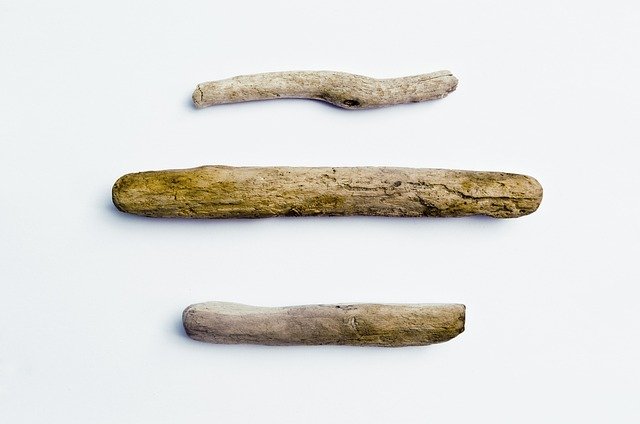 . It breaks down the hemicellulose that makes wood light and fast-burning, leaving behind the denser lignin and a lattice of salt crystals. In the world of homesteading, this is as close to “free coal” as you can get, provided you have the right machine to process it.
 . Standard red clay bricks can eventually crumble under the chemical stress of high-temperature salt combustion. High-alumina firebricks, however, are essentially immune to the chloride ions.