Why do we trust our treasures to ‘wood’ made of glue and sawdust when the ocean offers something stronger for free? Modern shelves are designed for the landfill. Driftwood was designed by the elements to survive a thousand-mile journey through salt and storm. If you’re living small, you need furniture that works as hard as you do—without the sagging.
Selecting a shelf isn’t just about finding a place for your books. It is a choice between honest materials and industrial shortcuts. Most people walk into a big-box store and walk out with a plank of particle board wrapped in a thin plastic film. They think they are getting a deal, but they are actually buying a ticking clock.
This guide will walk you through the grit and reality of using driftwood for floating shelves. We will look at why nature’s “ocean cured” timber outperforms the “modern veneer” of the factory floor. You will learn how to find, prep, and mount these pieces so they stay level for a lifetime.
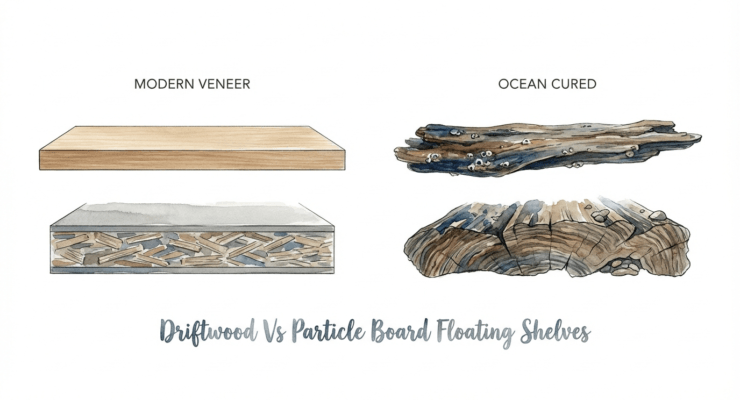
Driftwood Vs Particle Board Floating Shelves
Driftwood is solid wood that has been stripped of its softest tissues by the unrelenting motion of the sea. When a tree falls into a river and eventually hits the salt water, it begins a transformation. The salt leaches out the sugars and sap that usually attract rot and insects. What remains is a skeletal structure of hardened lignin and cellulose.
Particle board is the polar opposite. It is a composite material made from wood chips, sawmill shavings, and sawdust. These scraps are bonded together with synthetic resins and glues, often including urea-formaldehyde. It exists because it is cheap to produce and uniform in shape.
In the real world, these two materials behave like different species. A driftwood shelf is a single, continuous piece of history that can handle tension and compression. A particle board shelf is a compressed sponge held together by chemicals. If you put a heavy stack of cast-iron pans on driftwood, the wood fibers flex and hold. If you put that same weight on particle board, the glue slowly gives way, leading to a permanent, unsightly sag.
How to Source and Prepare Your Own Timber
Finding the right piece of wood requires more than a casual walk on the beach. You are looking for “ocean cured” pieces that are dense and dry. Avoid wood that feels “punky” or soft when you press a fingernail into it. That wood has begun to decay beyond the point of structural use.
Once you find a sturdy piece, you must treat it like a pioneer would. Natural wood from the shore often carries hitchhikers. 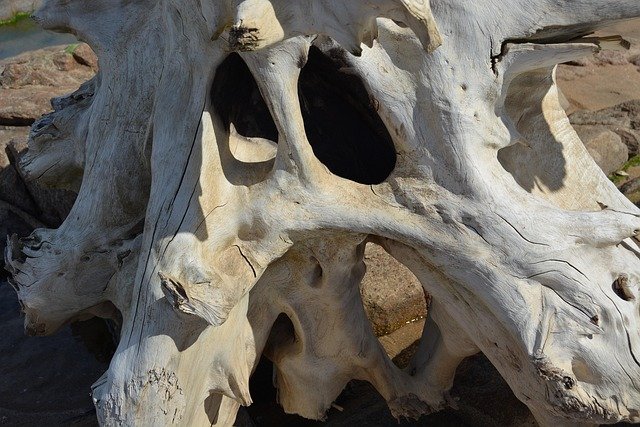 . Sand gnats, beetles, and bacteria can hide deep in the crevices. You need to clean the wood thoroughly to ensure it is safe for your home.
Start by scrubbing the surface with a stiff-bristled brush. This removes the loose sand and dried salt crust. Next, submerge the wood in a solution of one part bleach to nine parts water. Let it soak for at least 24 hours. This kills any remaining organisms and helps lighten the wood to that classic silver-grey patina.
The most critical step is the drying process.  . Do not rush this. Wet wood will warp once you move it into a climate-controlled home. Place your cleaned driftwood in a dry, shaded area with plenty of airflow. Depending on the thickness, this can take anywhere from two weeks to a full month. Patience here prevents a crooked shelf later.
Benefits of Choosing Natural Driftwood
The primary advantage of driftwood is its inherent structural integrity. . Because the ocean has already hammered away the weak points, the piece you are left with is the toughest part of the tree. This makes it exceptionally resistant to warping compared to new, green lumber.
Beyond strength, there is the matter of health. Particle board is notorious for off-gassing volatile organic compounds (VOCs). These chemicals can linger in a small apartment for years. Driftwood is a clean, inert material. It brings the scent of the salt air into your home rather than the smell of a chemical plant.
Longevity is where the comparison truly ends. A well-mounted driftwood shelf can last for generations. It can be sanded, re-oiled, and moved a dozen times. Particle board rarely survives its first move. The screw holes strip out easily, and the veneer often peels at the corners if the air gets too humid.
Challenges and Common Mistakes
Working with organic shapes is not as simple as cutting a straight line. The biggest challenge is the “live edge” and the uneven back of the wood. A floating shelf requires a perfectly flat surface to sit flush against the wall. Most beginners forget to plane or sand the back of their driftwood, leading to gaps that compromise the mounting hardware.
Another common mistake is ignoring the salt content. If you do not leach and seal the wood properly, the residual salt can attract moisture from the air. This can lead to “weeping” where the wood feels damp to the touch, or even rust the metal brackets holding it up.
Do not skip the weight-bearing calculations. Driftwood is often denser and heavier than the pine or cedar you find at the lumber yard. You must ensure your wall studs can handle the dead weight of the shelf before you even add your books or treasures.
Limitations: When to Stick to Tradition
Driftwood is not a universal solution for every project. If you are building a full wall of library shelving that needs to look identical, you will struggle. Nature does not produce matching sets. Each piece of driftwood is a one-of-a-kind sculpture, which makes it difficult to achieve a “minimalist, uniform” look.
Legal constraints are also a reality. In many coastal areas, removing large pieces of driftwood is regulated or prohibited to protect the local ecosystem and prevent erosion. Always check local beachcombing laws before you start hauling timber to your truck.
If your project requires extreme precision—such as a shelf that must fit perfectly between two cabinets—the natural twists and turns of driftwood might be more of a headache than an asset. In those cases, a high-quality solid hardwood like oak or walnut is a better middle ground than particle board.
Direct Comparison: Material Performance
| Feature | Driftwood (Ocean Cured) | Particle Board (Modern Veneer) |
|---|---|---|
| Lifespan | 50+ Years | 3-7 Years |
| Sag Resistance | High (Natural Fibers) | Low (Viscoelastic Creep) |
| Moisture Resistance | Excellent (Pre-weathered) | Poor (Swells and cracks) |
| Installation Difficulty | Moderate to High | Low |
| Environmental Impact | Low (Reclaimed) | High (Glues and VOCs) |
Practical Tips for a Secure Mount
Floating shelves rely on a cantilevered system. This means the hardware is hidden inside the wood, creating a massive amount of leverage against the wall. Because driftwood is often heavy, you must anchor your brackets directly into the wall studs. Drywall anchors are not sufficient for this type of project.
Use heavy-duty steel rods or a specialized floating shelf bracket system. If the driftwood piece is particularly gnarled, you may need to use a router to create a recessed pocket in the back of the wood. This allows the mounting plate to sit flush against the wall even if the wood itself is curved.
Before you drill, check the grain. You want your mounting holes to be perpendicular to the grain as much as possible. This ensures the wood fibers grip the steel rods tightly. If you drill into a soft spot or a pre-existing crack, the shelf will eventually tilt forward.
Advanced Considerations: The Physics of Creep
Practitioners should understand a concept called “creep.” Creep is the tendency of a solid material to move slowly or deform permanently under the influence of persistent mechanical stresses. Particle board is highly susceptible to this, especially in humid environments. The glues used in its construction behave like a very slow-moving liquid over years.
Driftwood, being a solid biological structure, handles these stresses through its grain. The interlocking fibers distribute the weight along the length of the shelf. Even a thin piece of “ocean cured” cedar has more structural resilience than a two-inch thick slab of particle board.
When selecting your mounting points, consider the center of gravity. For organic shapes, the weight isn’t always distributed evenly. You may need to offset your brackets to ensure the shelf doesn’t want to twist. A level is your best friend during this stage of the build.
Example Scenario: The Kitchen Spice Rack vs. The Bookshelf
Imagine you are outfitting a small kitchen. You have two options. You could buy a pre-made particle board shelf for $20. It looks clean and white. But within six months, the steam from your stove and the weight of your heavy glass spice jars will cause the center to bow. The plastic veneer will begin to bubble and peel away.
Now, consider a slab of driftwood found on a rocky cove. It has been weathered for decades. You spend a Saturday cleaning and sanding it. You mount it with two 6-inch steel rods driven into the studs. The shelf doesn’t move. It handles the humidity of the kitchen without a flinch. Ten years later, it looks exactly the same as the day you hung it.
The difference isn’t just in the aesthetics. It is in the reliability. One material is a product of a factory; the other is a product of the earth. The driftwood shelf tells a story every time you reach for the salt. The particle board shelf is just a piece of trash that hasn’t been thrown away yet.
Final Thoughts
Building with driftwood requires more sweat and soul than buying something off a showroom floor. It demands that you respect the material and understand the physics of the wall. But the reward is a piece of furniture that possesses more character and durability than anything mass-produced.
True sustainability isn’t about buying things labeled “recycled.” It is about finding materials that don’t need to be replaced. By choosing ocean-cured timber, you are opting out of the cycle of disposable furniture. You are building with the same grit and determination that the pioneers used to settle the coast.
Go to the water. Find a piece of wood that has survived the journey. Bring it home, treat it with care, and let it hold your treasures. You will find that the strongest things in your home are often the ones the world discarded. Experiment with different oils and finishes to find the look that fits your space, and never settle for sawdust and glue again.
Sources
1 themortiseandthehare.com (https://themortiseandthehare.com/blogs/news/floating-shelf-load-ratings-wall-type-and-bracket-design) | 2 shelfology.com (https://shelfology.com/blogs/shelfology-u/ask-the-shelf-experts-what-are-the-best-woods-for-floating-shelves) | 3 eco-dumpster.com (https://eco-dumpster.com/recycled-particle-board-furniture-vs-wood-shocking-truth/) | 4 hawk-hill.com (https://www.hawk-hill.com/how-to-clean-driftwood/) | 5 wikihow.com (https://www.wikihow.com/Preserve-Driftwood) | 6 legacyhandcraft.com (https://legacyhandcraft.com/resources/best-wood-for-floating-shelves/) | 7 jamesandjamesfurniture.com (https://jamesandjamesfurniture.com/blogs/news/why-solid-wood-outperforms-particle-board-the-smart-investment-guide) | 8 shelfology.com (https://shelfology.com/pages/the-ultimate-guide-to-floating-shelves) | 9 youtube.com (https://www.youtube.com/watch?v=cTf5frrdrh4) | 10 diydriftwood.com (https://diydriftwood.com/driftwood-refinishing-techniques/)