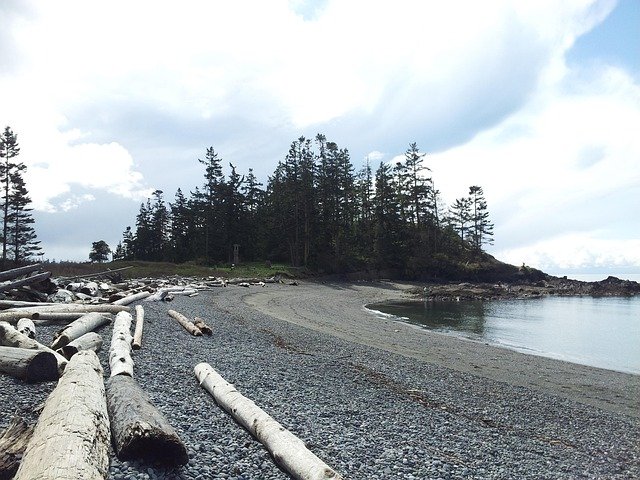
While the grid hums with expensive energy, this sun-bleached timber is harvesting pure water from the air for zero cost. Modern water filters are expensive and rely on the grid. Our ancestors knew that the salt-cured density of driftwood makes it the perfect insulator for a passive solar still. Build it once, and let the sun do the work forever.
Harnessing the sun to purify water is not just a survival skill; it is a return to a fundamental law of nature. You can take the most brackish, salt-heavy, or sediment-choked water and turn it into something crystal clear using nothing more than light and wood. This process, known as solar distillation, replicates the global water cycle within a small, hand-built chamber.
When you choose to build with driftwood, you are choosing a material that has already survived the harshest conditions the ocean can throw at it. This wood is seasoned, hardened by salt, and possesses a unique cellular structure that resists rot while providing exceptional thermal insulation. You are not just building a filter; you are creating a resilient piece of homesteading technology that requires no electricity and zero replacement cartridges.
Passive Solar Water Still Driftwood
A passive solar water still made from driftwood is a self-contained purification system that uses solar radiation to evaporate water and leave contaminants behind. This device consists of a weather-tight driftwood box, a dark basin for the source water, and a slanted transparent cover. Sunlight passes through the cover, heating the water in the basin until it turns into vapor. This vapor then rises, hits the cooler surface of the cover, and condenses into pure liquid droplets that trickle down into a collection trough.
Driftwood serves as the primary structural and insulating component of this system. Unlike fresh lumber, driftwood has been naturally “cured” by years of exposure to sun and salt. This process leaches out unstable sap and sugars, leaving behind a dense, fibrous skeleton that is remarkably stable. In a solar still, the wood’s job is to trap heat. High internal temperatures are the engine of distillation, and the natural air pockets within driftwood act as a thermal barrier, preventing precious heat from leaking out through the walls of the still.
In real-world applications, these stills provide a lifeline in remote coastal areas or arid environments where groundwater is undrinkable. They are used by off-grid practitioners who want a fail-safe backup for their primary water systems. Whether you are dealing with seawater, well water high in heavy metals, or surface water contaminated with pathogens, the solar still acts as a final, absolute barrier. It does not just “treat” water; it physically separates the H2O molecules from everything else.
How the Solar Distillation Cycle Works
The operation of a driftwood solar still relies on three distinct phases: absorption, evaporation, and condensation. Understanding these principles allows you to tune your build for maximum efficiency.
The Greenhouse Effect in a Box
Short-wave solar radiation passes through the glass or plastic cover of the still with ease. Once this light hits the black basin at the bottom, it is absorbed and converted into long-wave infrared radiation, or heat.

The Physics of Evaporation
As the water in the basin warms, the molecules at the surface gain enough kinetic energy to break free into the air as vapor. This is the purification step. Most contaminants—salts, heavy metals, minerals, and bacteria—do not have the same vaporization point as water. They remain in the basin as a concentrated “brine” while the pure water rises as a gas. Keeping the water level shallow, typically between one and two inches, ensures that the sun can heat the entire volume quickly.
Condensation and Gravity-Fed Collection
The rising vapor eventually contacts the underside of the transparent cover. Because the cover is exposed to the outside air, it remains cooler than the interior of the still. This temperature differential causes the vapor to revert to its liquid state.

Practical Benefits of Using Driftwood
Choosing driftwood over modern construction materials offers several distinct advantages that appeal to the long-term practitioner.
Reliability is the greatest benefit of a passive system. There are no pumps to fail, no sensors to glitch, and no filters to clog. As long as the sun rises, the still produces water. This makes it an essential tool for disaster preparedness and remote living where supply chains are non-existent.
Thermal efficiency is naturally higher in salt-cured wood. Driftwood that has spent years in the ocean often has a higher mineral content within its fibers, which can contribute to a subtle thermal mass effect. This helps the still maintain its temperature even when a stray cloud passes over, or as the sun begins to set in the evening.
Sustainability and cost are often the primary drivers for this project. Driftwood is a scavenged material, reducing the environmental impact of your build. By repurposing what the ocean has discarded, you create a high-value tool for nearly zero capital investment. Furthermore, the salt-hardened nature of the wood means it will not warp or rot as quickly as standard pine when exposed to the high humidity found inside the still.
Challenges and Common Pitfalls
Building a solar still is simple, but building an efficient one requires attention to detail. Many beginners fail because they overlook the small things that bleed energy or lose water.
Air Leaks and Vapor Loss
The most common mistake is failing to create a perfectly airtight seal. If water vapor can escape through gaps in the driftwood frame or around the edges of the glass, your yield will plummet. You must use high-quality, food-safe silicone to seal every joint. Even a tiny crack can allow a significant percentage of your daily water production to vanish into the atmosphere.
The Surface Tension Problem
If the transparent cover is not clean or if the angle is too shallow, the condensed droplets will not run down into the trough. Instead, they will grow large and eventually fall back into the dirty water basin. This “raining” inside the still effectively resets the process and wastes hours of sunlight. Maintaining a slope of at least 10 to 15 degrees and ensuring the glass is polished can prevent this issue.
Brine Management
Over time, the contaminants left behind in the basin will form a thick crust or a concentrated salty sludge. This buildup reflects sunlight and reduces the still’s efficiency. Practitioners often forget to flush the basin regularly. If you are distilling seawater, you may need to clean the basin every few days to prevent “salt-scaling,” which can eventually damage the basin liner or the driftwood frame.
Limitations of the Passive Approach
While the driftwood solar still is a miracle of passive engineering, it is not a high-volume solution for every scenario. It is important to understand what it cannot do.
Output volume is the primary limitation.
Weather dependency is the obvious trade-off for zero-cost energy. On cloudy or rainy days, production will be minimal. While the still can still harvest some ambient heat, it won’t produce the “flush” of water seen on a clear, high-UV day. You must have adequate storage—such as large glass carboys—to hold the surplus water generated during sunny periods to carry you through the gray days.
Geographic location also plays a role. If you live in a high-latitude area with short winter days, the sun may never stay high enough in the sky to generate the heat needed for efficient distillation. These systems thrive in the “sun belt” regions but require more advanced modifications, like external reflectors, to work effectively in the far north or south.
Comparing the Electric Distiller vs Driftwood Condenser
When deciding how to secure your water supply, it helps to see how the passive driftwood condenser stacks up against its modern electric counterpart.
| Feature | Electric Distiller | Driftwood Passive Still |
|---|---|---|
| Operational Cost | High (requires 800w-1500w per cycle) | Zero (runs on sunlight) |
| Production Speed | Fast (1 gallon in 4-6 hours) | Slow (1 gallon in 8-12 hours) |
| Maintenance | Frequent (descaling heating elements) | Low (occasional basin rinsing) |
| Durability | Moderate (electronic failure points) | High (lasts decades if built well) |
| Portability | High (portable countertop units) | Low (bulky structural wood) |
The electric distiller is a tool for convenience and speed, whereas the driftwood still is a tool for resilience and long-term autonomy. If you are connected to a stable power grid and need water immediately, the electric route is efficient. However, if your goal is a homestead that functions independently of external systems, the passive solar approach is the superior investment of your time and labor.
Practical Tips for Maximum Yield
Optimization is the difference between a trickle and a steady flow. Follow these best practices to ensure your driftwood still operates at its theoretical limit.
Perfecting the Orientation
Set your still facing true south if you are in the northern hemisphere. Use a compass to ensure the glass is perpendicular to the midday sun as much as possible. If you want to get advanced, you can build an adjustable leg system for your driftwood frame, allowing you to tilt the still further back in the winter and more forward in the summer to track the seasonal sun height.
Using Reflectors
Adding a simple reflective wing made of polished metal or even aluminum foil to the back of the still can increase your output by 20% to 30%. This bounces additional sunlight into the basin that would otherwise have hit the ground behind the unit. It is one of the easiest ways to compensate for shorter days or less intense sunlight.
Pre-Heating the Source Water
Filling the still with cold water in the morning forces the sun to spend the first two hours just raising the temperature to the point of evaporation. If you store your source water in a black container outside the still, it will already be lukewarm when you pour it in. This gives the distillation process a “head start” and results in more collection hours per day.
Advanced Considerations for Serious Practitioners
For those who want to take their solar water harvesting to the next level, there are several design modifications that can push the boundaries of passive performance.
The Double-Slope Design
Instead of a single sheet of glass, you can build a driftwood frame with a peaked “tent” of glass. This allows you to collect water from both sides and is particularly effective in tropical regions where the sun is directly overhead. It also reduces the distance the vapor has to travel before it hits a cool surface, which can marginally improve efficiency.
Incorporating Thermal Mass
Serious builders sometimes line the interior walls of the driftwood frame with dark stones or bricks. These materials absorb heat during the day and slowly release it after the sun goes down. This “thermal flywheel” can keep the water in the basin evaporating for several hours into the night, significantly increasing the total daily yield.
Multi-Stage Distillation
A multi-effect solar still uses the heat released during the condensation phase of the first stage to power a second, lower-temperature stage. This is complex to build with driftwood, but it essentially doubles the efficiency of the unit. It involves layering basins so that the “lid” of the first basin is the “floor” of the second.
Example Scenario: The Coastal Homestead
Imagine a small cabin on a salt-bleached shoreline. The well water is too brackish to drink, and the nearest town is twenty miles away. The owner spends a weekend collecting heavy driftwood logs—cedar and oak that have been tumbled by the tide. They notch these logs together to create a 4-foot by 4-foot box, lining the bottom with a durable, black EPDM rubber pond liner.
They seal a single sheet of tempered 1/8-inch glass over the top at a 15-degree angle. By midday, the internal thermometer reads 165 degrees. By sunset, a glass carboy at the end of the PEX collection tube is filled with nearly two gallons of pure, flat-tasting distilled water. To improve the taste, they pour the water through a small bag of crushed limestone and charcoal, adding back essential minerals and oxygen. This simple setup provides all the drinking and cooking water for the household, year-round, for the cost of a few tubes of silicone and a scavenged piece of glass.
Final Thoughts
The beauty of a passive solar water still made from driftwood lies in its quiet competence. It does not demand attention, it does not require fuel, and it does not break down. It is a testament to the idea that we can meet our most basic needs by aligning ourselves with the natural cycles of the earth. By using materials that have already been tested by the elements, you build a bridge between the wisdom of the past and the challenges of the future.
Building this system is an act of reclaiming your autonomy. You are no longer dependent on a delicate web of infrastructure for the very fluid that keeps you alive. Whether you are building one as a fun science project with your children or as a permanent fixture for your off-grid sanctuary, the result is the same: the peace of mind that comes from knowing you can turn the sun’s fire into life-giving water.
Experiment with your design, watch the way the droplets move across the glass, and learn the rhythm of your local sun. Every gallon you harvest is a victory for self-reliance and a reminder that the most sophisticated solutions are often the ones that have been right in front of us for centuries. Apply these lessons, build your still, and watch as the simplest tools provide the most profound results.
Sources
1 alternative-energy-tutorials.com (https://www.alternative-energy-tutorials.com/green-energy/solar-still-water.html) | 2 safewater.org (https://www.safewater.org/fact-sheets-1/2016/12/8/solar-water-distillation) | 3 teachbesideme.com (https://teachbesideme.com/simple-science-making-solar-still/) | 4 wikipedia.org (https://en.wikipedia.org/wiki/Solar_still) | 5 motherearthnews.com (https://www.motherearthnews.com/real-food/passive-solar-water-distillation-zmaz02aszgoe/)