after school routine chart for kids
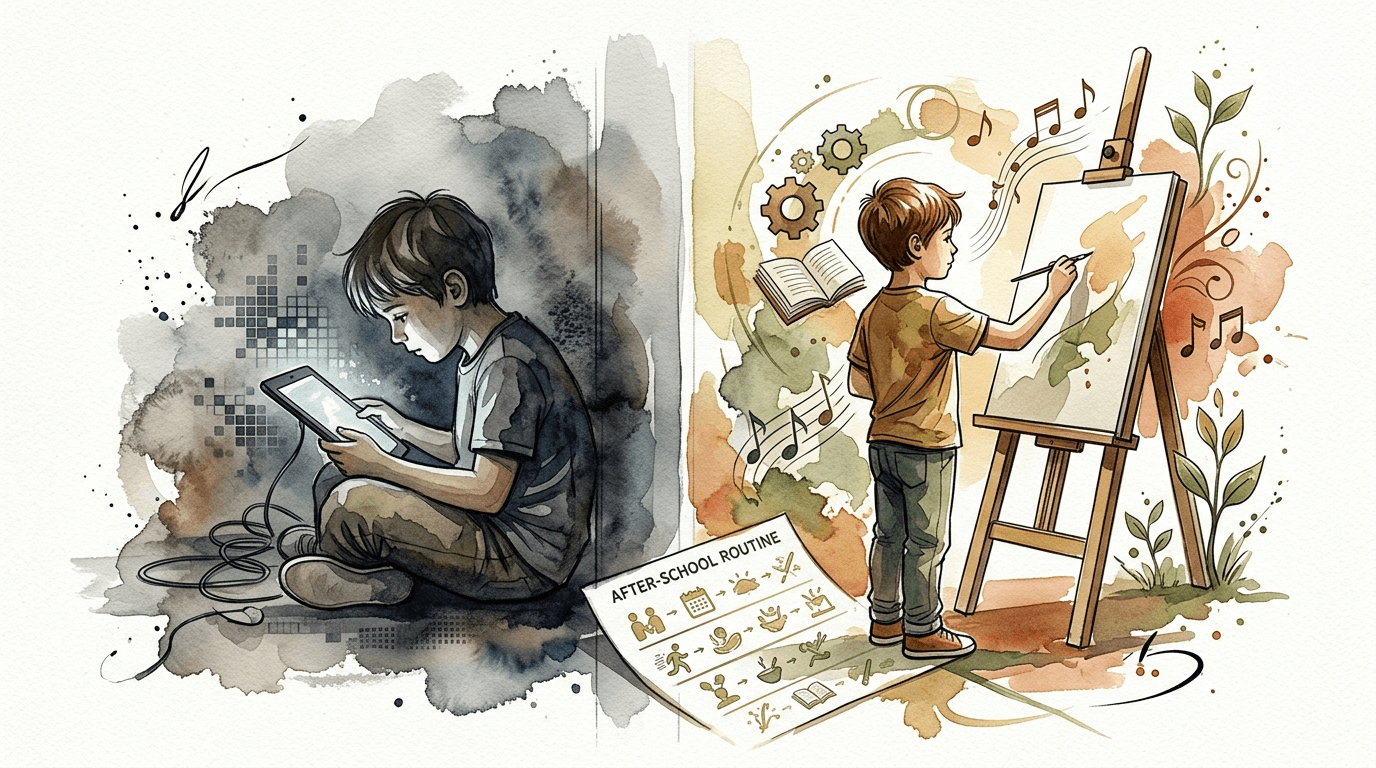
Raise a producer, not just a consumer. The hours between school and dinner are prime time for building character. Shift your child from passive consumption to active contribution with this simple routine chart.
[affiai]Many parents view the after-school hours as a survival period. Kids come home “hangry,” tired, and prone to meltdowns. It is tempting to let them sink into the couch with a tablet just to get a moment of peace. However, this passive consumption often leads to more irritability and less engagement with the family.
Establishing a structured rhythm changes the game. It moves the child from being a bystander in their own life to a participant in the household. You are not just getting them to do homework; you are training them to manage their time, their energy, and their responsibilities.
after school routine chart for kids
An after school routine chart for kids is a visual tool that outlines the sequence of activities a child should complete from the moment they walk through the door until dinner time. It acts as a roadmap for the afternoon, providing a sense of safety and predictability that reduces anxiety and power struggles.
In the real world, these charts are used to automate the “boring” parts of the day so that kids can reach the “fun” parts with a sense of accomplishment. They are common in Montessori classrooms and high-performance households where independence is a core value. Instead of a parent nagging about shoes or backpacks, the chart becomes the “boss.”
A well-designed chart doesn’t just list chores; it balances the child’s need for recovery with their need for growth. It typically includes transitions like a healthy snack, a reset period, and specific blocks for homework or “producer” activities like building, drawing, or helping with dinner.
How to Implement a High-Impact After School Routine
The secret to a routine that sticks is not the list of tasks, but the order of operations. You cannot expect a child to go from a high-pressure school environment directly into high-pressure homework without a buffer.
The Reset Phase
Start with a “soft landing.” Children often experience what experts call “after-school restraint collapse,” where they hold their behavior together all day at school only to fall apart at home where they feel safe. Give them 15 to 20 minutes of downtime first. This might involve a quiet snack, listening to music, or just sitting on the floor.
The Contribution Phase
Move next to chores or “producer” tasks. This reinforces the idea that they are an active member of the family team. Simple tasks like emptying the dishwasher, feeding a pet, or hanging up their coat build a sense of agency. These are small wins that build the momentum needed for harder tasks like homework.
The Focus Phase
Once the body is fed and the house is in order, move to academic work. By this point, the initial school-day stress has faded, and the child has had a “win” from their chores. Use a timer to keep this block focused. If they finish early, that time belongs to them for “active play” rather than mindless scrolling.
Benefits of the Producer-Focused Routine
Shifting to a routine focused on active contribution provides measurable benefits for both the child and the family dynamic.
* Building Executive Function: Routines help children practice planning, organization, and task initiation, which are critical brain skills for future success.
* Reducing Decision Fatigue: When a child knows exactly what comes next, they don’t have to spend mental energy arguing or wondering what to do.
* Character Development: Completing chores and “producer” tasks builds diligence, commitment, and confidence. They see themselves as capable people who can solve problems.
* Emotional Regulation: Predictability is a powerful antidote to stress. A consistent routine helps a child’s nervous system stay regulated, leading to fewer meltdowns.
Challenges and Common Routine Mistakes
Even the best-intentioned parents run into roadblocks when starting a new chart.
One major pitfall is over-scheduling. If every minute from 3:30 PM to 8:00 PM is accounted for, the child will feel suffocated. This leads to burnout and rebellion. Leave “white space” in the chart for spontaneous play or rest.
Another mistake is starting too big. If your child currently does nothing but watch TV after school, do not hand them a list of seven chores. Start with two or three essential steps—like “snack, shoes away, one chore”—and build from there once those become automatic habits.
Parents also often fail by not involving the child in the creation process. When a child helps choose which chores they do or where the chart is hung, they feel a sense of ownership. If you impose the routine from the top down, it feels like a prison sentence rather than a helpful tool.
Limitations: When the Chart May Not Work
A routine chart is a tool, not a law. There are specific situations where a rigid schedule will backfire.
If a child is dealing with extreme sensory overload or neurodivergence, a standard chart might need significant modification. These children may need a much longer “reset” period or a visual schedule that uses pictures instead of words to reduce cognitive load.
Environmental factors like sports seasons or rotating parent work schedules can also disrupt a routine. In these cases, it is better to have a “Modified Routine” for busy nights rather than abandoning the system entirely. Flexibility is what makes a routine sustainable over the long term.
Passive Consumer vs. Active Producer
The core philosophy of this routine is to move kids away from being “consumers” of entertainment and toward being “producers” of value.
| Feature | Passive Consumer | Active Producer |
|---|---|---|
| Primary Activity | Watching TV, scrolling apps, playing mindless games. | Building Legos, writing, drawing, helping with chores. |
| Brain State | Reactive; looking for the next dopamine hit. | Problem-solving; focused on creation or service. |
| Outcome | Increased irritability and dependence. | Increased confidence and independence. |
| Skill Level | Low; requires no effort or growth. | High; requires persistence and practice. |
Practical Tips for Success
To make your after school routine chart more than just a piece of paper on the fridge, follow these best practices.
* Keep it Visual: Use a whiteboard or a laminated sheet. Let kids check off items with a dry-erase marker. The physical act of crossing something off provides a “done” signal to the brain.
* Place it Strategically: Hang the chart at the child’s eye level in the mudroom or kitchen—wherever the “action” starts.
* Use Natural Consequences: Avoid nagging. If the chart says “Chores before Screens,” and the chores aren’t done, the screen simply doesn’t happen. The chart is the authority.
* Focus on Hydration: Often, after-school grumpiness is just dehydration. Make a large glass of water or a healthy smoothie a non-negotiable first step.
Advanced Considerations for Serious Practitioners
For parents looking to go deeper, consider how the routine builds “Atomic Habits.” You can use the routine to layer in specific character-building goals.
For example, if you want to foster empathy, add a “Service Minute” to the chart. This is a 5-minute task where the child does something nice for someone else in the house without being asked. It could be making their sibling’s bed or clearing a parent’s plate.
You can also use the routine to teach time management. For older kids, don’t just list “Homework.” Have them estimate how long each assignment will take and write it next to the task. This builds “time awareness,” a high-level executive function skill that many adults still struggle with.
Example Scenario: The Tuesday Transformation
Before the chart: Leo comes home at 3:30 PM. He throws his backpack on the floor, grabs a bag of chips, and starts playing a video game. When Mom asks him to do homework at 4:30 PM, he has a meltdown because he’s “in the middle of a level.” Dinner is a battle of wills.
After the chart: Leo comes home at 3:30 PM. The chart by the door says: 1. Shoes in bin. 2. Water and Apple. 3. 15-minute LEGO build (Reset). 4. Empty dishwasher. 5. Math worksheet.
By 4:15 PM, Leo has contributed to the house and finished his “Active Play.” His brain is in a “productive” mode rather than a “reactive” one. When it’s time for math, he is already at the table, his body is hydrated, and the “big transition” from fun to work is much smaller.
Final Thoughts
The hours between school and dinner are either a source of chaos or a factory for character. By implementing an after school routine chart for kids, you are choosing the latter. You are giving your children the structure they need to feel safe and the responsibilities they need to feel capable.
Moving from a consumer mindset to a producer mindset doesn’t happen overnight. It requires consistency, a few “do-overs,” and a lot of encouragement. However, the long-term payoff is a child who is resilient, helpful, and ready to face the world.
Start small. Involve your kids. Focus on the “wins.” Before you know it, the afternoon will go from a struggle for survival to a time of growth and connection.
Sources
1 americaskidsinmotion.com (https://www.americaskidsinmotion.com/blog/after-school-routine-kids/) | 2 theottoolbox.com (https://www.theottoolbox.com/after-school-meltdowns-why-kids-fall-apart-at-home-and-how-to-help/) | 3 jasperandwillow.com (https://jasperandwillow.com/after-school-routine-chart/) | 4 youtube.com (https://www.youtube.com/watch?v=iAsxnso8Gmo&vl=en) | 5 reframeparenting.com (https://www.reframeparenting.com/blog/afterschool-restraint-collapse) | 6 empoweredneurofamilies.com (https://www.empoweredneurofamilies.com/blog/simple-3-step-after-school-routine-to-avoid-after-school-meltdowns) | 7 cheshirefitnesszone.com (https://www.cheshirefitnesszone.com/how-to-build-the-right-after-school-routine-for-your-child/) | 8 familymatterscounselingcenter.com (https://www.familymatterscounselingcenter.com/post/the-psychology-of-routine-why-creating-structure-for-children-drives-success) | 9 ourjourneywestward.com (https://ourjourneywestward.com/chores-and-jobs/) | 10 theeducatorsspinonit.com (https://theeducatorsspinonit.com/afterschool-express-building-character/) | 11 rayzkidz.com (https://rayzkidz.com/how-to-implement-a-routine-chart-with-kids/) | 12 markmerrill.com (https://www.markmerrill.com/are-you-raising-producers-or-consumers-what-is-the-difference-and-why-does-it-matter/) | 13 refinedroomsllc.com (https://refinedroomsllc.com/creating-after-school-routine/) | 14 refinedroomsllc.com (https://refinedroomsllc.com/creating-after-school-routine/) | 15 headstart.gov (https://headstart.gov/about-us/article/importance-schedules-routines)