Diy Driftwood Garland Ideas For Coastal Homes
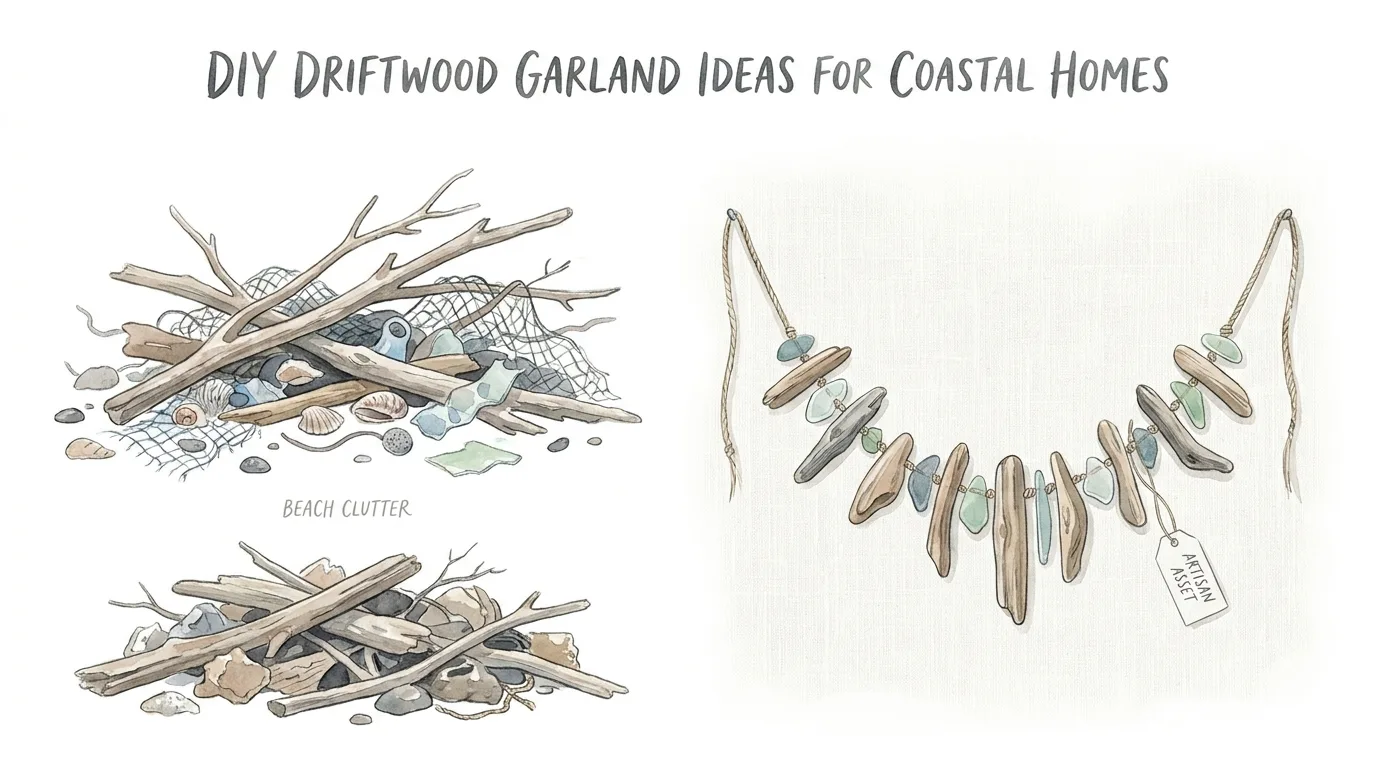
The wood you’re stepping over on the beach is actually the high-end centerpiece your living room is missing. Most people see a pile of trash on the tide line. The artisan sees a $200 designer garland waiting to be assembled. Don’t let the ocean’s best building materials go to waste—here is how to spot the ‘good’ sticks and turn them into a stunning home focal point.
[affiai]Finding a perfect piece of sea-weathered timber feels like uncovering a secret history. Each curve was carved by the relentless push of tides and the abrasive grit of sand. When you bring that wood home, you aren’t just decorating; you’re anchoring your space with the raw, untamed energy of the coast.
This guide will take you from the sandy shoreline to the finished masterpiece hanging over your mantle. We’ll cover the science of salt-washed fibers, the legalities of the hunt, and the technical skills needed to string a garland that rivals any luxury boutique.
Diy Driftwood Garland Ideas For Coastal Homes
A driftwood garland is a rhythmic arrangement of sea-bleached wood, often interspersed with nautical elements like shells, sea glass, or hand-rolled clay beads. In the world of interior design, these pieces serve as organic “sculptures” that break up the rigid lines of modern furniture. They bring a sense of wabi-sabi—the beauty of imperfection—into the home.
In real-world applications, you’ll see these garlands draped horizontally across fireplace mantels, hung vertically in window frames to act as organic sun-catchers, or even used as outdoor accents on a covered porch. Unlike store-bought plastic decor, a handmade driftwood garland carries a story. It represents a specific beach, a particular storm, and the patient hand of the maker.
Think of it as a “Valhalla Ladder.” Historically, some coastal cultures believed that driftwood was a gift from the gods. In Norse mythology, the first humans, Ask and Embla, were said to be formed from pieces of ash and elm driftwood found on a beach. Today, a garland made from these materials serves as a modern bridge between that ancient folklore and contemporary coastal style.
How to Process and Prepare Your Beach Finds
You cannot simply pull a stick from the sand and hang it on your wall. Raw driftwood is a biological mystery box. It may contain salt that attracts moisture, tannins that stain your paint, or hitchhiking pests like sand gnats and wood-boring beetles.
The Deep Clean
Step one is removing the grime. Use a stiff-bristled brush to scrub away sand and loose bark. Once the surface is clear, submerge the wood in a solution of one part bleach to ten parts fresh water. Let it soak for 30 to 60 minutes. This kills bacteria and microscopic organisms that could cause rot later. If you prefer a natural approach, a 50/50 mix of white vinegar and water can work, though it is less effective at bleaching the wood to that sought-after bone-white finish.
The Drying Phase
Drying is where most beginners fail. If the wood is still damp in the center when you seal it or string it, it will mold. Lay your pieces in a single layer in a sunny, well-ventilated spot. For those in humid climates, you can use a “low-temp kiln” method: place the wood in an oven at the lowest possible setting (around 150°F to 170°F) for two to four hours with the door slightly ajar. Watch it closely; you want to evaporate the moisture, not scorch the fibers.
Drilling and Sorting
Once dry, sort your wood by size and shape. Use a drill with a small bit—typically 1/8″ or 7/64″ works best for standard twine. Drill through the thickest part of the wood to prevent splitting. Pro tip: if the wood is particularly brittle, apply a piece of masking tape over the area you intend to drill to hold the fibers together as the bit passes through.
Benefits of Hand-Crafted Driftwood Decor
The most immediate benefit is the cost. A high-end, five-foot driftwood garland at a coastal boutique can easily retail for $150 to $300. Your cost is essentially the price of a roll of jute twine and a few hours of your time.
Beyond the wallet, there is the environmental impact. Driftwood is a 100% renewable, “found” resource. By repurposing it, you are engaging in a form of sustainable art that requires no new timber to be felled. Furthermore, the physical properties of driftwood make it remarkably durable. Seawater often saturates the heartwood with minerals, which, once dried, creates a material that is harder and more rot-resistant than its inland counterparts.
Finally, there is the psychological benefit of the “maker’s high.” Every time you look at the garland, you’ll remember the morning spent beachcombing, the smell of the salt air, and the satisfaction of building something with your own two hands.
Challenges and Common Mistakes to Avoid
The biggest mistake is ignoring the wood’s internal salt content. Salt is hygroscopic, meaning it pulls moisture from the air. If you don’t rinse and dry your driftwood thoroughly, it may feel “sweaty” or damp on humid days, which eventually leads to a musty odor or damage to the wall it’s hanging against.
Another common pitfall is choosing “soft” rot. Some driftwood has been in the water so long that the lignin—the “glue” that holds wood fibers together—has completely dissolved. If you can pinch the wood and it feels spongy or leaves an indentation, it is too far gone for a garland. It will crumble when you try to drill it.
Finally, be wary of “staining.” Some dark-colored driftwood is rich in tannins. If you hang a damp, dark piece of wood against a white-painted mantel, it can leave permanent brown streaks. Always ensure your pieces are bone-dry and, if in doubt, seal them with a matte clear coat.
Limitations and Environmental Constraints
Before you head out with a burlap sack, check your local laws. In some regions, such as the United Kingdom or certain National Parks in the United States, removing anything from the beach—including sand, stones, and driftwood—is strictly prohibited to prevent coastal erosion. Driftwood plays a vital role in the ecosystem; it provides a habitat for gribbles and shipworms and eventually breaks down into nutrients for the marine food web.
In Oregon, for example, visitors are allowed to take small amounts for personal souvenirs, but “mechanized” removal is a crime. Always be a respectful hunter. Take only what you need, and never strip a beach bare. If a piece of wood is half-buried in a sand dune, leave it; it is likely serving as a structural anchor for that dune.
Comparison: Natural Driftwood vs. “Weathered” Wood
It is important to distinguish between true driftwood and wood that has simply sat in a yard. The table below highlights the key differences for the artisan.
| Feature | Natural Driftwood | Inland Weathered Wood |
|---|---|---|
| Texture | Smooth, pitted, rounded edges | Rough, splintered, sharp edges |
| Color | Silvery-gray to bone-white | Brownish-gray to dark charcoal |
| Density | Higher (mineralized by salt) | Lower (subject to standard decay) |
| Pest Risk | Marine borers (easily treated) | Termites/Carpenter ants (high risk) |
Practical Tips for a Designer-Finish Garland
To get that “boutique” look, pay attention to the string. While standard twine works, a hemp cord or waxed cotton line provides a cleaner, more intentional aesthetic. Use “spacer” elements between your wood pieces to give the garland breath. Small wooden beads, pieces of turquoise sea glass, or even dried eucalyptus leaves can add a layer of sophistication.
When stringing a horizontal garland, find the “balance point” of each stick. If you drill every hole exactly in the center, some sticks will tilt awkwardly because of their natural weight distribution. Test the balance by holding the stick between two fingers before you drill.
For vertical “mobile” style garlands, end the piece with a heavy weight. A large, flat sea stone with a natural hole (often called a “hag stone”) or a heavy oyster shell makes for a perfect anchor that keeps the garland from tangling in a breeze.
Advanced Considerations for the Serious Artisan
If you want to go beyond the basics, consider the chemistry of preservation. While raw wood is beautiful, applying a coat of linseed oil or beeswax will deepen the grain and protect the wood from UV damage if hung near a window.
For structural garlands that will hold weight (like those used as curtain tie-backs), use a lark’s head knot or a clove hitch to secure each piece of wood individually. This prevents the pieces from sliding into a clump in the middle of the cord.
You might also experiment with “fire-bleaching.” Carefully passing a torch over the edges of the driftwood can create a high-contrast, charred look that fits perfectly in a “modern-industrial” coastal home. This technique, known in Japan as shou sugi ban, can be adapted for small-scale decor to highlight the unique ridges and grain of sea-weathered timber.
Examples and Scenarios
Scenario A: The Mantelpiece Runner
Collect 40-50 small pieces of driftwood, each about 3 to 5 inches long. String them tightly together with no spacers. The resulting “thick” garland looks like a textured rope of wood. Drape it across a white mantel and tuck in a few sprigs of air plants (Tillandsia) for a living, breathing coastal display.
Scenario B: The Vertical Window Accent
Select 10 long, thin pieces of driftwood. Drill a hole through the very top of each. String them vertically, leaving 6 inches of space between each piece. In the gaps, tie in pieces of frosted sea glass using a half-hitch knot. Hang this in a sunny window; the wood will provide a rustic frame for the light-catching glass.
Final Thoughts
Creating a DIY driftwood garland is more than a simple craft project. It is a way to reclaim the “waste” of the ocean and turn it into something with permanent value. By taking the time to properly clean, dry, and design your piece, you ensure that it remains a focal point in your home for decades rather than a temporary souvenir that eventually ends up in the bin.
The process requires patience—the sea took years to shape that wood, so you can afford to take a few days to prepare it. Whether you are building a Valhalla Ladder for protection or a simple beaded string for style, the grit and history of the wood will speak for itself.
Start small, experiment with different knots and spacers, and don’t be afraid to let the natural shape of the wood dictate the design. The best artisans know that they aren’t creating the beauty; they are simply revealing what the ocean has already spent a lifetime perfecting.
Sources
1 newpelican.com (https://www.newpelican.com/articles/herstory-driftwood/) | 2 smithsonianmag.com (https://www.smithsonianmag.com/science-nature/driftwood-reshapes-ecosystems-180968104/) | 3 wikipedia.org (https://en.wikipedia.org/wiki/Driftwood) | 4 makers-manual.com (https://makers-manual.com/wood-timber-types) | 5 ameliaislander.com (https://www.ameliaislander.com/the-story-of-driftwood/) | 6 lemonthistle.com (https://www.lemonthistle.com/diy-found-driftwood-garland/)