Driftwood Vs Plastic Bio Media For Aquariums
Is your aquarium filter a plastic graveyard for waste, or a living engine of purification? Modern aquarium keeping relies on ‘synthetic’ plastic media that only provides surface-level cleaning. Switching to ‘natural’ sea-weathered driftwood as your primary bio-media unlocks an infinite network of micro-pores. These aren’t just pieces of wood; they are biological skyscrapers that house more nitrifying bacteria than a thousand plastic balls ever could.
[affiai]Aquarists often spend hundreds of dollars on fancy ceramic rings and plastic bio-balls. They chase the promise of “maximum surface area” while ignoring the most efficient filtration material provided by nature itself. For centuries, the world’s river systems have used submerged timber to scrub water clean, yet we have traded this biological powerhouse for colorful plastic beads.
Returning to a natural bio-core requires a shift in perspective. It means seeing driftwood not just as a decorative branch, but as a complex, fibrous network designed to move fluids and host life. This approach bridges the gap between the sterile, mechanical hobby of the past and the thriving, self-sustaining ecosystems of the future.
This guide explores why seasoned keepers are ditching the plastic and looking toward the water’s edge. You will learn how to select, prepare, and utilize driftwood as the heartbeat of your filtration system. It is time to let nature do the heavy lifting in your aquarium.
Driftwood Vs Plastic Bio Media For Aquariums
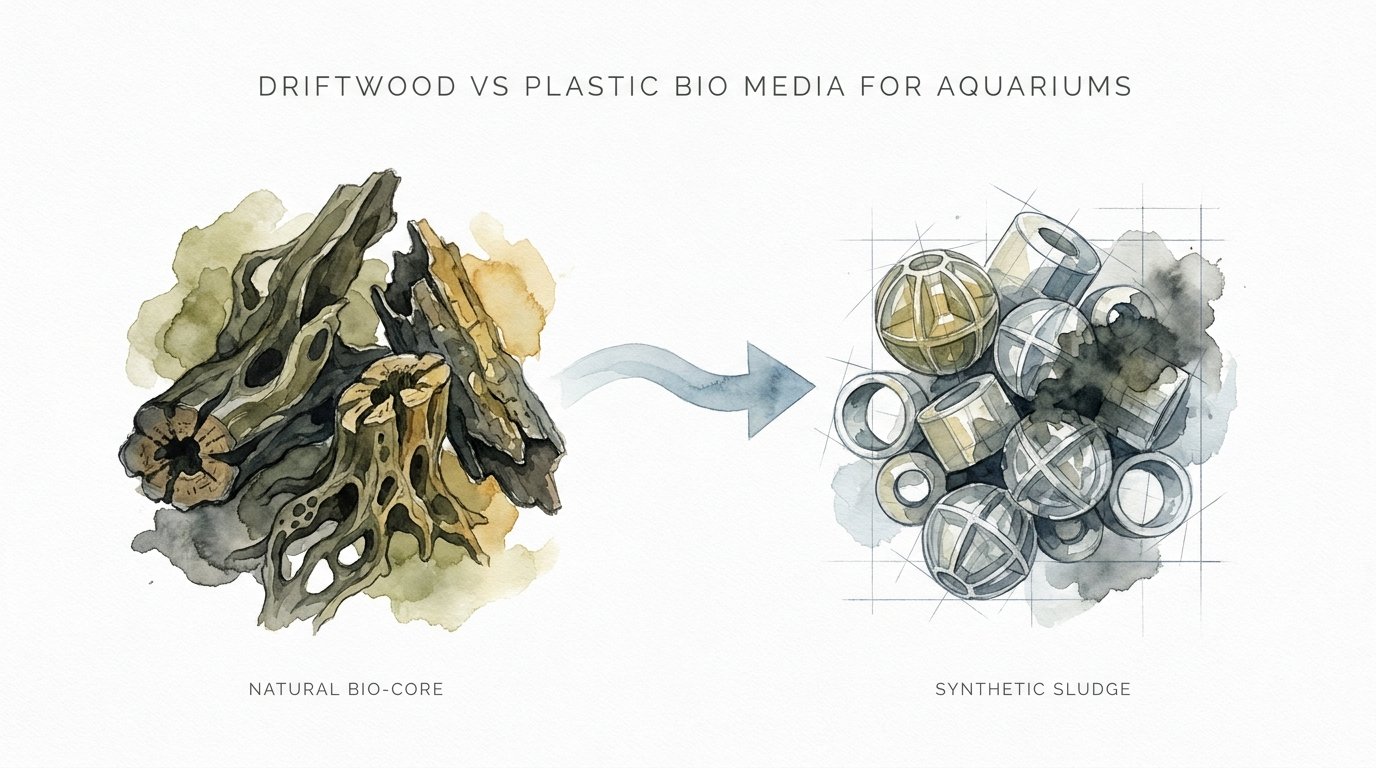
Plastic bio-media was born from the industrial wastewater industry. These molded shapes, often referred to as bio-balls or K1 media, are designed to be cheap, lightweight, and indestructible. They provide a static surface where nitrifying bacteria can cling, but their design is inherently limited by the manufacturing process. Plastic is non-porous; the bacteria only live on the “skin” of the media.
Driftwood represents the antithesis of this “synthetic sludge” mentality. A single piece of weathered wood is composed of millions of microscopic vessels called xylem and phloem. These tubes once moved water through the tree, and even after the wood dies, those pathways remain open. This creates an internal surface area that is exponentially larger than any molded plastic shape.
In a real-world setting, driftwood acts as a natural bio-core. While plastic media waits for waste to land on its surface, driftwood draws water into its fibers through capillary action. This allows specialized colonies of bacteria to establish themselves deep within the wood, protected from the turbulent water flow that often strips colonies off smooth plastic surfaces.
Think of plastic media as a flat parking lot and driftwood as a multi-story apartment complex. The parking lot can only hold as many cars as fit on the pavement. The apartment complex, however, utilizes vertical space and internal rooms to house a much larger population in the same footprint. Driftwood is the high-density housing of the bacterial world.
How a Natural Bio-Core Works
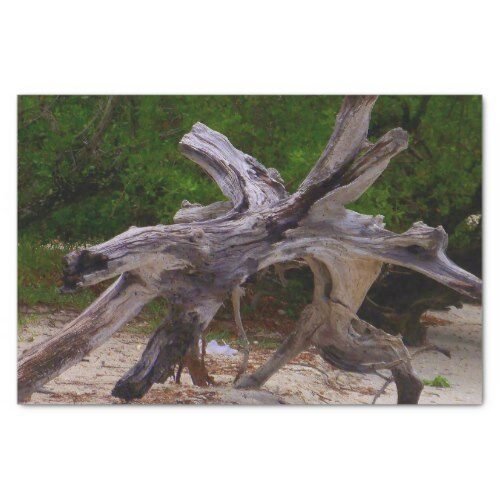
The transition from a tree to a biological filter starts with the wood’s structural integrity. Wood is primarily composed of lignin and cellulose. These organic polymers are incredibly tough and provide the “scaffolding” for bacterial colonization. Over time, as driftwood weathers in the sea or a river, the softer tissues wash away, leaving behind a hardened, porous skeleton.
Nitrifying bacteria, specifically Nitrosomonas and Nitrospira, require a surface to attach to before they can begin processing ammonia and nitrite. In a standard filter, these bacteria form a thin film on the media. When using driftwood, this biofilm extends deep into the wood’s pores. This depth provides a unique advantage: it creates various oxygen zones. The outer layers host aerobic bacteria that thrive in oxygen-rich water, while the deeper, tighter pores may host anaerobic bacteria capable of denitrification—the removal of nitrates.
Water flow plays a critical role in this process. When you place driftwood in a high-flow area of the tank or inside a canister filter, the constant movement of water delivers nutrients directly to the bacterial colonies. The wood acts as a secondary “liver” for the aquarium, processing organic waste products before they can spike to toxic levels.
Preparation is the bridge between a raw branch and a functional filter. Sea-weathered wood must be soaked to leach out excess salts, while “green” wood from a forest requires curing to ensure it doesn’t rot rapidly. This curing process involves boiling or long-term submersion to collapse the remaining sap cells and open the internal pore structure for bacterial entry.
The Benefits of Living Media
The most immediate advantage of using driftwood over plastic is the stability of the nitrogen cycle. Because the bacteria are housed within the pores, they are remarkably resilient. During a heavy water change or a filter cleaning, you are less likely to “crash” your cycle. The driftwood keeps the majority of the colony safe and sound inside its fibrous walls.
Beyond basic filtration, driftwood provides chemical benefits that plastic simply cannot replicate. As the wood slowly breaks down, it releases humic substances and tannins into the water. These compounds act as natural conditioners, lowering the pH slightly and providing mild antibacterial and antifungal properties. This mimics the “blackwater” environments where many tropical fish originate, leading to better colors and reduced stress levels.
For certain inhabitants, the wood itself is a nutritional supplement. Species like Bristlenose Plecos and various shrimp graze on the biofilm and fungi that grow on the wood’s surface. They actually ingest the lignin and cellulose, which is essential for their digestive health. This creates a closed-loop system where the “filter” also serves as a pantry for your livestock.
- Increased Surface Area: Micro-pores provide thousands of times more space for bacteria than smooth plastic.
- Water Conditioning: Tannins and humic acids naturally soften water and boost fish immunity.
- Bio-Security: Bacteria deep in the wood are protected from mechanical cleaning and chemicals.
- Natural Aesthetic: Ditching the plastic “graveyard” creates a more authentic, river-like environment.
Challenges of Using Wood in Filtration
The primary challenge with any organic filter media is decomposition. Unlike plastic, which stays the same for a thousand years, driftwood is slowly being consumed by the very bacteria it houses. This means that over several years, a piece of wood will soften and eventually break apart. If you are using small chunks of wood inside a canister filter, you must monitor them for structural integrity to prevent them from turning into “muck” that could clog your pump.
Another common hurdle is the initial tannin explosion. Freshly added driftwood can turn your water the color of strong tea within hours. While this is beneficial for the fish, many aquarists find the “dirty” look unappealing. Managing this requires patience, regular water changes, or the use of chemical adsorbents like activated carbon until the wood reaches a state of equilibrium.
Fungal blooms are also a frequent sight on new wood. This often looks like a white, translucent slime covering the branches. It is a natural part of the “seasoning” process as the wood adjusts to the aquarium environment. While harmless, it can be an eyesore. Introducing wood-eating fish or shrimp is the most effective way to manage these blooms without resorting to chemicals.
Limitations and Constraints
Driftwood bio-media is not a universal solution for every tank. For keepers of African Cichlids from the Rift Lakes, the pH-lowering effects of wood can be detrimental. These fish require hard, alkaline water, and the constant leaching of humic acids from a large wood-based filter could cause the pH to crash. In these specific setups, inert plastic or specialized alkaline-buffered stones are a safer bet.
Size and space also dictate the feasibility of this method. To replace a significant amount of plastic media, you need a substantial volume of wood. Small hang-on-back (HOB) filters rarely have the room to house enough driftwood to make a meaningful difference. This technique is best suited for large canister filters, sumps, or “natural-style” aquariums where the wood can sit directly in the display tank’s flow path.
Environmental limitations must be considered when harvesting your own wood. Sea-weathered driftwood is excellent but carries high salt loads. Using it in a freshwater tank without a months-long “purging” soak can lead to osmotic shock for your fish. Similarly, wood found in areas treated with pesticides or industrial runoff should never enter an aquarium, as the porous nature of the wood will absorb and later release those toxins.
Comparison: Natural Wood vs. Synthetic Plastic
When deciding between a natural bio-core and a plastic-based system, it helps to look at the long-term performance metrics. While plastic has a higher “upfront” convenience, the natural approach offers a depth of filtration that synthetic materials cannot touch.
| Factor | Plastic Bio-Media | Natural Driftwood Media |
|---|---|---|
| Pore Structure | External surface only (Non-porous) | Internal micro-pores (Highly porous) |
| Lifespan | Indefinite / Permanent | 3 to 10 years (Decomposes) |
| Water Chemistry | Inert / No effect | Active / Lowers pH & GH |
| Maintenance | Requires periodic rinsing of sludge | Self-cleaning via biofilm grazing |
| Bio-Availability | None (Synthetic) | High (Provides food for grazers) |
Practical Tips for Implementation
Success with driftwood filtration begins with wood selection. Hardwoods like Mopani, Bogwood, and Malaysian Driftwood are the gold standard. These woods are extremely dense, meaning they sink immediately and decompose very slowly. Avoid softwoods like pine or cedar, as they contain resins and saps that can be toxic to fish and break down far too quickly to be effective media.
If you want to use wood as your primary filter media in a canister, cut the wood into 1-inch to 2-inch cubes. This increases the available surface area and allows for better water bypass, preventing the “clogging” issues seen with large, solid blocks. Mix these cubes with a small amount of coarse sponge to catch mechanical debris, ensuring the wood’s pores stay open and accessible to the bacteria.
Don’t be afraid of the “Natural Bio-Film.” If you see a brownish, slippery coating on your wood, that is a sign of a healthy, functioning colony. Avoid the urge to scrub the wood clean. If the buildup becomes excessive, simply rinse it in a bucket of dechlorinated aquarium water during your regular maintenance. Scrubbing with tap water or brushes will kill the very “living engine” you are trying to build.
- Soak First: Submerge new wood in a separate tub for 2-4 weeks to let the heaviest tannins leach out.
- Check for “Soft Spots”: During filter cleanings, squeeze the wood. If it feels like a sponge, it is time to replace that piece.
- Use Pre-filters: Always use a mechanical sponge before the wood media to prevent fish waste from plugging the micro-pores.
- Anchor if Necessary: If using wood in the display tank for filtration, use stainless steel screws to attach it to slate to keep it submerged.
Advanced Considerations: Scaling the System
Serious practitioners often move beyond simple branches and build Integrated Wood Filtration (IWF) systems. This involves creating a “wood wall” or a “stump-core” in a large sump. By stacking various types of wood—such as dense Bogwood for the base and lighter Manzanita for the upper layers—you can create a graduated filtration system that mirrors a natural riverbank.
The interaction between wood and anoxic filtration is a deep-dive topic for advanced keepers. In the very center of a thick piece of Mopani wood, oxygen levels are significantly lower than on the surface. This creates a “dead zone” where facultative anaerobic bacteria can survive. These bacteria are the only organisms capable of converting nitrates into nitrogen gas, potentially allowing you to go longer between water changes while maintaining pristine water quality.
Temperature and flow rates also impact the efficiency of the natural bio-core. In warmer tropical tanks (80°F+), metabolic rates for bacteria are higher, meaning the wood will decompose slightly faster but process waste more quickly. Balancing this with a high-turnover pump ensures that every cubic inch of the wood’s internal structure is being utilized to its full potential.
A Realistic Scenario: The 55-Gallon Riverbed
Consider a 55-gallon aquarium housing a community of South American Tetras and Corydoras. A standard setup would use a canister filter filled with plastic bio-balls and ceramic rings. While this keeps ammonia at zero, the nitrates often climb rapidly, requiring weekly 50% water changes.
By removing the plastic media and replacing it with 5 pounds of cured Malaysian Driftwood chunks and a few large pieces of Mopani in the display, the dynamic changes. After three months, the tank establishes a natural bio-core. The water takes on a slight amber tint, and the Tetras begin to show deep, vibrant reds that were absent before. The nitrifying bacteria population becomes so stable that even after adding a new school of fish, there is no ammonia spike. The owner notices the plecos are more active, and the nitrate levels rise much more slowly, allowing for smaller, more manageable water changes.
This is the difference between a mechanical life-support system and a biological ecosystem. The wood isn’t just “decor”—it is a functioning organ of the tank that actively participates in the health of every inhabitant.
Final Thoughts
Transitioning from synthetic media to a natural driftwood bio-core is a journey back to the basics of the hobby. It replaces the “sterile” mindset of modern keeping with a respect for the complexity of the natural world. While plastic has its place in high-bioload, industrial settings, the home aquarium thrives when it is treated as a living, breathing entity.
The challenges of tannins and decomposition are minor trade-offs for the massive increase in bacterial stability and the health benefits of humic substances. By seeing the potential in a piece of weathered wood, you unlock a level of filtration that no factory-made plastic could ever hope to achieve. It is about building a foundation that lasts, even as it slowly gives itself back to the water.
Start small, experiment with different wood types, and observe the changes in your fish. You will likely find that as you remove the plastic, you also remove much of the stress and instability that plagues so many modern tanks. Let the driftwood be your guide, and turn your aquarium into the living engine of purification it was always meant to be.
Sources
1 reddit.com (https://www.reddit.com/r/Aquariums/comments/f9i73a/using_wood_chips_as_filter_media/) | 2 armcoaquatics.com (https://armcoaquatics.com/driftwood-for-fish-aquariums/) | 3 ratemyfishtank.com (https://www.ratemyfishtank.com/blog/driftwood-in-aquariums-benefits-types-and-how-to-prepare-it-safely) | 4 hikariusa.com (https://hikariusa.com/wp/know-adding-driftwood-tank) | 5 bulkreefsupply.com (https://fresh.bulkreefsupply.com/content/post/benefits-of-using-driftwood-in-your-aquarium) | 6 aquascapingsupply.com (https://aquascapingsupply.com/visual-guides/f/the-advantages-of-driftwood) | 7 splashyfishstore.com (https://splashyfishstore.com/blogs/all-thing-aquarium-related-blog/benefit-of-adding-driftwood-to-aquarium) | 8 bulkreefsupply.com (https://www.bulkreefsupply.com/content/post/biological-filter-media-improve-nitrification-and-prevent-nuisance-algae) | 9 monsterfishkeepers.com (https://www.monsterfishkeepers.com/forums/threads/driftwood-for-bio-filtration.739244/) | 10 aquaticexperts.com (https://www.aquaticexperts.com/blogs/blog/types-of-bio-media-for-aquariums) | 11 aquariumscience.org (https://aquariumscience.org/14-10-wood/)