Best Waterproof Bathroom Shelves
If it survived ten years in the Pacific Ocean, your morning shower won’t even leave a mark. Most modern furniture is held together by hope and toxic glue. When humidity hits, it fails. But driftwood? It was forged in the harshest salt-water environment on Earth. It doesn’t just survive moisture; it was built by it.
[affiai]When you step into a bathroom, you are entering a high-stress environment. Steam, splashes, and constant temperature shifts create a relentless cycle of expansion and contraction. Most store-bought storage solutions are not prepared for this battle. They are made of pressed wood fibers that drink up water like a sponge.
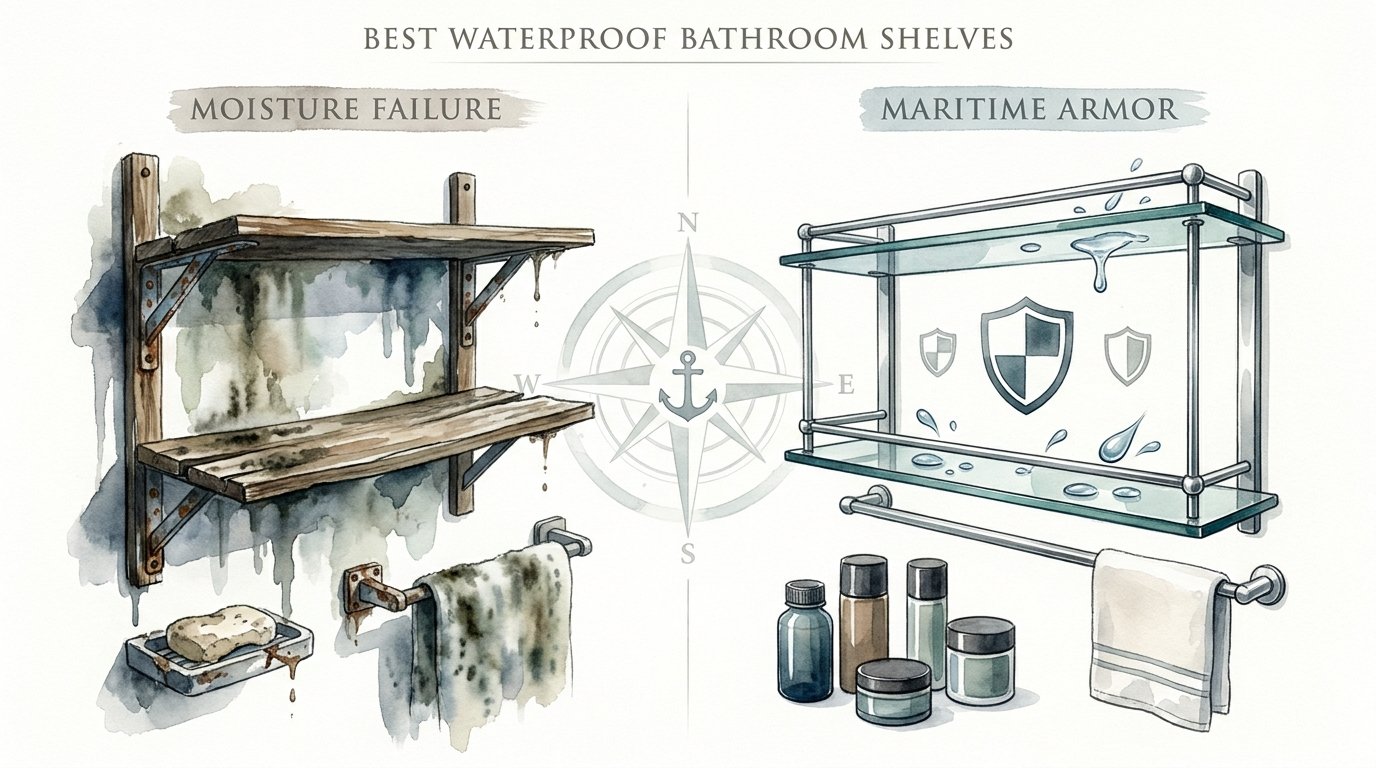
Choosing the right materials for your bathroom is about more than just style. It is about understanding the difference between moisture failure and maritime armor. One choice leaves you with peeling laminate and swollen edges within a year. The other provides a lifetime of service while looking better with age.
This guide will walk you through the world of waterproof bathroom shelves. We will look at natural wonders like driftwood and teak, as well as modern engineered marvels. You will learn how to spot a shelf that can actually handle the heat and how to maintain it so it stays beautiful forever.
Best Waterproof Bathroom Shelves
Waterproof bathroom shelves are storage units designed to resist the damaging effects of high humidity and direct water contact. In a standard bathroom, relative humidity can spike to 80% during a hot shower. Standard furniture often warps or grows mold in these conditions. True waterproof shelving uses materials that are either naturally non-porous or have been treated to become impervious.
You will find these shelves in residential master suites, high-end spas, and even marine environments. They exist because the alternative—replacing particle-board shelves every two years—is both expensive and frustrating. A waterproof shelf acts as a permanent fixture in your home, standing up to the steam that would destroy lesser materials.
Think of these shelves as the hull of a ship. Just as a boat must resist the corrosive power of the sea, your bathroom shelving must resist the constant moisture of your daily routine. This is why materials like stainless steel, tempered glass, and specific hardwoods are the primary choices for this space.
In real-world terms, a waterproof shelf means you don’t have to panic when a bottle of shampoo leaks. It means you don’t have to worry about the edges of your vanity “blooming” or swelling after a few months of use. These pieces are built to last through decades of steam, not just a few weeks of showroom display.
How to Select and Prepare Your Materials
The first step in securing a waterproof shelf is selecting a material that can handle the environment. If you are going the natural route, look for woods that have a high oil content. Teak, ipe, and cedar are the champions here. These woods have natural resins that repel water and prevent rot.
If you are lucky enough to find a piece of ocean-tumbled driftwood, you are starting with a material that has already passed the ultimate test. Before you bring it into your home, you must clean it thoroughly. Soak the wood in a solution of one part bleach to ten parts water for at least 24 hours. This kills any bacteria or microscopic pests that might be hiding in the grain.
After the wood is clean, let it dry completely in a shaded area. This can take several days depending on the thickness of the piece. Once dry, you must sand away any loose fibers or sharp edges. Start with a coarse grit and move toward a fine 220-grit finish. This creates a smooth surface that is ready for a protective coating.
The sealing process is where you create your maritime armor. For the best results, use a marine-grade polyurethane or a high-quality epoxy resin. These finishes create a literal plastic barrier between the wood and the air. Apply at least three thin coats, sanding lightly between each one. This ensures a professional finish that will never let water penetrate the surface.
Benefits of Choosing Maritime Armor
The primary benefit of high-quality waterproof shelving is long-term durability. While a cheap MDF shelf will fail the moment the sealant is scratched, solid wood or metal shelves are resilient. If you scratch a teak shelf, the wood underneath is still naturally resistant to rot. This creates a safety net for your furniture that engineered products simply cannot match.
Another major advantage is the aesthetic value. Natural materials like driftwood or live-edge slabs bring a warmth to the bathroom that tile and porcelain lack. They break up the cold, sterile feel of most modern bathrooms. You get a piece of art that also serves a functional purpose, making the room feel like a private retreat rather than a utility space.
Health is also a significant factor. When moisture-vulnerable furniture fails, it often traps water inside the fibers. This creates a perfect breeding ground for black mold and mildew. By choosing non-porous or properly sealed materials, you eliminate the places where mold likes to hide. This keeps the air in your bathroom cleaner and safer for your family.
Finally, these shelves are an investment in your home’s value. Quality fixtures are noticed by buyers and inspectors alike. A bathroom that looks as good after ten years as it did on day one is a rare find. Using materials built for a maritime environment ensures that your home stays in top condition without constant repairs.
Challenges and Common Mistakes
One of the most common mistakes is assuming that all wood is the same. Many people buy “solid wood” shelves made of pine or poplar. These are softwoods that soak up moisture quickly. Even with a good finish, they are prone to significant movement and warping. Without the right species, your shelf will eventually pull away from the wall or sag under the weight of your items.
Failure to seal the edges and back of the shelf is another frequent error. When people install shelves, they often focus on the top and front surfaces. However, steam rises and gets behind the furniture. If the back of the shelf is raw wood, it will absorb moisture and swell, pushing the shelf out of level. You must seal every square inch of the material, even the parts you will never see.
Incorrect mounting hardware is a challenge that many overlook. Bathrooms are often built with moisture-resistant drywall or tile over cement board. Standard plastic anchors may not provide enough grip in these materials over time. Using stainless steel screws is mandatory. Regular steel screws will rust in the humid air, eventually staining the wood and weakening the support.
Ignoring the weight of the material can lead to structural failure. Driftwood and hardwoods like oak or teak are much heavier than the hollow-core shelves sold at big-box stores. You must ensure that your mounting brackets are rated for the weight of the wood plus the items you plan to store. If you are drilling into tile, use a diamond-tipped bit to avoid cracking the surface.
Limitations of Waterproof Shelving
While waterproof shelves are incredibly durable, they are not indestructible. Even the best marine-grade finish will eventually wear down if it is constantly subjected to standing water. If your shelf is located inside the shower where water pools on it, the finish will eventually cloud or peel. You must still practice basic maintenance to ensure the longest lifespan possible.
Space and installation constraints can also be a factor. Thick, heavy slabs of wood require deep anchors and sometimes even structural blocking behind the wall. If you are renting or cannot open your walls, you may be limited in the types of waterproof shelves you can install. You might have to settle for lighter materials like tempered glass or stainless steel wire.
Cost is a realistic boundary for many homeowners. Naturally moisture-resistant woods like teak and ipe are significantly more expensive than standard lumber. Marine-grade finishes also carry a premium price tag. While the long-term savings are high because you aren’t replacing the furniture, the upfront investment can be a shock to those used to IKEA prices.
Environmental limitations also play a role. Natural wood is a living material. Even when sealed, it can respond to extreme changes in temperature. If your bathroom has no ventilation at all, even a waterproof shelf might struggle with constant dampness. A bathroom with poor airflow will eventually face mold issues on the surface of any material, regardless of how waterproof it is.
Comparison: Solid Wood vs. Engineered Solutions
Understanding the differences between material types helps you make the right choice for your specific budget and skill level.
| Feature | Solid Hardwood / Driftwood | Marine-Grade Plywood | PVC / Plastic Composites |
|---|---|---|---|
| Moisture Resistance | High (natural oils) | Moderate (waterproof glue) | Total (non-porous) |
| Aesthetic Quality | Premium / Natural | Utilitarian / Modern | Synthetic |
| Maintenance Needs | Periodic re-oiling | Check for delamination | Low / Wipe clean |
| Longevity | 25+ Years | 10-15 Years | 15-20 Years |
Solid wood offers the best long-term value but requires more attention during the preparation phase. Plywood is a great middle-ground for those who want the look of wood without the high price of solid slabs. PVC and composites are ideal for high-traffic or kid-friendly bathrooms where utility is more important than luxury.
Practical Tips and Best Practices
Always ensure your bathroom has proper ventilation before installing expensive shelving. An exhaust fan that is correctly sized for the room will do more for your furniture’s lifespan than any sealant. If you don’t have a fan, try to keep the door or a window cracked after a shower to let the steam escape. This prevents the moisture from settling on your shelves for long periods.
When mounting your shelves, use a level and a stud finder. Heavy waterproof shelves need to be anchored into the framing of the house. If you cannot find a stud, use high-quality toggle bolts. Avoid using the small plastic plugs that come in most mounting kits. They are rarely strong enough to hold a solid wood shelf and a full set of heavy towels or toiletries.
Keep a microfiber cloth handy to wipe down the shelves occasionally. Even though they are waterproof, minerals in the water can leave spots or “tide marks” on the finish. A quick wipe once a week will keep the finish looking new and prevent any buildup of soap scum. This is especially important for glass or polished metal shelves.
If you are using a natural oil finish like Tung oil or linseed oil, you will need to reapply it every six months. This is a simple process that only takes a few minutes. Clean the shelf, let it dry, and rub a small amount of oil into the wood with a rag. This keeps the wood hydrated and maintains its natural water-repelling properties.
Advanced Considerations for the Serious Builder
For those who want to go beyond basic shelving, consider the physics of wood movement. Wood expands more across the grain than it does along the grain. When you mount a wide shelf, you must use hardware that allows for a small amount of seasonal movement. If the shelf is locked too tightly in place, it may eventually crack itself as it tries to expand in the summer humidity.
Calculations for load-bearing capacity are also vital for large installations. A thick slab of live-edge walnut can weigh 20 pounds on its own. If you add heavy glass jars and towels, you could be looking at 50 pounds of static load. Ensure your wall-to-bracket interface is engineered to handle at least double the expected weight to account for someone accidentally leaning on the shelf.
Custom joinery in a bathroom requires specific adhesives. Standard yellow wood glue is water-resistant, but not waterproof. For projects that will be exposed to steam daily, use a Type III waterproof glue or a two-part epoxy. This ensures that the joints of your shelves won’t pull apart when the wood starts to “breathe” in the humidity.
Think about the “drip edge” if your shelf is located near a sink or tub. By carving a small groove on the underside of the front edge, you can encourage water to drip off the shelf rather than running back toward the wall. This simple trick, often used in window sills and boat decks, prevents water from pooling at the junction where the shelf meets the tile.
Examples of Waterproof Shelving Scenarios
Imagine a coastal-themed master bathroom. Instead of a standard medicine cabinet, the homeowner installs three floating shelves made of reclaimed cedar. These shelves are finished with a matte marine varnish. They hold heavy glass apothecary jars filled with cotton balls and salts. Despite the daily steam from a double-headed shower, the wood remains stable and adds a rich, organic scent to the room.
In a minimalist guest ensuite, the designer chooses tempered glass shelves with brushed stainless steel brackets. The glass is non-porous and easy to sanitize, making it perfect for a space that sees many different visitors. The hardware is 304-grade stainless steel, ensuring that no rust spots ever appear on the bright white tile. This setup is efficient, clean, and entirely impervious to water damage.
Consider a rustic “pioneer-style” powder room. The shelf is a single, massive piece of driftwood found on a local beach. It has been bleached, sanded, and encased in several layers of clear epoxy resin. It acts as the primary vanity top, holding a heavy stone vessel sink. Because the driftwood was forged in the ocean and then sealed with modern chemistry, it handles the splashes of the sink without any risk of rot or staining.
Final Thoughts
Building or buying waterproof bathroom shelves is a choice to prioritize quality over convenience. It is an acknowledgment that the bathroom is a demanding environment that requires specialized solutions. By moving away from toxic glues and thin laminates, you are creating a space that is as durable as it is beautiful.
Whether you choose the rugged history of driftwood or the clean lines of modern composites, the principles remain the same. You must seal every surface, use the right hardware, and ensure your space is well-ventilated. These small steps transform a simple storage unit into a permanent part of your home’s infrastructure.
Do not be afraid to experiment with natural materials. Nature has already provided the blueprints for surviving the water; we simply need to apply a little grit and the right tools to bring those solutions into our homes. Your morning shower shouldn’t be a threat to your furniture—it should be a testament to how well you’ve built your space.
Sources
1 givingtreehome.com (https://www.givingtreehome.com/blogs/news/solid-wood-vs-plywood-mdf-bathroom-vanity) | 2 ashdeco.com (https://ashdeco.com/blogs/buying-guides/floating-shelves-bathroom-moisture-proof) | 3 ghcabinetry.com (https://ghcabinetry.com/blogs/industry-news/best-bathroom-cabinet-materials-for-humid-environments-a-practical-buying-guide) | 4 shelfgenie.com (https://www.shelfgenie.com/blog/tips-tricks/waterproof-bathroom-cabinets/) | 5 vanico-maronyx.com (https://www.vanico-maronyx.com/en/blog/bathroom-the-best-moisture-resistant-materials) | 6 aliexpress.com (https://www.aliexpress.com/s/wiki-ssr/article/driftwood-floating-shelf) | 7 josephkitchens.com (https://www.josephkitchens.com/blog/bathroom/whats-best-for-your-bathroom-a-mdf-or-wood-vanity/) | 8 rockler.com (https://vertexaisearch.cloud.google.com/grounding-api-redirect/AUZIYQFV1E6HDs4eJ007Bk7Zz60T9pmC0pxISIqqKtOmybhj0ga9C9DG3j-jkXqR2f3CQEzkbuVDPVjAIuLbTD5T-4ScP8E7exGEbNy6Ru7-Urcif2mE5Fm0G84OT886qg8j3cDQQR0g2-aieocWfaK113pzZvPkapSF) | 9 mod-land.com (https://www.mod-land.com/blogs/bathroom-vanity-blogs/maintain-solid-wood-bathroom-vanity) | 10 dogberrycollections.com (https://dogberrycollections.com/blogs/news/how-to-clean-wood-shelves-a-step-by-step-guide)