Biophilic Design With Driftwood Shelves
Your apartment is a box of straight lines—break the cycle with the ocean’s own geometry. Modern city living is full of right angles and cold surfaces. It’s a biological desert. Bringing in the sea-sculpted curves of a driftwood shelf means you aren’t just adding storage—you’re adding a living history. Transform your ‘urban cage’ into a coastal sanctuary with one simple project.
[affiai]Walking into a modern apartment often feels like entering a grid. Every wall is flat, every corner is ninety degrees, and the materials are frequently synthetic. This environment lacks the tactile and visual complexity our brains evolved to crave. Humans spent millennia surrounded by the irregular fractals of forests and shorelines, yet we now spend ninety percent of our lives in “sterile boxes.”
Driftwood offers a bridge back to the wild. Unlike store-bought lumber that has been milled into submission, driftwood retains the spirit of the tide. It has been tumbled by currents, bleached by the sun, and sandblasted by the wind. Each piece is a unique record of environmental struggle and survival. Installing a driftwood shelf is more than a weekend DIY task; it is an act of reclaiming your living space from the monotony of the industrial world.
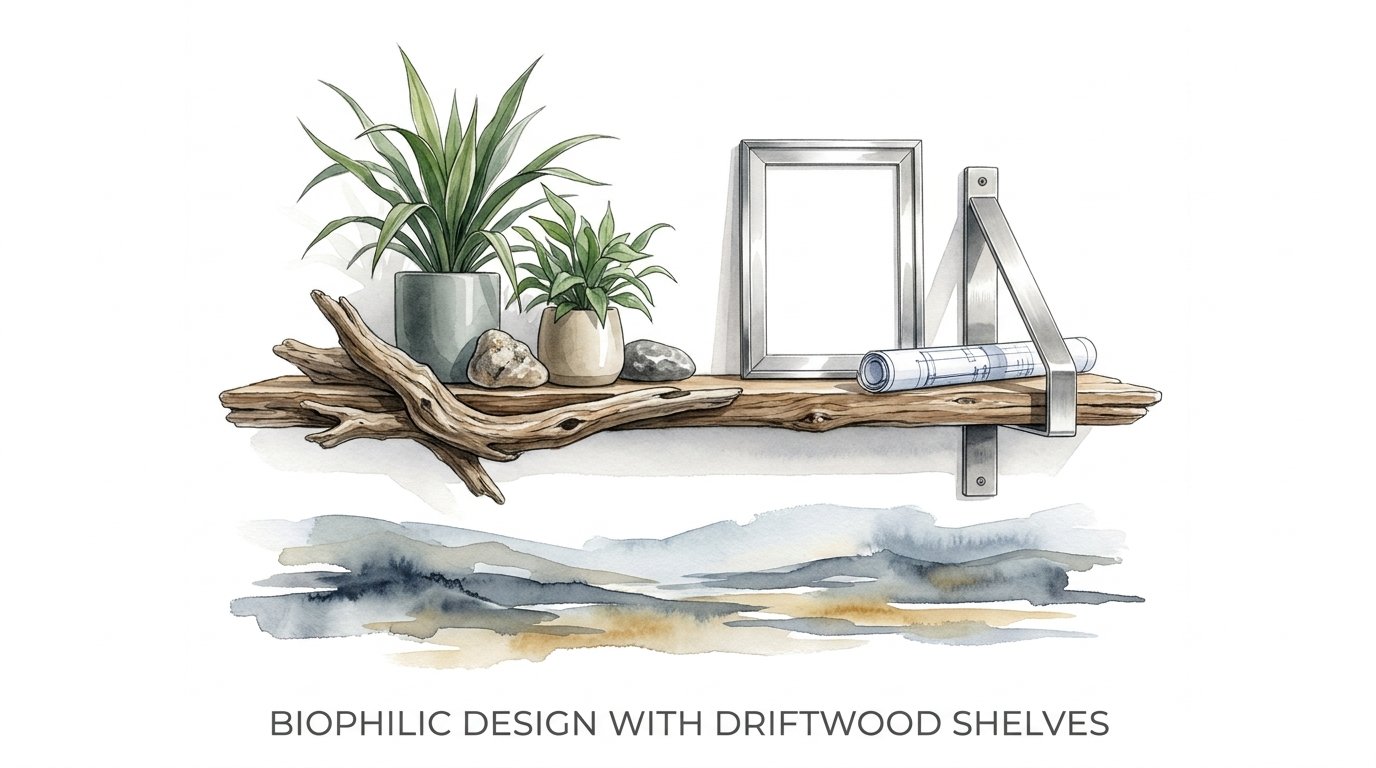
Biophilic Design With Driftwood Shelves
Biophilic design is the practice of connecting people with nature within the built environment. It is not just about placing a plant on a desk. It is a systematic approach to architecture and interior design that incorporates natural light, ventilation, and, most importantly, natural materials and forms. Driftwood serves as a primary example of a “natural analogue,” which is a man-made object that mimics or utilizes the textures and shapes found in the wild.
Studies in environmental psychology show that viewing organic, biomorphic forms reduces stress and lowers blood pressure. Our eyes are naturally drawn to the complex, non-linear patterns found in wood grain and weathered timber. This is known as the “fractal effect.” When you look at the jagged edge of a piece of cedar pulled from a river, your brain registers a level of complexity that plastic or painted MDF simply cannot provide.
Material connection with nature is a core pillar of this design philosophy. Using minimally processed materials like driftwood provides an authentic tactile experience. Touching a cool, salt-cured piece of wood provides a sensory grounding that helps alleviate the “biological boredom” of city life. It reminds the occupant of the world beyond the concrete, fostering a sense of peace and continuity with the planet.
The Hunt: Sourcing Your Timber Legally and Ethically
Finding the right piece of wood is the most rewarding part of the process, but it requires a keen eye and a respect for the law. Not all beaches are created equal, and not all wood is free for the taking. Legal regulations regarding driftwood collection vary significantly depending on your location and the type of land you are visiting.
National Parks and Federal Wildlife Refuges generally prohibit the removal of any natural material. This includes rocks, shells, and driftwood. These ecosystems rely on decaying wood to provide habitat for insects, birds, and small mammals. Removing large quantities of wood can disrupt the local food chain and contribute to beach erosion. Always check the specific rules of the park before you start hauling lumber to your truck.
Public beaches and state lands are often more permissive, but they still have limits. Many coastal states allow for the collection of small amounts of driftwood for personal, non-commercial use. For instance, California state law typically allows for the collection of up to 50 pounds or one piece of driftwood per person per day in certain areas. Always look for posted signs at beach entrances or consult the local department of natural resources website to ensure you are operating within the law.
Ethical harvesting means taking only what you need and leaving the rest for the environment. Avoid areas with sensitive dunes or nesting birds. Focus on wood that has been washed up high on the tide line, away from active ecosystems. Selecting a piece that has already been sun-bleached and stripped of its bark will save you hours of preparation time later.
From Beach to Bench: Preparing Your Driftwood
Bringing raw wood into your home without proper treatment is an invitation for disaster. Driftwood is often a sanctuary for pests, bacteria, and salt. Skipping the cleaning phase can result in a shelf that rots from the inside out or introduces wood-boring beetles into your furniture. Proper preparation is a slow process, but it is non-negotiable.
Start by removing any loose debris. Use a stiff nylon brush or a steel brush to scrub away sand, dried algae, and mud. If the wood has soft, pulpy sections, use a chisel or a flat-head screwdriver to scrape them away. You want to reach the solid, “heart” wood that has survived the elements. Weak spots will eventually fail under the weight of books or decor.
Sterilization is the next step. Soaking the wood in a solution of one part bleach to nine parts water is the industry standard. This kills mold spores and insect larvae hiding in the deep cracks. For a piece intended for a shelf, a soak of 24 to 48 hours is usually sufficient. If you prefer to avoid bleach, a concentrated solution of borax and water can also serve as an effective insecticide and fungicide.
Desalination is often overlooked but critical. Sea salt is hygroscopic, meaning it absorbs moisture from the air. If you mount a salty piece of wood to your wall, it will stay perpetually damp, eventually damaging your paint and drywall. After the chemical soak, submerge the wood in fresh water for several days, changing the water daily until the “tannin bleed” stops and the salt is flushed out.
Drying requires patience. Never rush this stage with high heat, as rapid moisture loss causes the wood to warp or crack. Let the wood air-dry in a shaded, well-ventilated area for at least two weeks. For thicker pieces, a month is better. You can check the progress by weighing the wood; once the weight stops dropping, the internal moisture has reached equilibrium with the environment.
How to Build Your Own Driftwood Shelf
Building a driftwood shelf requires a different mindset than traditional carpentry. You aren’t forcing the wood to fit a blueprint; you are adapting your hardware to the wood’s existing soul. Most driftwood pieces are irregular, meaning a standard bracket might not sit flush against the back.
Step 1: Establishing a Flat Mounting Surface
The back of the driftwood—the side that meets the wall—must be flat to ensure stability. Use a hand saw or a circular saw to “slab” the back of the wood. If you want to keep the piece looking completely natural, you can use a power planer or a belt sander to create a flat plane without removing too much material. Check your progress frequently with a straight-edge level.
Step 2: Sanding for Texture and Safety
While the weathered look is the goal, you don’t want a shelf that gives you splinters. Begin sanding with a coarse 60-grit paper to remove any remaining “fuzz” or sharp edges. Gradually move up to 120-grit and finally 220-grit for the top surface where items will sit. Sanding the ends of the wood helps reveal the internal grain, providing a beautiful contrast to the grey, sun-bleached exterior.
Step 3: Choosing Your Finish
A heavy lacquer or high-gloss polyurethane will make driftwood look like cheap plastic. To preserve the biophilic benefits, use a natural finish. Beeswax, carnauba wax, or a light application of linseed oil will deepen the color without killing the texture. These finishes allow the wood to “breathe” and retain its organic feel. Apply the finish in thin layers, buffing between coats with a lint-free cloth.
Mounting Techniques: Floating vs. Visible Brackets
The mounting method determines the visual impact of the shelf. A “floating” look emphasizes the organic form, making the wood appear as if it grew out of the wall. Visible brackets, on the other hand, can add an industrial or “pioneer-grit” aesthetic that complements the ruggedness of the timber.
The Blind Support Method (Floating)
Creating a floating driftwood shelf involves drilling deep holes into the back of the wood to accommodate steel rods. You can buy specialized floating shelf kits or use heavy-duty lag bolts with the heads cut off. Use a drill press or a portable drill guide to ensure the holes are perfectly perpendicular to the flat back of the shelf. Any slight tilt in the hole will result in a sagging shelf once mounted.
The Industrial Pipe Method
Using black iron pipe fittings is a popular choice for heavier, thicker pieces of driftwood. Screw a floor flange into a wall stud, attach a short length of pipe, and let the driftwood rest on top. You can secure the wood to the pipe using “U” clamps or by drilling a shallow recess into the bottom of the wood for the pipe to sit in. This method is incredibly strong and handles the weight of heavy books with ease.
The Minimalist L-Bracket
Small, thin pieces of driftwood often look best with simple, low-profile L-brackets. To hide the hardware, mount the brackets so that the vertical arm goes *up* into the wall behind the shelf and the horizontal arm is tucked underneath. Painting the brackets the same color as your wall makes them nearly invisible, leaving the focus entirely on the coastal timber.
Benefits of Reclaimed Coastal Timber
Choosing driftwood over new lumber is a victory for both your home and the planet. Reclaimed wood carries a lower carbon footprint because it doesn’t require new trees to be felled or industrial processing. It is the ultimate sustainable material, essentially salvaged from nature’s waste stream.
Durability is another surprising benefit. Most driftwood has already spent months or years in the harshest conditions imaginable. The wood that remains is the toughest part of the tree—the dense heartwood that resisted rot and mechanical breakdown. Once properly dried and sealed, a driftwood shelf is often more stable than new-growth pine found at big-box hardware stores.
Aesthetic versatility allows these pieces to fit into various design styles. In a minimalist “scandi” home, a white-washed driftwood shelf adds warmth. In a maximalist “boho” space, a gnarled, dark piece of river wood provides a sense of history and weight. It is a timeless material that transcends passing trends.
Common Pitfalls and How to Avoid Them
The most frequent error in driftwood DIY is failing to find the wall studs. Driftwood is significantly heavier than the hollow-core shelves sold in department stores. Mounting a ten-pound piece of wood plus five pounds of books into nothing but drywall is a recipe for a collapsed wall. Always use a stud finder and ensure at least two of your mounting points are anchored into solid timber.
Ignoring the “hygroscopic cycle” is another common mistake. If you don’t properly desalinate the wood, the shelf will “sweat” during humid summer months. This moisture can cause the wood to expand, potentially loosening the mounting hardware or causing the finish to peel. Take the time to soak the wood in fresh water during the preparation phase to avoid this long-term headache.
Over-processing the wood is a pitfall for beginners who are used to traditional woodworking. If you sand away all the grey patina and square off every edge, you lose the very reason for using driftwood. The goal is to preserve the “wild spirit” of the piece. Use a light hand and focus on making the piece functional without erasing its history.
Limitations: When This May Not Be Ideal
Driftwood is not a structural material. You should never use it for load-bearing pillars or the primary framework of a house. Its irregular grain and internal micro-cracks make its strength unpredictable compared to graded construction lumber. Limit its use to decorative furniture, shelving, and accent pieces.
Environmental constraints also play a role. If you live in an extremely humid or damp environment, an unfinished driftwood shelf may eventually develop mold, even if it was sterilized. In these cases, a more robust sealer like a matte outdoor-grade varnish might be necessary, even if it slightly alters the natural look. Always consider the micro-climate of your home before choosing a finish.
Weight limits are a practical boundary. Because the back of the shelf is often the only contact point with the wall, the “lever effect” is significant. A very deep shelf—anything over ten inches—will put immense strain on the mounting hardware. For deep shelves, you must use heavy-duty steel rods that penetrate at least four inches into the wall studs.
STERILE STEEL vs WILD SPIRIT
| Feature | Store-Bought (Steel/MDF) | Driftwood (Wild Spirit) |
|---|---|---|
| Cost | Moderate to High | Low (Sourcing is Free) |
| Complexity | Easy (Assembly only) | Moderate (Prep required) |
| Stress Reduction | Neutral | High (Biophilic effect) |
| Uniqueness | Mass-Produced | One-of-a-Kind |
| Sustainability | Industrial Footprint | Zero Waste / Carbon Sink |
Practical Tips for Success
- The Water Test: If you aren’t sure if your wood is dry, place it in a sealed plastic bag overnight. If condensation appears on the inside of the bag the next morning, the wood is still too wet to mount.
- Leveling the Irregular: Since the top of the shelf might be bumpy, use small “clear bumpers” or rubber adhesive pads under the items you place on the shelf. This prevents your favorite vase from wobbling.
- Chemical Anchors: If you are mounting into brick or stone, use epoxy chemical anchors for the steel rods. This creates a bond that is stronger than the wall itself.
- Drilling Jig: Investing in a self-centering dowel jig is the best way to ensure your mounting holes are straight. Hand-drilling deep holes in hardwood is notoriously difficult to keep aligned.
Advanced Considerations: Integrated Features
For those looking to push the boundaries of coastal design, consider integrating living elements directly into the shelf. Succulents and air plants thrive in the small hollows and crevices often found in driftwood. You can use a router to carve out a small “pocket,” line it with a thin plastic barrier, and fill it with cactus soil for a built-in planter.
Lighting can also transform the piece. Installing a hidden LED strip along the back edge creates a “halo” effect that emphasizes the wood’s silhouette at night. Since driftwood has many natural shadows and textures, a “grazing” light—light that hits the surface at a sharp angle—will highlight the grain and make the shelf look like a piece of gallery art.
Scaling up to a full “coastal mantle” requires additional structural support. For very large timbers, consider using hidden “torsion box” frames or structural steel angles that are recessed into the wood. This allows you to use massive logs as floating features without the risk of them tearing out of the wall.
Example Scenario: The Small Studio Transformation
Imagine a 400-square-foot studio in a downtown high-rise. The walls are white, the floor is grey laminate, and the furniture is all flat-pack. The space feels cramped and artificial. By adding three staggered driftwood shelves above the work desk, the entire vibe of the room shifts.
The shelves provide essential vertical storage for books and office supplies, but they also serve as a visual anchor. The organic curves of the wood break up the “boxiness” of the room. When the afternoon sun hits the shelves, the shadows cast by the irregular edges add depth and movement to the wall. This simple addition introduces a “material connection with nature” that makes the studio feel like a sanctuary rather than a cage.
Using the industrial pipe mounting method, the owner can store heavy reference books safely. The contrast between the black steel pipes and the grey, sun-faded cedar provides a “pioneer-grit” aesthetic that feels both modern and nostalgic. It is a practical solution that addresses both the need for storage and the psychological need for nature.
Final Thoughts
Your home should be more than just a place where you store your belongings. It should be an environment that supports your mental and physical well-being. Biophilic design offers a roadmap for creating these spaces, and driftwood shelves are one of the most accessible ways to start that journey. They require no specialized foresting, very few expensive tools, and a healthy dose of patience.
Embrace the imperfections of the wood. The cracks, knots, and weathered grey tones are not flaws; they are the marks of a life lived in the elements. Every time you look at that shelf, you are reminded of the ocean’s power and the slow, steady rhythm of the natural world. It is a grounding force in an increasingly fast-paced, digital society.
Experiment with different species of wood and mounting techniques. Whether you find a small piece of river-tumbled oak or a massive slab of coastal redwood, the process of turning it into a functional piece of art is a reward in itself. Stop living in a biological desert. Build your coastal sanctuary one shelf at a time, and bring the wild spirit of the ocean back into your everyday life.
Sources
1 youtube.com (https://www.youtube.com/watch?v=ggDsw1nQDQ8) | 2 venturainteriors.com (https://venturainteriors.com/blog/biophilic-design-benefits-of-natural-elements-in-furniture/) | 3 chitaliving.com (https://chitaliving.com/blogs/blog/biophilic-design-furniture-ideas-for-your-living-room) | 4 dksstores.com (https://dksstores.com/blog-post67) | 5 quora.com (https://www.quora.com/Is-it-illegal-to-take-driftwood-from-a-beach) | 6 stackexchange.com (https://outdoors.stackexchange.com/questions/3855/what-kind-of-mementos-if-any-am-i-allowed-to-collect-from-state-and-national-p) | 7 hawk-hill.com (https://www.hawk-hill.com/how-to-clean-driftwood/) | 8 cornell.edu (https://www.law.cornell.edu/regulations/california/14-CCR-4306) | 9 ashdeco.com (https://ashdeco.com/blogs/news/how-to-make-floating-shelf-diy) | 10 youtube.com (https://www.youtube.com/watch?v=Alc_lpZxEWU) | 11 aprettyfix.com (https://aprettyfix.com/disinfect-driftwood/) | 12 markslumber.us (https://markslumber.us/blog/biophilic-design-the-health-benefits-of-using-wood-products-in-your-home)