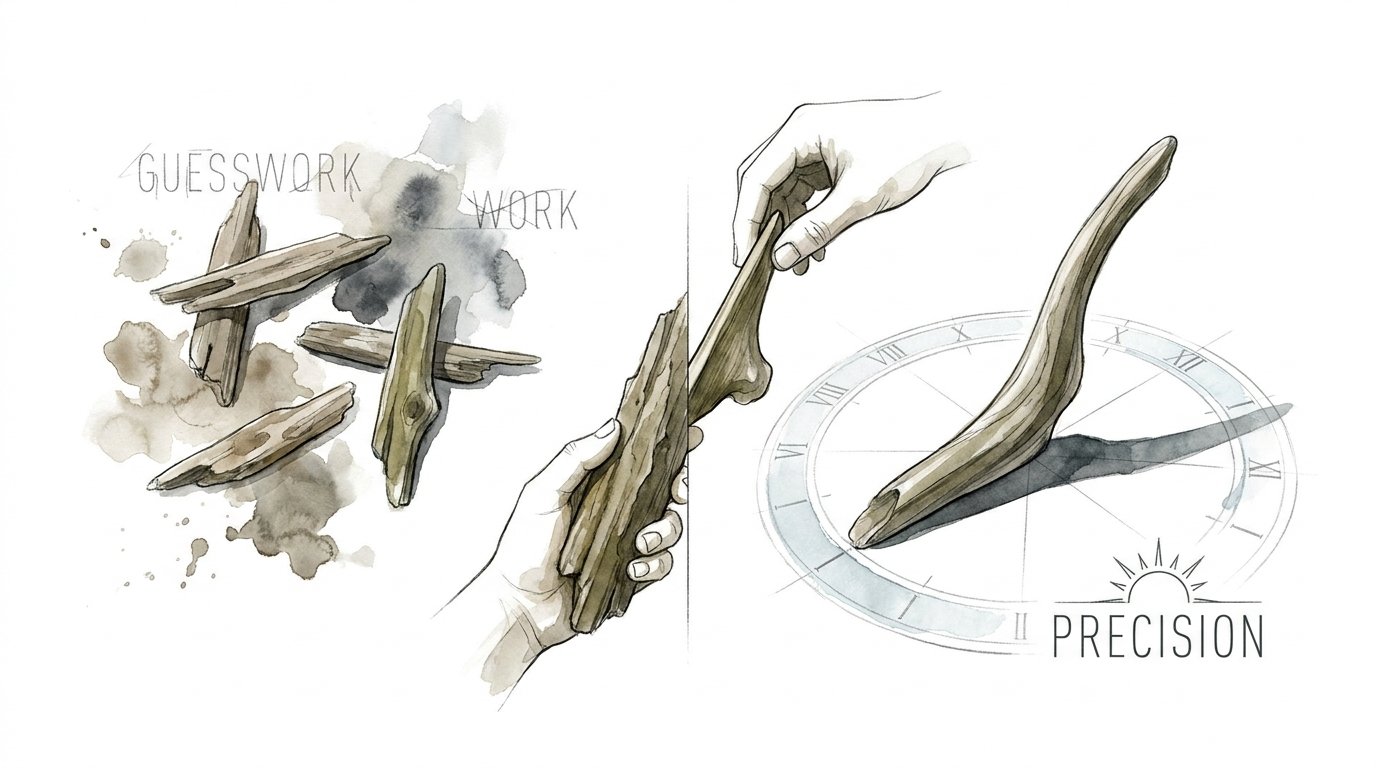
Building A Driftwood Sundial For Gardening
The ocean’s bones can tell you exactly when the earth is ready to grow. Forget digital apps; we’re going back to solar precision. Using a perfectly straight piece of ‘sea-cured’ timber, we’ve built a seasonal dial that tracks the equinox. Know exactly when the frost risk ends by watching the shadows on the sand.
[affiai]When you step into a garden, you are stepping into a relationship with the sun. Most modern growers rely on a screen in their pocket to tell them when to sow, but those numbers are often averages stripped of local context. A driftwood sundial, or a shadow stick, anchors your garden to the specific celestial geometry of your own patch of soil. It is a tool of “pioneer-grit” that uses the most reliable clock in the universe to dictate your planting schedule.
This isn’t just about telling the time of day. A well-constructed seasonal dial tracks the sun’s altitude as it shifts through the months. When the shadow of your gnomon hits a specific mark on the spring equinox, it signals a biological shift in the soil that no app can replicate. It is the intersection of ancient astronomy and practical horticulture.
Building A Driftwood Sundial For Gardening
A driftwood sundial is a functional landscape feature that uses a vertical or angled post to cast a shadow onto a marked surface. Unlike a standard decorative sundial that you might buy at a garden center, a seasonal dial is calibrated to your specific latitude to track the transition of seasons. It exists to bridge the gap between high-level meteorology and the ground-level reality of your garden.
In the real world, these structures serve as permanent “shadow markers.” Farmers and navigators for millennia used similar techniques to identify the summer and winter solstices, as well as the equinoxes. In a gardening context, the sundial acts as a physical representation of the solar year. You use it to visualize how much light a particular bed will receive in June versus October, and to mark the exact moment the sun climbs high enough in the sky to warm the earth past the point of deep frost.
Think of it as a low-tech solar computer. The “sea-cured” timber—driftwood that has been tumbled by the tide and saturated with salt—provides a durable, rot-resistant gnomon that looks like it belongs in the landscape. It is a piece of the ocean helping you navigate the land.
How It Works: The Mechanics of Solar Precision
Understanding the movement of shadows requires a basic grasp of solar geometry. The sun does not follow the same path every day. As the Earth orbits the sun on its tilted axis, the sun appears to move higher or lower in the sky depending on the season. This change in solar altitude is what allows a simple stick to become a seasonal calendar.
The first step in building your dial is choosing a gnomon. A straight piece of driftwood is ideal because the salt saturation helps prevent fungal decay, a common issue in damp garden soil. You want a piece about four to five feet long. Set this post firmly in the ground in a spot that receives unobstructed sunlight from dawn until dusk.
To find True North, which is essential for accuracy, do not rely solely on a magnetic compass. Magnetic north shifts depending on your location, a phenomenon known as magnetic declination. Instead, use the “shortest shadow” method. At local solar noon—the moment the sun is at its highest point—the shadow of a vertical post will point exactly True North in the Northern Hemisphere. Mark this line; it is the central axis of your dial.
Tracking the seasons involves marking the length of that noon shadow. During the winter solstice, the sun is at its lowest point, and the noon shadow will be at its longest. During the summer solstice, the sun is at its zenith, and the shadow will be at its shortest. The equinox falls exactly in the middle. On the day of the spring equinox, the tip of the shadow throughout the day will trace a perfectly straight line from east to west. Every other day of the year, that shadow tip will trace a curve.
Benefits of Solar Tracking Over Digital Guesswork
Using a physical marker in the garden offers several practical advantages that digital tools cannot match. The most significant benefit is the visualization of light and shadow. By watching the shadow of your driftwood post, you can see exactly where the “shade footprint” of nearby trees or buildings will fall during the peak of the growing season.
Another advantage is the durability and sustainability of the materials. Sea-cured timber is naturally resistant to many pests and rot because the salt crystals embedded in the wood fibers make it less hospitable to fungi. This means your “pioneer” clock will stand for years with minimal maintenance. It requires no batteries, no software updates, and no data connection.
Furthermore, a sundial encourages a deeper observational habit. When a gardener relies on a solar dial, they begin to notice the subtle changes in bird activity, insect emergence, and bud break that coincide with the shadow hitting specific marks. This “solar precision” aligns your labor with the actual energy available to your plants, rather than a generalized calendar date.
Challenges and Common Mistakes
The most frequent error in building a seasonal dial is failing to account for the angle of the gnomon. If you want your sundial to tell accurate clock time as well as seasonal shifts, the gnomon must be angled to match your local latitude. For example, if you live at 45 degrees north, your gnomon should be tilted at a 45-degree angle pointing toward the celestial pole. A simple vertical stick works for tracking shadow length, but it will not provide a linear “clock” face without complex calculations.
Another challenge is ground stability. If the post shifts even a few degrees due to frost heave or soil settling, the seasonal marks will become inaccurate. It is vital to sink the post deep—at least a third of its length—and perhaps surround the base with packed stones to ensure it remains plumb or at its set angle throughout the year.
Finally, many beginners forget that “clock noon” is rarely “solar noon.” Because of time zones and daylight saving time, the sun might reach its highest point at 1:15 PM instead of 12:00 PM. If you mark your seasonal lines based on the clock rather than the sun’s actual position, your garden data will be skewed. Always calibrate your dial during the “equation of time” periods when solar and clock time are closest, or use the shortest shadow method to find your true local noon.
Limitations: When Solar Precision Hits a Wall
While a driftwood sundial is a powerful tool, it has realistic constraints. The most obvious is weather. In regions with persistent spring cloud cover or coastal fog, you may go weeks without a clear shadow to read. In these environments, the sundial serves more as a “check-in” tool for clear days rather than a daily guide.
Latitude also plays a massive role in the dial’s utility. Near the equator, the change in shadow length between seasons is minimal, making it harder to distinguish between, say, early March and late April. Conversely, in extreme northern or southern latitudes, the shadows in winter become so long that they may extend beyond your garden’s boundaries, requiring a massive area to track the full year.
Environmental changes can also render a dial obsolete. If a neighbor builds a fence or a nearby tree grows significantly, the “solar window” of your dial may be compromised. You must choose a site that is likely to remain open to the sky for the foreseeable future.
Comparing Methods: Guesswork vs. Solar Precision
| Factor | Digital Apps (Guesswork) | Driftwood Dial (Precision) |
|---|---|---|
| Data Source | Regional averages & airport sensors. | Local solar geometry in your soil. |
| Maintenance | Regular updates and charging. | Annual check for post stability. |
| Cost | Subscription fees or hardware costs. | Free (scavenged materials). |
| Accuracy | Varies by microclimate. | Perfect for that specific square foot. |
Practical Tips for the Modern Pioneer
To get the most out of your seasonal dial, start small. Do not try to mark every hour of every day. Focus on the “Noon Line” first. Use a permanent stone or a buried brick to mark where the shadow tip falls at solar noon on the spring equinox. This becomes your “sowing anchor.”
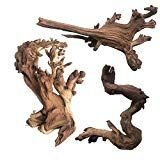
When selecting driftwood, look for pieces that have a silver-grey patina. This color indicates that the softer outer fibers have been worn away, leaving the dense, lignified core of the wood. This core is what will survive the soil contact. Avoid “punky” or soft wood that feels light for its size, as this will rot within a single season regardless of its salt content.
Keep a gardening journal alongside your dial. Note the shadow position on the day you plant your first peas or when your tomatoes finally start to ripen. Over three to four years, you will develop a “shadow map” that is far more accurate for your specific microclimate than any planting zone map published by a government agency.
Advanced Considerations: The Equation of Time
For those who want to go beyond basic markers, you must account for the “Equation of Time.” The Earth does not orbit the sun in a perfect circle, and its speed varies. This causes the sun to be slightly “ahead” or “behind” clock time by up to 16 minutes at different points in the year.
Serious practitioners will mark their dial with an “analemma”—a figure-eight shape that represents the sun’s position at the same clock time every day for a year. While this takes patience to map out, it allows you to correct for the Earth’s orbital eccentricity. If you see the shadow falling to one side of your equinox line in October, you’ll know it’s the orbital tilt at work, not a mistake in your post’s placement.
Additionally, consider the “Albedo Effect.” If you place your dial on a dark surface like mulch or dark soil, it will be easier to see the shadow, but the surface will also absorb more heat. Using a bed of light-colored sand or flat white stones for your dial face makes the shadow sharper and easier to mark with precision, which is vital when you are trying to catch the exact moment of the equinox.
Example Scenario: The 45th Parallel Gardener
Imagine a gardener in the Pacific Northwest, living at 45 degrees North latitude. In mid-March, they are anxious to plant their brassicas, but the “guesswork” of the local news suggests a lingering frost. They go to their driftwood sundial at solar noon on March 20th—the Spring Equinox.
The gnomon is a four-foot tall piece of cedar driftwood. At noon, the shadow falls exactly on a stone they placed the previous year. Because it is the equinox, they watch the shadow tip throughout the day and see it tracing a straight line across the garden. This confirms the sun has reached the halfway point in its journey north.
They know from their journal that when the shadow is this length, the soil temperature in their raised beds consistently hits 50 degrees Fahrenheit. They ignore the “average frost date” on their phone and trust the solar precision. They plant. Two weeks later, their neighbors are still waiting, while their peas have already breached the surface, fueled by the specific solar energy that the sundial accurately predicted.
Final Thoughts
Building a driftwood sundial is an exercise in slowing down and looking up. It rejects the frantic, data-driven pace of modern gardening in favor of a steady, rhythmic connection to the celestial cycles. By using sea-cured timber, you are literally bringing the ancient endurance of the ocean into your garden to help you time the future.
The practical value of this system lies in its unwavering consistency. While weather patterns may shift and climates may change, the tilt of the Earth and its relationship to the sun remain the most stable variables in a gardener’s life. Relying on a shadow stick teaches you to read the land directly, fostering a level of “pioneer-grit” that makes you a more resilient and observant grower.
Experiment with your dial. Move your markers as you learn your land’s secrets. Whether you are tracking the equinox to avoid frost or simply watching the hours pass as you weed, the driftwood sundial serves as a reminder that the best tools aren’t always found in a store—sometimes, they are washed up on the shore, waiting for a gardener with the patience to use them.
Sources
1 wildsight.ca (https://wildsight.ca/education-resources/make-a-sundial/) | 2 jerryoltion.com (https://www.jerryoltion.com/Sundials.htm) | 3 raritanheadwaters.org (https://www.raritanheadwaters.org/2020/04/16/make-a-sundial/) | 4 johnmuirlaws.com (https://johnmuirlaws.com/sun-shadows-exploring-the-solstice-and-equinox/) | 5 nomadpress.net (https://nomadpress.net/wp-content/uploads/2014/05/NP_ActivityPrintOut_SeasonsFromShadow_Timekeeping.pdf) | 6 colorado.edu (https://lasp.colorado.edu/wp-content/uploads/2011/08/EarthTilt.pdf) | 7 sciencefriday.com (https://www.sciencefriday.com/educational-resources/sunlight-and-shadows/) | 8 pacificsciencecenter.org (https://pacificsciencecenter.org/wp-content/uploads/2022/05/cah-shadow-tracking-6-8.pdf) | 9 motherearthnews.com (https://www.motherearthnews.com/diy/build-a-sundial-zmaz96fmzgoe/) | 10 si.edu (https://vertexaisearch.cloud.google.com/grounding-api-redirect/AUZIYQG2PB6HHkilsBUU5F13vy7JDRnTyZGQ0HCOBp3fymFWBZPHFQ4c8CSmrQO9icU8QqUfaUrKn02IgweGmpGn-rE7kUB5vmJG4D7K_q-CR8J9y8Hz81nc-yN4-B3PH9SovdLF-h7F6fErPx0z8w9xXMDSLleNpVxk6TBSLjMpYDXJ_0Adp_4rDLtDfgIU5jiZBxAw__OJkDedQlXWZM0XJur_74bAzRA7-Q==) | 11 thehoarde.com (https://www.thehoarde.com/blog/a-beginners-guide-to-the-garden-sundial) | 12 permies.com (https://permies.com/t/164133/Sundials-Passive-Solar-Timekeeping-Device) | 13 frostscience.org (https://www.frostscience.org/wp-content/uploads/2020/04/Sundial-Activity-Toolkit.pdf)