Driftwood Wall Decor For City Apartments
Your brain wasn’t built for right angles and concrete; it was evolved to find peace in the chaotic geometry of the shore. Urban living often means being surrounded by sterile surfaces. But you don’t have to live in a desert. Bringing in ‘wild’ architecture—wood that has been sculpted by the sea—you can restore the biological connection your home is starving for.
[affiai]Integrating these organic relics into a modern dwelling is more than just a stylistic choice. It is a calculated move to reclaim the rugged textures of the natural world. This guide explores how to source, prepare, and install driftwood wall decor to transform a flat apartment into a sanctuary of grit and history.
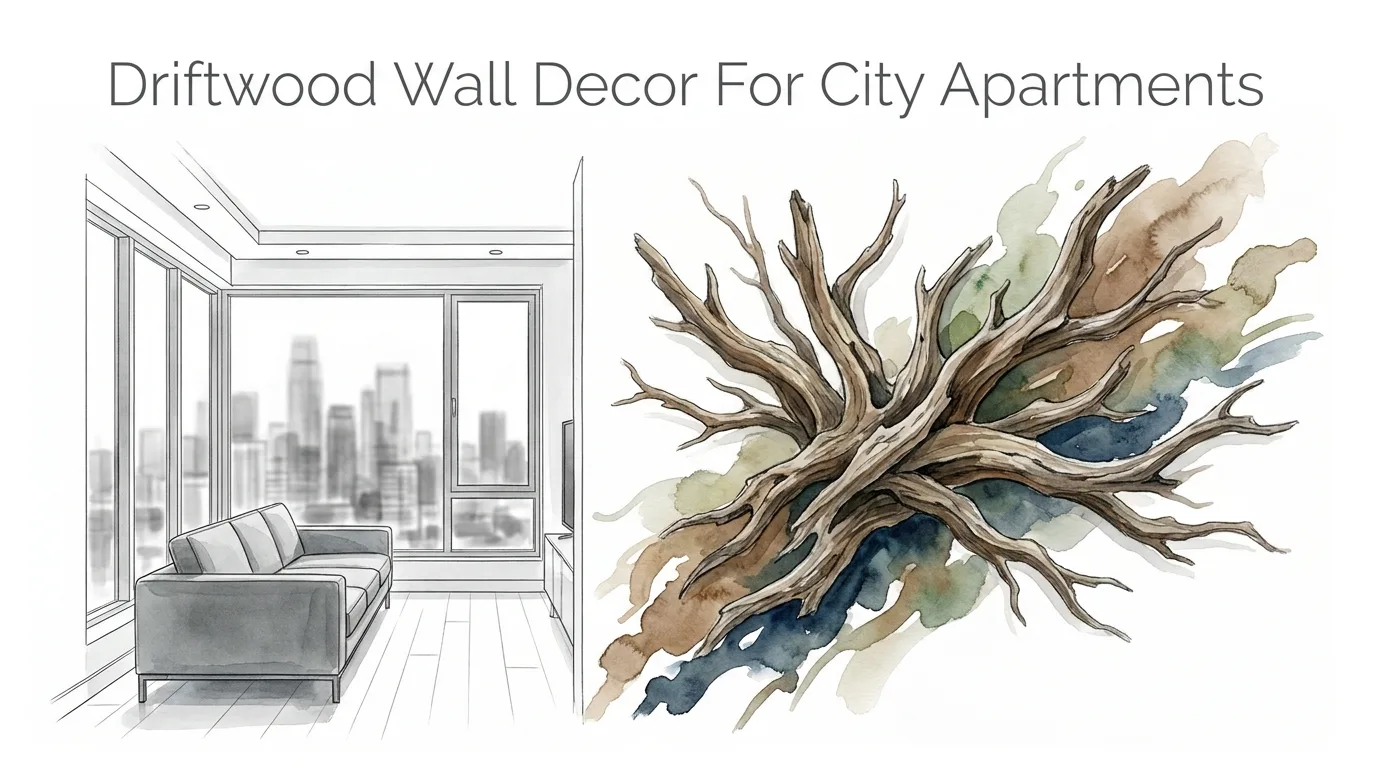
Driftwood Wall Decor For City Apartments
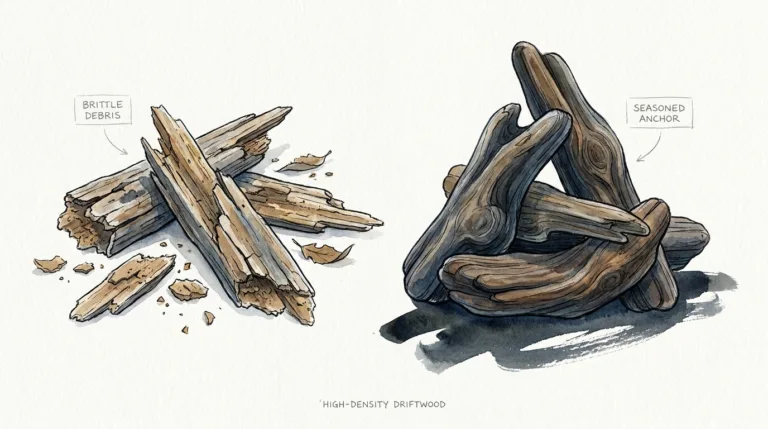
Driftwood wall decor for city apartments serves as a bridge between the relentless pace of urban life and the timeless rhythm of the tides. In the context of interior design, driftwood refers to any wood that has been washed onto a shore or beach of an ocean, lake, or river by the action of winds, tides, or waves. It is wood that has undergone a natural “curing” process, stripped of its bark and softened by years of exposure to salt, sun, and water.
In a city environment, where walls are often perfectly flat and painted in uniform shades, a piece of sun-bleached timber provides an essential focal point. It breaks the visual monotony of “apartment beige” and introduces a tactile element that demands attention. Whether it is a singular, gnarled branch or a mosaic of smaller fragments, this decor style emphasizes the beauty of impermanence and resilience.
Designers often use these pieces to ground a room. A large horizontal branch over a sofa or bed creates a sense of stability and shelter. Smaller pieces can be used as functional art, such as jewelry hangers or towel racks, blending utility with a raw, pioneer aesthetic. Unlike mass-produced plastic or metal accents, no two pieces of driftwood are identical, ensuring your space remains truly unique.
The Artisan’s Protocol: How to Prepare and Mount Your Wood
Preparing driftwood for indoor use is a labor-intensive process that requires patience and a steady hand. You cannot simply pull a log from the sand and nail it to your drywall. Raw wood from the shore often carries hitchhikers—sand gnats, termites, and bacteria—that must be eradicated before the wood crosses your threshold.
The Sanitization Phase
Start by giving the wood a deep scrub with a stiff-bristled brush and fresh water to remove loose sand and salt. Larger pieces may require a pressure washer to reach into deep crevices. Once the surface is clean, the wood must be submerged in a sanitizing solution.
Mixing one part household bleach with nine parts water in a large trough is the standard industry practice. Submerge the wood completely for at least 24 hours. Placing heavy stones on the wood prevents it from floating, ensuring the solution penetrates every fiber to kill internal parasites.
The Drying and Curing Cycle
Removing the wood from the bleach bath is only half the battle. It must dry thoroughly to prevent rot and mold growth. Placing the wood in direct sunlight is the most effective natural method, as UV rays further sanitize the surface.
Expect this process to take several days for small branches and several weeks for thick logs. If the wood feels cool to the touch, it still holds internal moisture. Professionals sometimes use a low-heat oven (around 200°F) for smaller pieces, monitoring them closely to ensure they do not catch fire or crack.
Mounting and Stability
Securing a heavy, irregularly shaped object to a vertical surface requires mechanical precision. For heavy branches, finding a wall stud is mandatory. Using a French cleat system or heavy-duty D-rings allows the wood to sit flush against the wall without visible hardware.
Dowel screws are an excellent option for medium-sized pieces. These screws have threads on both ends; one side goes into the wood, and the other goes into a wall anchor. This creates a “floating” effect that highlights the silhouette of the timber without the distraction of brackets.
The Functional Advantages of Organic Architecture
Choosing driftwood over standard art provides measurable benefits for the inhabitant. Research in biophilic design suggests that natural features in interior spaces can reduce perceived stress by as much as 25%. Surrounding yourself with materials that reflect the “chaos” of nature helps the mind recover from the overstimulation of city traffic and digital screens.
Durability is another significant advantage. Properly cured driftwood is incredibly stable. Having survived years in the ocean, it is unlikely to warp or degrade further once it is inside a climate-controlled apartment. It is a one-time investment in a piece of decor that will literally outlast the building it hangs in.
From an aesthetic standpoint, driftwood is a master of neutrality. Its colors range from ash gray to sun-bleached white, allowing it to fit into Scandinavian, Industrial, or Bohemian styles with ease. It provides the “pioneer grit” needed to balance out high-end finishes like marble or polished steel.
Navigating the Pitfalls: Common Mistakes in Driftwood Design
Skipping the cleaning process is the most frequent error made by beginners. Raw beach wood often contains salt that will slowly leach out and ruin your paint or wallpaper. More importantly, sand gnat eggs can hatch weeks after the wood is brought inside, leading to a localized infestation that is difficult to manage in a small apartment.
Over-finishing the wood is another common mistake. Slathering a piece of driftwood in high-gloss polyurethane strips away the very texture that makes it valuable. The goal is to preserve the “bone-dry” look. Using a matte sealer or a light coat of beeswax provides protection without the artificial shine of plastic.
Ignoring the weight distribution is a safety hazard. Driftwood is often denser than it looks, especially if it was found in a river or lake (bogwood). Failing to use proper wall anchors or neglecting to hit a stud can result in the wood tearing out a chunk of drywall, causing expensive damage and potential injury.
Constraints and Reality Checks: When Driftwood Isn’t the Answer
Environmental limitations play a role in whether driftwood is right for your home. In extremely humid environments, unsealed wood can act like a sponge, absorbing moisture from the air. This can lead to a musty odor or the reactivation of dormant mold spores if the piece wasn’t properly cured.
Legal constraints are equally important. Collecting wood from National Parks or protected conservation areas is often illegal and carries heavy fines. Oregon law, for instance, allows for the removal of small amounts for personal use, but mechanized equipment is strictly prohibited. Always verify local regulations before heading to the shore with a truck.
Renters must also consider the “permanence” of the installation. Mounting a 40-pound branch usually requires drilling significant holes. If your lease prohibits wall damage, you may be limited to smaller pieces that can be hung with heavy-duty adhesive strips or lean against the wall on a mantle.
The Heritage Comparison: Authentic Driftwood vs. Factory Resin
| Feature | Authentic Driftwood | Mass-Produced Resin |
|---|---|---|
| Texture | Deeply irregular, porous, and tactile. | Uniform and smooth; looks “plastic” up close. |
| Uniqueness | One-of-a-kind; shaped by nature. | Cast from a mold; thousands of identical copies. |
| Installation | Requires custom hardware and stud-finding. | Usually lightweight with pre-installed hooks. |
| Sustainability | High; reclaimed from natural waste. | Low; involves petroleum-based plastics. |
| Longevity | Lasts decades if kept dry. | Can chip or fade over time. |
The Artisan’s Protocol: Practical Tips and Best Practices
- Use a Dremel: A rotary tool is your best friend for cleaning out tight knots and root systems where sand might be trapped.
- Side-Lighting: Install a wall sconce or directional LED to hit the driftwood from the side. This accentuates the shadows and depth of the wood’s grain.
- Pair with Living Elements: Mounting air plants (Tillandsia) directly into the crevices of the driftwood creates a “living sculpture” that thrives on the wood’s texture.
- The Float Test: If you find a piece and it sinks immediately, it is likely extremely dense and heavy. Plan your mounting hardware accordingly.
Sanding should be kept to a minimum. Only sand the areas where the wood was cut or broken to blend the “fresh” wood with the weathered exterior. Over-sanding the face of the piece destroys the silver-gray patina that only years of saltwater exposure can produce.
Advanced Engineering: Large-Scale Installations
Serious practitioners often move beyond single branches and into structural installations. A floor-to-ceiling driftwood room divider or a full-wall mosaic requires a different level of planning. For these projects, weight becomes a primary engineering concern.
Creating a modular system is the most efficient way to handle large-scale art. Instead of mounting fifty individual sticks to the wall, secure them first to a plywood backing painted the same color as your wall. This allows you to mount the entire “panel” into the studs at once, reducing the number of holes in your drywall and ensuring the composition stays tight.
Integrated lighting is another advanced technique. Routing a small channel in the back of a large branch to hide an LED strip creates a warm “halo” effect. This transforms the wood from a piece of decor into a primary light source, adding a soft, organic glow to the room that mimics a sunset on the beach.
From Shore to Studio: Realistic Scenarios
Imagine a narrow entryway in a 600-square-foot studio. The walls are white, the floor is polished concrete, and the space feels cold. Installing three vertical “slats” of Ghostwood—each about four feet tall—instantly changes the energy. The vertical lines lead the eye upward, making the ceiling feel higher, while the rough texture provides a “hand-crafted” feel the moment you walk through the door.
In a master bedroom, a single long piece of Manzanita can serve as a sculptural headboard. By mounting it six inches above the mattress, you create a natural boundary. The red-toned bark of the Manzanita adds warmth to the bedding, turning the sleeping area into a den-like retreat.
For a home office, a small driftwood shelf made from a flat piece of sea-worn cedar offers a place for pens and a single succulent. It provides a tactile break during long hours at a computer. Touching the wood’s surface provides a grounding sensation, a quick sensory reminder of the world outside the screen.
Final Thoughts: Reclaiming the Wild
Restoring the biological connection in your home doesn’t require a total renovation. It starts with a single piece of wood that has survived the elements. Driftwood is more than just a decorative object; it is a testament to resilience and a reminder that there is beauty in the weathered and the worn.
By choosing to incorporate these organic forms, you are rejecting the sterile standards of modern urban construction. You are opting for a home that feels lived-in and connected to the broader world. This practice of “wild architecture” allows you to build a space that doesn’t just house your body, but nourishes your primitive need for nature.
Experiment with different wood types and mounting styles. Start small if you must, but do not be afraid to let a large, gnarled branch take over a room. The goal is to create a space that feels like a refuge—a place where the chaotic geometry of the shore finally meets the right angles of the city.
Sources
1 laredoute.co.uk (https://www.laredoute.co.uk/content/driftwood-decoration-why-adopt-it-for-an-organic-and-chic-winter/) | 2 instructables.com (https://www.instructables.com/Driftwood-into-art/) | 3 coco-papaya.com (https://www.coco-papaya.com/en/blog/ethnic-decoration-handicrafts-from-around-the-world/driftwood-decoration-a-unique-and-natural-choice-to-beautify-your-interior) | 4 tfhmagazine.com (https://www.tfhmagazine.com/articles/freshwater/the-dramatic-design-of-driftwood-full) | 5 modernrium.com.au (https://modernrium.com.au/blogs/news/best-driftwood-and-stone-layouts-for-natural-looks) | 6 medium.com (https://medium.com/@diane.whitlock8/beyond-the-canvas-western-driftwood-wall-art-for-your-interior-design-d55fb9ace14b) | 7 theroomsart.com (https://theroomsart.com/driftwood-wall-decor-guide/) | 8 dksstores.com (https://dksstores.com/blog-post49) | 9 wikihow.com (https://www.wikihow.com/Preserve-Driftwood) | 10 lakewedoweelife.com (https://www.lakewedoweelife.com/lake-life/driftwood-art-and-treasures-by-tammy-lovvorn) | 11 specialeditionart.com (https://specialeditionart.com/blogs/theoracle/how-to-hang-driftwood-on-your-wall-a-comprehensive-guide) | 12 hawk-hill.com (https://www.hawk-hill.com/how-to-clean-driftwood/) | 13 parklanejewelry.com (https://www2.parklanejewelry.com/how-to-wash-driftwood/) | 14 homestyler.com (https://www.homestyler.com/article/driftwood-wall-decor-beyond-beach-themes?lang=ja_JP) | 15 microaquaticshop.com.au (https://microaquaticshop.com.au/blogs/bonsai-driftwood/27-best-driftwoods-for-aquarium-types) | 16 homestyler.com (https://www.homestyler.com/article/driftwood-decor-redefined) | 17 homestyler.com (https://www.homestyler.com/article/driftwood-decor-and-behavioral-design?lang=pl_PL) | 18 quora.com (https://www.quora.com/Is-it-illegal-to-take-driftwood-from-a-beach)