family connection activities for kids
Connection isn’t a destination; it’s a byproduct of shared work. You don’t need to buy a ticket to connect with your kids. The strongest bonds are formed in the rhythm of daily life—cooking, gardening, and building together.
[affiai]Real connection often happens when we stop looking for it. It shows up while we are elbow-deep in soapy water or pulling weeds in the backyard. This approach moves away from the pressure of “making memories” and focuses on living life together. You are not an entertainer for your children. You are a mentor and a teammate in the work of running a home.
Modern parenting often emphasizes scheduled fun. We plan expensive outings and themed parties to stay close. While these are great, they can create a transactional relationship. Integrated connection shifts the focus back to the home. It turns ordinary chores into opportunities for conversation and mutual respect.
This guide will show you how to turn your daily to-do list into a connection tool. You will learn the science behind shared work and get practical strategies for every age. Let’s look at how to build a family culture that thrives on participation rather than performance.
family connection activities for kids
Family connection activities for kids are intentional ways to involve children in the actual maintenance and rhythm of the household. Instead of separating “work time” for parents and “play time” for kids, these activities blend the two. This concept is often called integrated connection. It treats the home as a shared project where every member has a meaningful role to play.
Research shows that involving children in household tasks from a young age provides a massive boost to their development. The Harvard Grant Study, one of the longest longitudinal studies ever conducted, found that individuals who had household responsibilities as children were more independent and successful as adults. It found that these children developed a stronger work ethic and a deeper sense of empathy.
In real-world terms, this looks like a toddler helping sort laundry by color. It looks like a ten-year-old helping change the oil in the car or a teenager planning the weekly grocery list. These are not just chores; they are moments of mentorship. When a child works alongside a parent, the hierarchy of “boss and employee” shifts toward a partnership.
These activities exist to give children a sense of belonging and significance. When a child knows their contribution is necessary for the family to function, their self-esteem grows naturally. They don’t need artificial praise because they can see the results of their own hands. A clean floor or a cooked meal is proof of their capability.
Integrated connection works because it lowers the stakes. During a formal “family meeting,” a child might feel put on the spot. But while washing the car together, conversation flows easily. Eye contact is optional, and the shared physical activity reduces tension. This creates a safe space for kids to share their thoughts and feelings without pressure.
How to Integrate Connection into Your Daily Rhythm
Moving from a “chore-based” house to a “connection-based” house requires a change in mindset. The goal is no longer just a clean kitchen. The goal is a connected family. This process happens in small, deliberate steps.
Start with the “Side-by-Side” Approach
Children, especially younger ones, are naturally inclined to imitate adults. Use this to your advantage. Instead of waiting for them to go to sleep to finish your tasks, do them while they are awake. Invite them into the space. If you are folding laundry, give them a pile of socks to match.
The key is to keep the mood light. Talk about your day while you work. Ask them about their favorite part of school. If the conversation stalls, focus on the task. “These socks are tricky, aren’t they?” Small comments keep the connection alive without forcing a deep discussion.
Create Predictable Rituals
Consistency builds security. Choose one or two daily tasks that will always be “shared work.” This could be setting the table, watering the garden, or prepping breakfast. When an activity becomes a ritual, it reduces the friction of asking for help.
Kids thrive on knowing what to expect. A morning ritual of feeding the pets together can become a time for quiet connection before the busyness of the day begins. These moments don’t have to be long. Five to ten minutes of focused, shared effort is enough to set a positive tone for the entire day.
Focus on Mentorship, Not Management
When you teach a child a new skill, you are acting as a mentor. Show them how to do the task, then do it with them, then let them do it while you watch. Finally, let them take ownership of it. This progression builds their confidence.
Avoid the urge to correct every minor mistake. If the towels aren’t folded perfectly, let it go. The value is in the participation, not the perfection. Constant correction will make the child want to quit. Instead, praise their effort and their contribution to the family.
Benefits of Shared Work Bonding
The advantages of integrated connection go far beyond a tidy house. This approach builds the “soft skills” that children need to thrive in the real world.
Enhanced Self-Esteem and Confidence
Children who contribute to their family feel useful. They see themselves as capable people who can handle responsibilities. This is a far more powerful confidence builder than external praise. Accomplishing a difficult task, like fixing a leaky faucet or baking a loaf of bread, provides tangible proof of their worth.
Development of Executive Function
Shared tasks require planning, focus, and time management. When a child helps cook a meal, they have to follow steps in order and manage different ingredients. This strengthens the parts of the brain responsible for organization and self-regulation. These skills translate directly to better performance in school and future careers.
Stronger Empathy and Awareness
Working together helps children realize how much effort it takes to run a home. They become more aware of the needs of others. This fosters gratitude and reduces the “entitlement” mindset. A child who has spent an hour weeding the garden is much more likely to appreciate the food on their plate.
Improved Communication and Conflict Resolution
Shared work often requires negotiation. “I’ll wash, you dry.” “Should we plant the tomatoes here or there?” These micro-decisions teach children how to communicate their ideas and compromise with others. It provides a low-stakes environment to practice resolving disagreements.
Challenges and Common Mistakes
Even with the best intentions, integrating connection into shared work can be difficult. Recognizing common pitfalls is the first step toward avoiding them.
The Perfectionism Trap
One of the biggest mistakes parents make is expecting adult-level results from children. If you find yourself “fixing” a chore as soon as your child finishes it, you are undermining their confidence. It sends the message that their work isn’t good enough. Accept the “kid-standard” for a while. The relationship is more important than a perfectly organized pantry.
The Nagging Cycle
Turning shared work into a power struggle kills connection. If you have to yell to get your kids to help, the activity is no longer about bonding. Focus on the “team” aspect rather than the “command” aspect. Use “we” language. “We need to get the kitchen ready for dinner” sounds much better than “Go clean the kitchen.”
Lack of Patience
Teaching a child to do a task takes longer than doing it yourself. This is the hardest part for many parents. You have to view that extra time as an investment. The “time tax” you pay now will result in a more capable child and a stronger bond later. If you are in a rush, don’t try to make it a connection moment.
Making It a Punishment
Never use chores as a penalty for bad behavior. If work is associated with punishment, children will grow to hate it. Shared work should be framed as a privilege and a natural part of being in a family. It is something we do because we care for each other and our home.
Limitations and When This May Not Be Ideal
While shared work is powerful, it is not a “magic pill” for every situation. There are times and places where this approach might not work well.
Environmental limitations can play a role. If you live in a very small apartment, a large-scale gardening project might not be feasible. If you work multiple jobs and are rarely home, finding time for “slow” shared tasks can feel impossible. In these cases, focus on micro-moments. Even two minutes of sorting mail together counts.
Safety is another boundary. Young children should not be involved in tasks involving heavy machinery, dangerous chemicals, or high heat without extreme supervision. You must tailor the activity to the child’s developmental stage. Pushing a child into a task that is too dangerous or too difficult will only cause stress and fear.
Emotional state matters too. If a parent is at their breaking point or a child is having a sensory meltdown, it is not the time for shared work. Connection requires a baseline of emotional regulation. If everyone is high-strung, it’s better to focus on rest or simple play before trying to tackle a project together.
Finally, shared work shouldn’t replace all forms of play. Children still need time for unstructured, imaginative play where they are in charge. The goal is balance. Integrated connection should supplement, not eliminate, the joy of pure recreation.
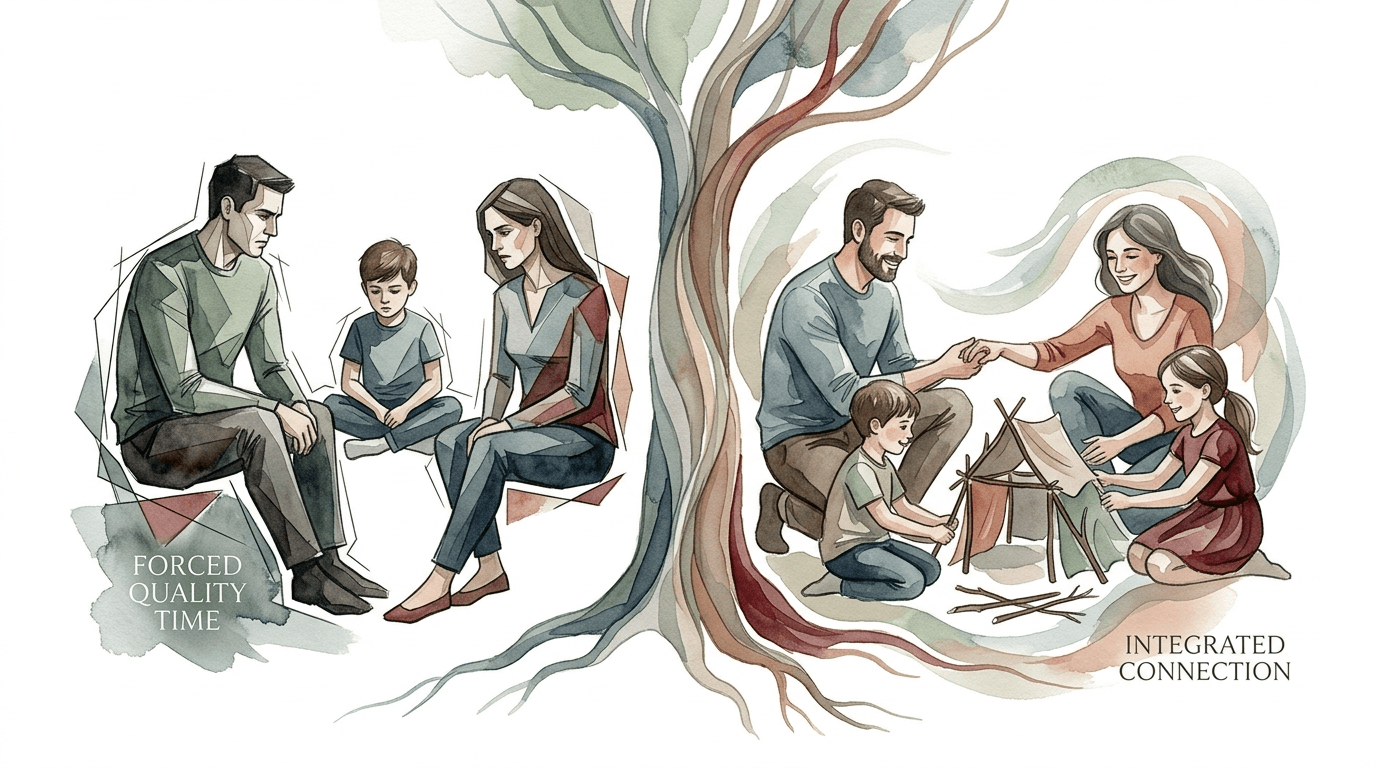
Integrated Connection vs. Forced Quality Time
Understanding the difference between these two approaches can help you choose the right strategy for your family.
| Feature | Integrated Connection | Forced Quality Time |
|---|---|---|
| Primary Goal | Living life together and contributing to the home. | Creating a specific “memorable” experience. |
| Cost and Prep | Zero to low cost. Happens within existing routines. | Often expensive and requires significant planning. |
| Child’s Role | Active participant and contributor. | Passive recipient of entertainment. |
| Sustainability | High. Can be done daily without burnout. | Low. Hard to maintain on a regular basis. |
| Stress Level | Low stakes. Mistakes are part of the process. | High pressure to “have fun” and get the right photo. |
Practical Tips for Success
Ready to start? Here are some actionable tips you can apply today to improve family connection through shared work.
- Use “Special Helper” Roles: Give younger kids a specific title for the day. Being the “Lead Gardener” or the “Sous Chef” makes the work feel more like an adventure.
- narrate Your Work: Even if your child isn’t helping yet, talk through what you are doing. “Now I’m adding salt to the water so the pasta tastes good.” This invites them into your world.
- Accept the Mess: Expect that flour will end up on the floor and water will splash out of the bucket. Keep a rag nearby and make cleaning up part of the activity too.
- Keep it Age-Appropriate: Matching socks for toddlers, clearing the table for elementary kids, and meal planning for teens. Success depends on the task fitting the child’s skill level.
- Focus on the Finish Line: Celebrate the completion of the work. Sit down and enjoy the meal you cooked or admire the clean car together. Reinforce the “we did this” feeling.
Advanced Strategies for Strengthening Bonds
For those who want to go deeper, look for ways to turn shared work into a mentorship program. This moves beyond simple tasks and into the realm of “family mission.”
Consider starting a “legacy project.” This is a long-term goal that requires months of effort. Examples include building a treehouse, restoring an old piece of furniture, or creating a large-scale vegetable garden. These projects teach children about delayed gratification and the power of consistent, incremental work. They create a sense of shared history that is unique to your family.
You can also introduce “Skill Saturday.” Dedicate an hour to teaching a specific, practical life skill. It could be how to sew a button, how to use a drill, or how to follow a budget. Let your child choose the skill. This shifts the dynamic to one where you are actively investing in their future independence.
Finally, incorporate shared reflection. After a big project, ask each other: “What was the hardest part? What are you most proud of? How did we work together as a team?” This helps children internalize the lessons learned and strengthens the emotional connection to the physical work.
Real-World Scenarios
How does this look in practice? Let’s look at two different families.
Scenario A: The Sunday Meal Prep
Instead of the parents spending Sunday afternoon alone in the kitchen, they involve their three children. The toddler is at the counter “washing” plastic containers. The seven-year-old is peeling carrots with a safety peeler. The twelve-year-old is looking at a recipe and measuring out dry ingredients. They are listening to music and talking about the upcoming week. The work takes 30 minutes longer than usual, but the kids feel like they helped provide food for the family. There is no yelling, just the steady hum of a team at work.
Scenario B: The Backyard Clean-Up
A family decides to clear out an overgrown corner of their yard. Instead of hiring a service, they spend three hours on a Saturday morning doing it together. They find a “treasure” (an old marble), they encounter a few spiders (which leads to a mini-science lesson), and they work up a sweat. When they are finished, they order pizza and sit on the back porch looking at the clear space. The twelve-year-old says, “I didn’t realize how much work that was going to be, but it looks awesome.” That realization is the foundation of empathy and self-worth.
Final Thoughts
Connection isn’t something you can buy or schedule; it is something you build through the daily actions of living together. By shifting from “entertainer” to “teammate,” you relieve the pressure on yourself and give your children a much more valuable gift: a sense of belonging and capability. Shared work provides the perfect low-pressure environment for conversation, mentorship, and mutual respect to grow.
Stop waiting for the perfect vacation or the expensive outing to connect with your kids. Look at the sink full of dishes or the messy garden as your next great bonding opportunity. The work of a home is never done, and that is actually a good thing. It means you have a lifetime of opportunities to build a family culture that is rooted in real, integrated connection.
Experiment with one small task this week. Invite your child into your world, lower your expectations for perfection, and focus on the person standing next to you. You might be surprised at how much closer you feel after just ten minutes of shared work. These small, repeated moments of participation are the “super glue” that holds a family together through the years.
Sources
1 starry.org (https://starry.org/increasing-connection-strategies-for-families/) | 2 peacefamilycounseling.com (https://peacefamilycounseling.com/making-time-matter-a-guide-to-creating-meaningful-family-moments/) | 3 pakeys.org (https://www.pakeys.org/the-importance-of-household-chores-for-children/) | 4 psychologytoday.com (https://www.psychologytoday.com/us/blog/it-starts-at-home/202308/the-benefits-of-kid-chores) | 5 utahparentcenter.org (https://utahparentcenter.org/quality-time-ideas/) | 6 blueprint.ai (https://www.blueprint.ai/blog/family-therapy-activities) | 7 helpmegrowutah.org (https://helpmegrowutah.org/blog/the-benefits-of-childhood-chores/) | 8 brighthorizons.com (https://www.brighthorizons.com/article/parenting/benefits-of-chores) | 9 onecentralhealth.com.au (https://www.onecentralhealth.com.au/blog/the-importance-of-kids-doing-chores/) | 10 uvws.org (https://www.uvws.org/news/s94a63z7yun3fczjm80xh8fzivafkb) | 11 playmatters.org.au (https://playmatters.org.au/blog/9-reasons-to-involve-children-in-household-chores) | 12 connectedfamilies.org (https://connectedfamilies.org/family-bonding-activities/) | 13 connectedfamilies.org (https://connectedfamilies.org/family-bonding-activities/) | 14 nurturingparenting.com (https://www.nurturingparenting.com/blog/10-engaging-family-activities-to-strengthen-emotional-bonds/) | 15 uhhospitals.org (https://www.uhhospitals.org/blog/articles/2025/07/chores-are-good-for-kids) | 16 ocodile.com (https://ocodile.com/blogs/the-little-space/family-quality-time-ideas) | 17 usu.edu (https://extension.usu.edu/relationships/faq/the-importance-of-playing-with-your-child) | 18 harvard.edu (https://mcc.gse.harvard.edu/whats-new/chores-caring-kids) | 19 youtube.com (https://www.youtube.com/watch?v=CSqK42Y4va4) | 20 youtube.com (https://www.youtube.com/watch?v=CSqK42Y4va4) | 21 novellaprep.com (https://novellaprep.com/blog/surprising-benefits-of-chores-for-child-development/) | 22 growingkiwigardeners.co.nz (https://www.growingkiwigardeners.co.nz/post/connecting-children-to-where-food-comes-from) | 23 learningforapurpose.com (https://learningforapurpose.com/family-bonding-activities/) | 24 ucanr.edu (https://ucanr.edu/blog/backyard-gardener/article/gardening-children) | 25 napacenter.org (https://napacenter.org/chores-for-kids/) | 26 theravaultllc.com (https://theravaultllc.com/5-simple-ways-to-build-family-connection-in-busy-households/) | 27 nurturingparenting.com (https://www.nurturingparenting.com/blog/10-engaging-family-activities-to-strengthen-emotional-bonds/)