Heirloom Driftwood Sailboat Models Vs Plastic
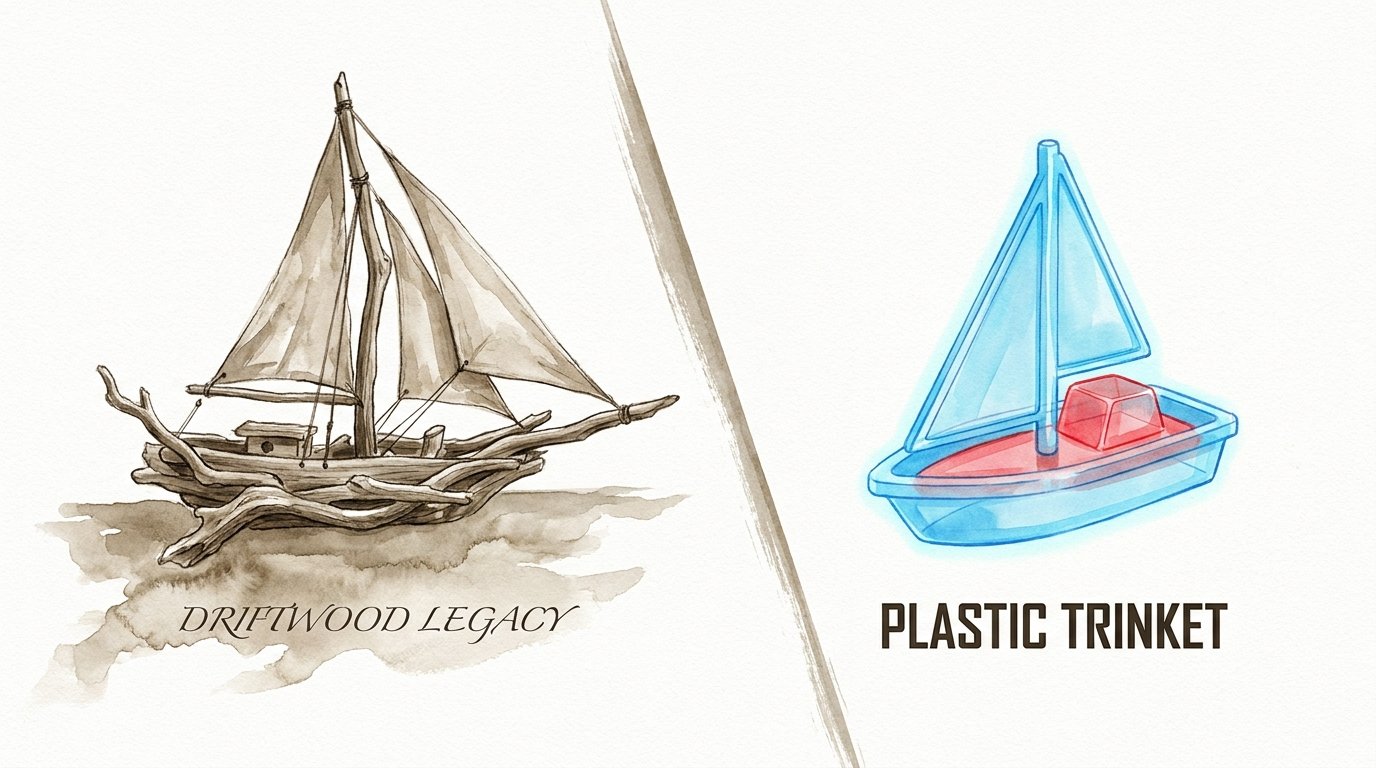
While plastic decor begins to fail the moment it leaves the factory, a ship forged by the Pacific is just getting started. Most ‘coastal’ decor is just landfill in waiting. We’ve traded the enduring soul of salt-cured timber for injection-molded garbage that loses its charm the second the trend shifts. A driftwood sailboat isn’t just a decoration; it’s a piece of maritime history that has already survived the ocean’s worst. Why trust your home’s aesthetic to something that can’t even survive a move?
[affiai]Heirloom Driftwood Sailboat Models Vs Plastic
Heirloom driftwood sailboat models are handcrafted vessels created from timber that has been naturally seasoned by the tides, salt, and sun. Unlike mass-produced plastic replicas, these models utilize “flotsam” and “jetsam”—wood that has been tumbled by the sea until only the heartwood remains. This process creates a material that is literally tempered by the elements, resulting in a silvered patina and structural density that no factory can replicate.
In real-world terms, a plastic sailboat is a static object. It is born in a mold and begins to degrade, fade, or crack within a few years of exposure to sunlight. A driftwood sailboat is a dynamic piece of maritime folk art. It represents a physical journey across oceans, sometimes traveling thousands of miles before being plucked from the shoreline to be rigged as a miniature ship. These models are used by collectors and interior designers to ground a room in authenticity, providing a tactile connection to the rugged reality of the coastline.
Think of it like the difference between a synthetic fragrance and the smell of a real cedar forest after rain. One is a clever imitation; the other is the thing itself. Driftwood models carry the “pioneer grit” of the sea, offering a weathered aesthetic that actually improves as it ages in your home. They serve as a legacy piece because they are already ancient by the time they reach your mantel.
The Nautical Roots of Driftwood Art
Maritime folk art has historically relied on the materials provided by the sea. For centuries, sailors on long voyages or coastal dwellers with limited resources used found wood to carve toys, tools, and tributes to the vessels they relied on for survival. This tradition of “making do” with what the tide brought in has evolved into a sophisticated art form that celebrates the raw, unpolished beauty of nature.
How the Craft Works: From Shoreline to Shelf
Creating a high-quality heirloom model begins long before a tool touches the wood. The first and most critical step is ethical sourcing. You must find timber that has the “bones” of a hull—a piece that is dense, salt-cured, and free of active rot. Hardwoods like oak or mahogany that have fallen from historic shipwrecks are the gold standard, though seasoned cedar and cypress are more common and highly durable.
Once the wood is harvested, it must undergo a rigorous cleaning and curing process. Saltwater wood often carries microscopic hitchhikers, from sand gnats to wood-boring beetles. To ensure the piece is safe for your home, most practitioners soak the wood in a mild bleach solution or bake it at low temperatures to sterilize the interior fibers. This prevents the wood from warping or releasing “stinky beach” odors once it enters a climate-controlled environment.
The rigging process involves identifying the natural center of gravity. A hole is drilled into the “hull” to accept a mast, usually another sturdy piece of driftwood or a reclaimed dowel. Instead of using nylon or plastic strings, heirloom models utilize natural fibers like hemp twine, cotton canvas, or weathered muslin for the sails. These materials breathe and age in tandem with the wood, maintaining the cohesive, organic feel of the piece.
Curing and Sterilization Steps
- Mechanical Cleaning: Use a stiff wire brush to remove loose bark, sand, and salt crust from the surface.
- The Soak: Submerge the wood in a mixture of one part bleach to ten parts water for at least 24 hours to kill mold spores and insects.
- Dehydration: Air-dry the wood in a shaded, well-ventilated area for two weeks, or use an oven set to 150°F (65°C) for several hours to ensure the core is bone-dry.
- Sealing: Apply a light coat of tung oil or linseed oil to protect the fibers without creating a plastic-like shine.
Benefits of Choosing Driftwood Over Synthetic Materials
The most immediate benefit is the absolute uniqueness of the object. Plastic models are identical by design, whereas nature never produces the same piece of driftwood twice. Every knot, grain swirl, and wormhole tells a story of a specific tree and a specific storm. When you own a driftwood sailboat, you own the only one of its kind in existence.
Environmental sustainability is another measurable advantage. Plastic decor is a petrochemical product that contributes to global microplastic pollution and resides in landfills for millennia. Driftwood is a reclaimed natural resource. By turning flotsam into art, you are participating in a cycle of renewal, giving a “dead” piece of timber a second life as a legacy item.
Psychologically, these pieces contribute to what designers call “biophilic design.” Natural textures and weathered wood have been shown to reduce stress and improve the “warmth” of a living space. A driftwood model doesn’t just look like the ocean; it feels like the ocean, bringing a sense of calm and endurance that synthetic materials cannot provide.
Challenges and Common Mistakes
One frequent error is failing to remove the salt from the wood before rigging. Salt is hygroscopic, meaning it pulls moisture from the air. If you don’t thoroughly rinse and dry your driftwood, it may “sweat” in humid weather, potentially damaging the surface it sits on or causing the rigging to mold. Always ensure a deep freshwater soak follows the initial collection.
Another pitfall is over-processing the wood. Beginners often try to sand the driftwood until it is perfectly smooth and uniform. This strips away the “soul” of the piece—the very texture that makes it valuable. The goal is to preserve the weathering, not erase it. If you wanted a smooth, perfect boat, you should have bought the plastic one.
Structural integrity is also a concern. Not all wood on the beach is usable. Some pieces are “punky,” meaning the interior has become spongy and weak from fungal decay. You can test this by pressing a thumbnail or a small screwdriver into the wood; if it sinks in easily, the piece will likely crumble over time and won’t hold the tension of the rigging.
Limitations of Driftwood Models
Realistic constraints must be acknowledged. Driftwood models are generally heavier and more fragile than their plastic counterparts. The rigging, often made of natural cotton or hemp, can become brittle if kept in direct, harsh sunlight for decades. Unlike a plastic toy, these are not meant to be handled frequently or used as playthings by children.
Environmental limitations also exist. In some protected coastal areas and national parks, it is illegal to remove driftwood because it provides critical habitat for shoreline organisms. You must be aware of local regulations before beachcombing. Additionally, because these are handcrafted from found materials, you cannot “order” a specific size or shape with factory precision; you are at the mercy of what the sea provides.
Comparison: Plastic vs. Resin vs. Heirloom Driftwood
| Feature | Plastic (Mass Market) | Resin (Artisan Cast) | Driftwood (Heirloom) |
|---|---|---|---|
| Lifespan | 3-7 years before fading | 10-20 years (brittle) | Indefinite (Generational) |
| Uniqueness | Zero (Mass produced) | Moderate (Hand painted) | High (One-of-a-kind) |
| Maintenance | Minimal (Dusting) | Minimal | Occasional oiling |
| Sustainability | Low (Petroleum based) | Low (Chemical resins) | Excellent (Reclaimed) |
Practical Tips for Display and Care
To keep your heirloom model in peak condition, avoid placing it directly in front of a heating vent or an air conditioner. Extreme shifts in humidity can cause the wood to expand and contract, which might loosen the mast or snap the delicate rigging lines. A stable, indoor environment is best for long-term preservation.
Cleaning should be done with a soft-bristled brush or a can of compressed air. Never use liquid cleaners or furniture polish on the raw wood, as these can seep into the pores and change the color permanently. If the wood begins to look “thirsty” or excessively dry after a few years, a light application of beeswax or high-quality wood oil will restore its depth without creating an artificial shine.
- Rigging Tension: If the sails begin to sag, you can often “tighten” them by lightly misting the fabric with distilled water. As it dries, the fibers will shrink slightly and pull the lines taut.
- Mounting: Use a heavy, stable base if the driftwood hull is irregular. A simple block of reclaimed slate or a heavier piece of hardwood provides a beautiful contrast to the silvered driftwood.
- Lighting: Use warm, directional LED lighting to highlight the texture. Shadow play on the weathered grooves of the wood adds significant visual depth.
Advanced Considerations for Collectors
Serious practitioners often look for “signed” pieces or those that incorporate other reclaimed maritime materials. This might include using rusted iron nails found on the beach as cleats, or using copper wire that has developed a green verdigris patina. These additional elements add layers of history and complexity to the model.
Understanding the “wood type” of your driftwood can also provide insight into its history. For example, finding a piece of tropical teak on a North Atlantic beach suggests a long journey via the Gulf Stream. Identifying these woods requires a keen eye for grain patterns and weight; teak and mahogany are significantly heavier and more “oily” to the touch than local pines or poplars.
Scaling is another advanced concept. While these are not meant to be exact architectural replicas, maintain a sense of “visual logic.” The ratio of the mast height to the hull length should feel balanced. A mast that is too tall for a small, lightweight hull will make the piece look amateurish and unstable, whereas a lower, sturdier rig evokes the “pioneer-grit” of a working coastal schooner.
Example Scenario: The Pacific Gale Model
Imagine a collector who finds a piece of weathered cedar on the rugged coast of Washington state. The wood is dense, twisted, and has a natural “v-shape” that suggests the bow of a ship. This isn’t just a stick; it is the foundation for a “Pacific Gale” class model.
The craftsman cleans the wood, leaving the deep scars from where it was pounded against rocks. He drills a single mast hole and fits a piece of sun-bleached branch found in the same cove. For sails, he uses heavy-duty canvas from an old drop cloth, stained with tea to give it a parchment-like hue. He rigs the vessel with tarred twine, mimicking the smell and look of a traditional fishing boat.
The result is a three-pound sculpture that carries the weight of the Pacific. When placed on a mantel, it draws the eye not because it is “pretty,” but because it is formidable. It looks as though it could actually sail, and it carries the silent authority of an object that has already survived the end of the world several times over.
Final Thoughts
Investing in a driftwood sailboat model is a rejection of the “disposable” culture that dominates modern home decor. It is a choice to surround yourself with objects that have earned their place in the world through endurance rather than manufacturing efficiency. These models serve as a reminder that beauty is often found in the broken and the weathered.
By choosing an heirloom piece over a plastic trinket, you are securing a legacy that will likely outlast the home it sits in. You are buying into a story of the tides, the winds, and the hands that were patient enough to see a ship hidden inside a piece of sea-tossed timber. We encourage you to seek out the authentic, to touch the salt-cured grain, and to let a piece of the ocean’s history anchor your space.
Whether you choose to build one yourself or support an artisan who walks the shorelines, remember that the value of the piece lies in its struggle. The sea doesn’t make things easy, but it does make them permanent. That is the true power of a driftwood legacy.
Sources
1 kuksa.shop (https://www.kuksa.shop/en/blog/driftwood/) | 2 hawk-hill.com (https://www.hawk-hill.com/how-to-clean-driftwood/) | 3 gcwmultimedia.com (https://www.gcwmultimedia.com/diy-driftwood-sailboat/) | 4 homeroad.net (https://www.homeroad.net/2012/07/a-sailboat-mantel.html) | 5 pondtrademag.com (https://www.pondtrademag.com/driftwood-for-water-features/) | 6 youtube.com (https://www.youtube.com/watch?v=aFWLyAPowMA) | 7 nostalgia-ithaki.com (https://nostalgia-ithaki.com/shop/handmade-boats/driftwood-boats/artisan-driftwood-sailboats/) | 8 junglebound.in (https://www.junglebound.in/blog/plastic-vs-wood-environmental-impact-comparison-for-sustainable-choices)