How Does Driftwood Form?
Driftwood has an intriguing and mysterious way of finding its place on sandy shores, but have you ever wondered how it actually forms? In this article, we will uncover the fascinating process behind the creation of driftwood. From the first step of a tree falling near a river to its journey through currents and tides, you’ll discover the remarkable transformation that occurs before this weathered treasure finally settles on the beach. So, join us as we explore the enchanting world of driftwood formation and unlock the secrets hidden within these beautiful pieces of nature.
[affiai]Factors that Contribute to Driftwood Formation
Driftwood is a fascinating natural phenomenon that can be found along the shores of rivers, streams, and coastlines. It is formed through a combination of various factors, each playing a crucial role in its creation and transformation over time. Understanding these factors can provide insight into the complex process of driftwood formation.
Deposition of Dead Trees
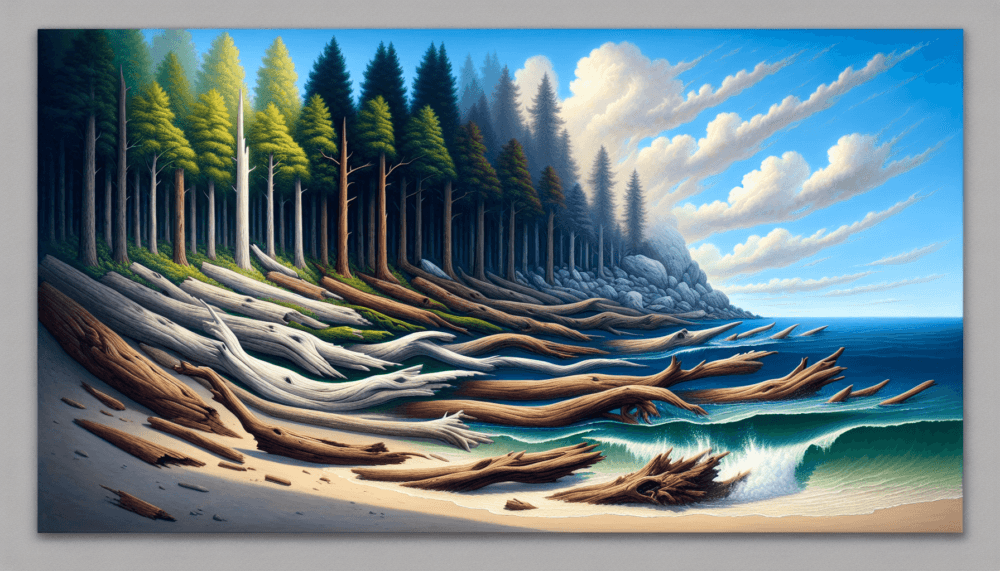
One of the primary contributors to driftwood formation is the deposition of dead trees. When trees die in close proximity to water bodies, they have the potential to become driftwood. This can occur through a variety of means, including sudden death, falling into water bodies, or transportation by river currents.
Sudden Death
Trees can die for a multitude of reasons, such as disease, old age, or severe weather events. When a tree abruptly dies near a water body, it becomes susceptible to the processes that lead to driftwood formation.
Falling into Water Bodies
Trees that grow close to the edge of water bodies, such as rivers or lakes, are at risk of falling into the water due to erosion or natural instability. These fallen trees then enter the realm of driftwood, as they are carried along by the current.
Transportation by River Currents
Once fallen into a river, trees are further transported downstream by the force of the water current. This transportation plays a vital role in the driftwood formation process.
River and Stream Erosion
Another factor that contributes to driftwood formation is river and stream erosion. The constant movement and force of water can wear away riverbanks, leading to the detachment of trees and their subsequent driftwood transformation.
Bank Erosion
Riverbanks are vulnerable to erosion caused by the sheer force of flowing water. As the river eats away at the banks, trees that were once firmly rooted can become uprooted and begin their journey as driftwood.
Falling into Rivers
In addition to bank erosion, trees growing on unstable ground near rivers can also fall directly into the water due to erosion. These fallen trees then join the ranks of driftwood as they are carried downstream.
Transportation by River Currents
Similar to the transportation process mentioned earlier, river currents are instrumental in the movement of driftwood. As the water flows, it carries the fallen trees along, shaping them into unique and fascinating forms.
Flooding and Storms
Flooding and storms are powerful natural events that can significantly contribute to the formation of driftwood. The force and intensity of these events often result in widespread displacement of trees and subsequent accumulation as driftwood.
High Water Levels
During flooding or storms, water levels rise dramatically, leading to the inundation of trees near water bodies. When these trees become submerged, they have the potential to transform into driftwood.
Strong Currents
Flooding and storms often bring with them strong currents, which can dislodge trees from their original locations. These trees are then carried along by the force of the water, undergoing the process of becoming driftwood.
Upstream Transport
One unique aspect of driftwood formation during flooding is the potential for upstream transport. When water levels rise, trees can be swept upstream and further away from their source, ultimately becoming driftwood in their new location.
Downstream Accumulation
Conversely, downstream accumulation is also a significant outcome of flooding and storms. As the water recedes, the displaced trees gather and accumulate along shorelines, resulting in the formation of driftwood in concentrated areas.
Coastal Erosion
Coastal erosion is another influential factor in the formation of driftwood. The relentless action of waves, tidal currents, beach erosion, and even collapsing cliffs can contribute to the creation and movement of driftwood.
Wave Action
The constant pounding of waves against coastal areas can erode the land, dislodging trees and vegetation. These fallen trees are then exposed to the forces of driftwood formation.
Tidal Currents
Tidal currents, driven by the ebb and flow of the tides, can transport trees and vegetation along the coastline. This movement contributes to the accumulation and formation of driftwood.
Beach Erosion
Beach erosion is a natural process that can displace trees growing near the shoreline. As the beach erodes and retreats, these trees enter the realm of driftwood and move with the dynamics of the coastal environment.
Cascading Down from Cliffs
In some coastal areas, cliffs are continuously subjected to erosion, leading to the cascading down of rocks, trees, and vegetation. These fallen trees make their way to the shorelines and contribute to the formation of driftwood.
Natural Decay
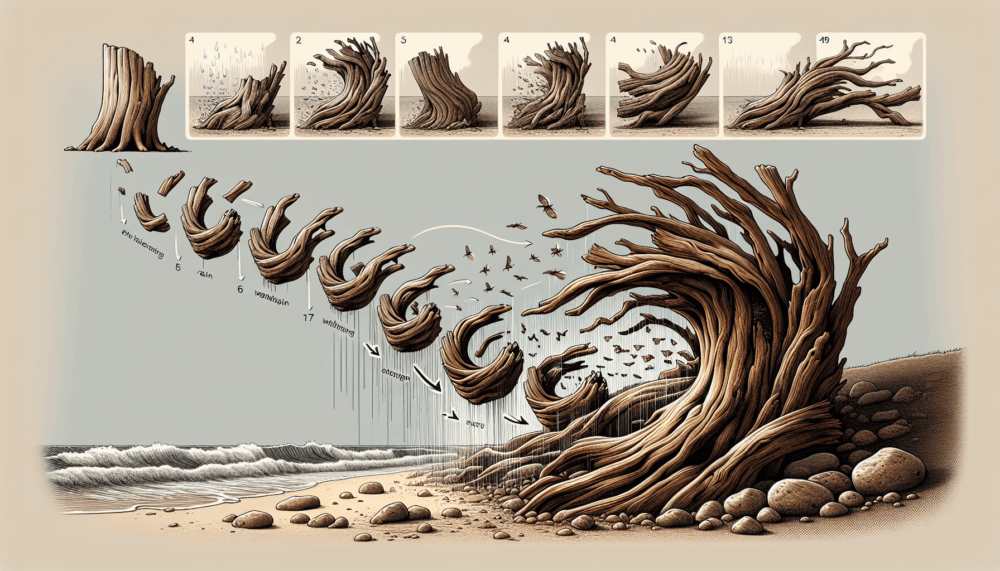
The natural decay of wood is a significant process in driftwood formation. Over time, the exposure of driftwood to various elements results in its gradual breakdown and transformation.
Microbial Breakdown
When driftwood comes into contact with water and soil, it becomes a breeding ground for various microorganisms. These organisms break down the wood through a series of biological processes, contributing to its decay.
Exposure to Sunlight
The prolonged exposure of driftwood to sunlight accelerates its decay. The energy from the sun’s rays facilitates chemical reactions within the wood, causing it to break down further.
Chemical Weathering
Chemical weathering, as a result of exposure to elements such as rainwater and seawater, also plays a role in the decay of driftwood. The chemical reactions slowly dissolve the wood, transforming it over time.
Abrasion by Water and Rocks
The constant movement of water and rocks against driftwood can result in abrasion. This friction wears away at the wood, gradually breaking it down and shaping it into distinctive forms.
Prolonged Water Submersion
When driftwood remains submerged in water for extended periods, it undergoes significant changes. The prolonged immersion causes the wood to become waterlogged and weak, contributing to its eventual decay.
Formation Processes of Driftwood
The formation of driftwood can be categorized into three distinct processes: detachment from source trees, transportation by water, and deposition on shorelines.
Detachment from Source Trees
The initial step in driftwood formation involves the detachment of trees from their original location. This can occur through both natural processes and human activities.
Natural Processes
Natural processes such as storms, flooding, intense erosion, and old age can cause trees to become detached from the ground. These fallen trees then enter the cycle of driftwood formation.
Human Activities
In some cases, human activities such as logging, construction, or deliberate cutting of trees near water bodies can initiate the detachment of trees. These trees are then transported by water, becoming driftwood.
Transportation by Water
Once detached from their source trees, the fallen trees are transported by water to various destinations. This transportation can occur through river and stream currents, oceanic currents, or tidal actions.
River and Stream Currents
The force of river and stream currents carries the fallen trees downstream, sometimes over vast distances. As the trees travel, they are gradually shaped by the water, transforming into driftwood.
Oceanic Currents
For trees that eventually make their way into the ocean, oceanic currents play a crucial role in their transportation. These powerful currents direct the driftwood, shaping it as it moves through the vast expanse of the sea.
Tidal Actions
Tidal actions, driven by the gravitational pull of the moon, also contribute to the transportation of driftwood. Tides can push the fallen trees ashore or carry them further out to sea, depending on the ebb and flow of the tides.
Deposition on Shorelines
The final step in driftwood formation involves the deposition of the transported trees onto shorelines. This deposition occurs as a result of tidal effects, beach profiles, and various shoreline obstacles.
Tidal Effects
Tides can be instrumental in determining where driftwood is deposited. The rise and fall of the tides affect the distribution of driftwood along the shoreline, leading to its accumulation in specific areas.
Beach Profiles
Beach profiles, which describe the shape and slope of a beach, influence the deposition of driftwood. Steep beaches may result in the accumulation of driftwood at the high water mark, while gently sloping beaches may allow driftwood to spread more evenly along the shoreline.
Shoreline Obstacles
The presence of shoreline obstacles, such as large rocks or man-made structures, can influence where driftwood is deposited. These obstacles can cause driftwood to accumulate, creating distinct patterns and formations along the shore.
In conclusion, the formation of driftwood is a complex process influenced by various factors. The deposition of dead trees, river and stream erosion, flooding and storms, coastal erosion, and natural decay all play critical roles in the creation of driftwood. Understanding these factors and the processes involved provides a deeper appreciation for the beauty and intricacy of driftwood found along our shores.