How To Install Large Driftwood Wall Decor
Stop hanging ‘decor’ and start using the ocean’s bones to redefine your home’s entire geometry. Most people treat driftwood like a picture frame, but its true power lies in its structural potential. When you move away from ‘hanging art’ and toward ‘architectural integration,’ you turn a simple room into a coastal sanctuary. Learn how to anchor massive timber directly into your home’s skeleton for a look that feels permanent and primal.
[affiai]There is a fundamental difference between a house that contains things and a home that is built from them. When you bring a massive piece of driftwood across your threshold, you aren’t just adding a visual accessory. You are inviting a piece of the earth’s history—scoured by salt and hardened by sun—to become part of your living space. This guide is for those who want to do more than tap a nail into drywall. It is for those ready to use real tools and real engineering to secure heavy, irregular timber into the very studs of their home.
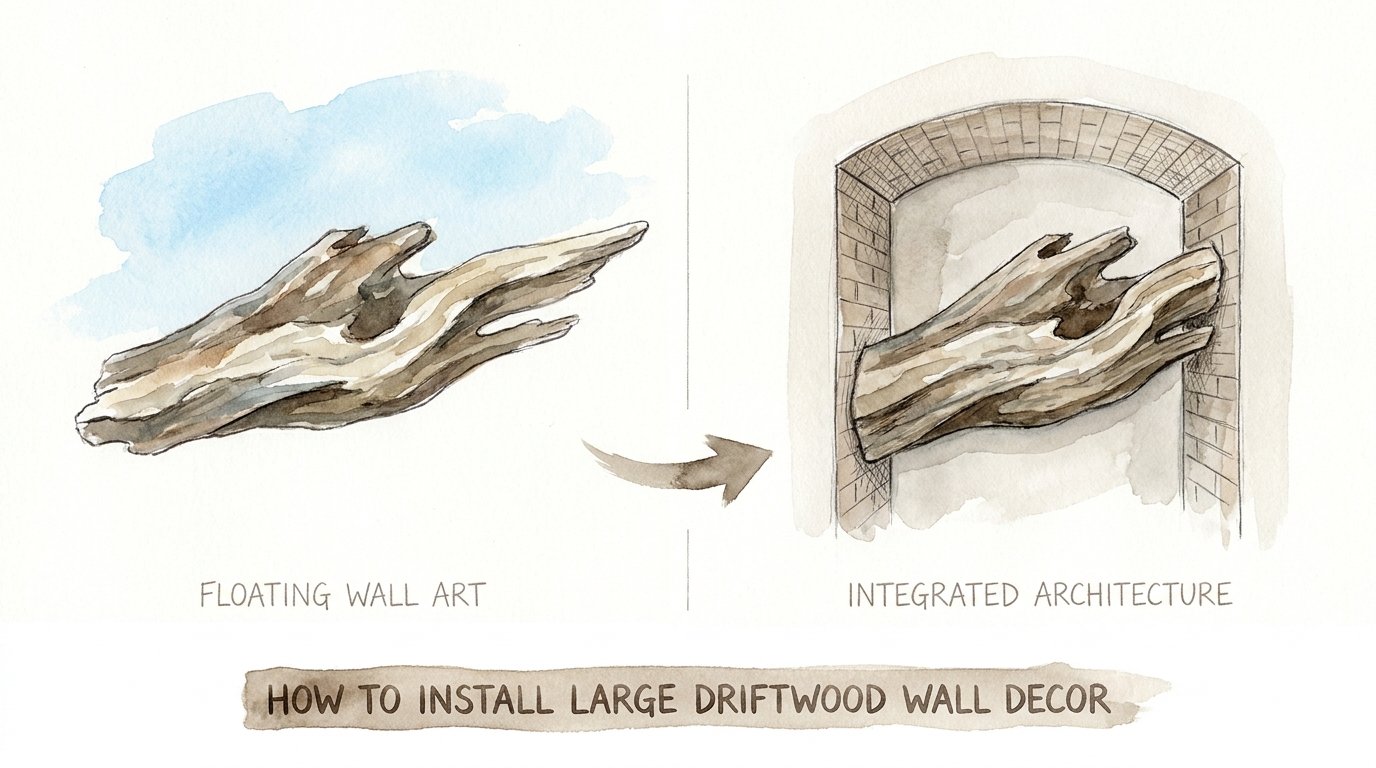
Integrated architecture is about the seamless blend of the natural world and the built environment. It creates a sense of “prospect and refuge,” a core tenet of biophilic design that makes us feel safe yet connected to the wild. By the time you finish this process, your driftwood won’t look like it’s hanging on the wall; it will look like the wall grew around it.
How To Install Large Driftwood Wall Decor
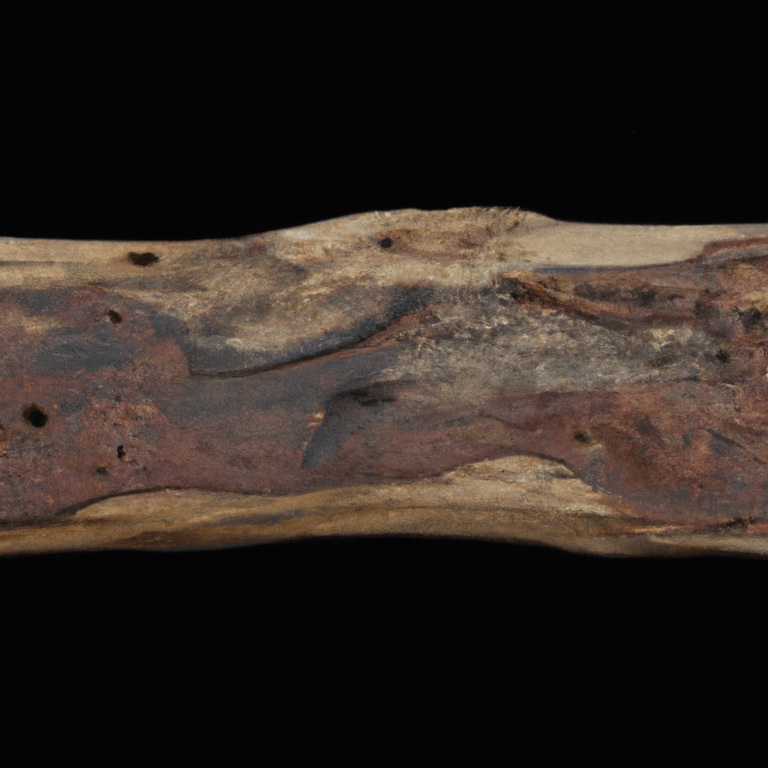
Installing large driftwood wall decor is the process of mounting oversized, weathered timber—often weighing between 20 and 100 pounds—securely to a vertical surface. Unlike standard art, driftwood is non-linear, heavy, and structurally unpredictable. Proper installation requires identifying the wall’s internal skeleton and using heavy-duty fasteners to ensure the piece stays put for decades.
This practice exists because standard decor often feels “thin” in large rooms. A massive piece of driftwood provides scale, texture, and a sense of gravity that mass-produced items cannot match. You see this in high-end coastal estates, rustic mountain lodges, and modern minimalist lofts where the goal is to create a focal point that feels ancient and unshakeable.
In real-world terms, this is less like hanging a mirror and more like installing a kitchen cabinet or a floating mantel. You are dealing with “dead weight” and “leverage.” Because driftwood often protrudes away from the wall, it exerts a pulling force on the anchors. Mastering the install means understanding how to counter that force using the right hardware and placement.
The Preparation: Curing the Ocean’s Bones
You cannot simply drag a log off the beach and bolt it to your living room wall. Raw driftwood is a vessel for salt, moisture, and often, uninvited guests like sand gnats or wood-boring beetles. Preparation is the “grit” phase where you ensure the timber is as clean as the room it will inhabit.
The Deep Clean
Start with a stiff-bristled brush and clear water to remove the loose sand and crusty salt. For internal sanitation, most professionals use a 1:10 solution of bleach and water. Soak the piece for at least 24 hours if possible, or spray it liberally and scrub every crevice. If you prefer a more traditional approach, a mixture of water and Murphy’s Oil Soap or white vinegar can work for pieces that aren’t heavily infested.
The Drying Cycle
Moisture is the enemy of structural mounting. Wet wood is significantly heavier and can warp or rot once sealed against a wall. Depending on the thickness of the timber, drying can take anywhere from two weeks to several months in a dry, ventilated area. Some pioneers even use a DIY kiln or a dehumidifier-heavy room to speed up the process. You’ll know it’s ready when the wood feels surprisingly light for its size and the “damp” smell has been replaced by a neutral, earthy scent.
The Final Finish
Once dry, sand the rough edges by hand. Avoid orbital sanders; they tend to “flatten” the natural whorls and ripples created by the water. After sanding, apply a finish that preserves the “bone-white” or “drifted” look. Beeswax or a matte tung oil will nourish the fibers without giving the wood a plastic, artificial sheen. This layer also acts as a barrier against indoor humidity changes.
The Anatomy of the Install: Step-by-Step
Securing a massive timber requires a strategy that respects the laws of physics. You aren’t just looking for a spot on the wall; you are looking for the studs.
Step 1: The Visual Mock-up
Before you drill a single hole, have a partner hold the wood against the wall. Because driftwood is irregular, the “center of gravity” is rarely the geometric center. Use painter’s tape to mark the outer boundaries and the potential contact points where the wood sits flushest against the wall.
Step 2: Locating the Skeleton
Use a high-quality stud finder to locate the vertical 2×4 or 2×6 studs behind your drywall. In most modern homes, these are spaced 16 inches apart. Mark these clearly. Your goal is to have at least two major mounting points sink directly into these wooden supports. If the driftwood is exceptionally long, aim for three.
Step 3: Selecting the Hardware
For large timber, skip the picture wire. You have three primary choices:
- Lag Bolts: The gold standard for structural mounting. These thick, heavy-duty screws go through the wood and deep into the stud.
- French Cleats: Best for pieces with a flat backside. One bracket mounts to the wall (into studs), and the interlocking bracket mounts to the wood.
- Threaded Rods: For a “floating” look, you can drill deep into the wood and the stud, then epoxy a threaded steel rod into both.
Step 4: The Pilot Hole and Sink
Drill a pilot hole through the driftwood at the contact point. This prevents the wood from splitting. If you are using lag bolts, countersink the hole so the bolt head sits below the surface. Drive the bolt into the wall stud until it is tight. To hide the hardware, mix some of the sawdust from the drilling with wood glue to create a paste. Pack this over the bolt head, let it dry, and sand it flush.
Benefits of Architectural Integration
Choosing to integrate large driftwood into your home’s architecture offers more than just a “pretty view.” It changes the psychological and physical atmosphere of the space.
Structural Permanence: When a piece is bolted to the studs, it becomes part of the home. It doesn’t rattle when the door slams; it doesn’t tilt when someone walks by. This permanence gives the room an “anchored” feel that relieves the subconscious stress often caused by cluttered or flimsy decor.
Biophilic Connection: Studies in biophilic design show that visual exposure to natural wood grains and “organized complexity” reduces heart rates and lowers cortisol levels. By scaling this up to a large driftwood installation, you are essentially “forest bathing” within your own four walls.
Uniqueness: No two pieces of driftwood are identical. While “floating art” can be replicated, a structural driftwood installation is a one-of-a-kind engineering feat that reflects the specific geometry of your room and the history of that specific timber.
Challenges and High-Stakes Mistakes
The biggest challenge with large-scale driftwood is the Dynamic Load. This is the stress placed on the wall over time. While a piece might weigh 40 pounds, its protrusion creates a lever effect that can pull anchors out of the wall if they aren’t properly seated in studs.
The “Drywall Only” Error: One of the most common mistakes is trusting heavy-duty drywall anchors for a protruding piece of wood. Even if an anchor is rated for 50 pounds, that rating is for “shear load” (weight pulling straight down). Protruding driftwood creates “tension load” (pulling out), which drywall is not designed to handle. Always hit at least one stud.
The Level Illusion: Because driftwood is crooked by nature, using a traditional level on the wood itself is useless. You must level the visual weight. Step back frequently during the mock-up phase to ensure the piece feels balanced, even if no single part of it is actually “straight.”
Limitations: When This May Not Work
As much as we love the “pioneer grit” of a massive timber install, there are real-world constraints to consider. Environment and legalities play a role in whether this project is feasible.
Rental Constraints: Most leases allow for small nail holes, but bolting a 60-pound log into the studs is usually considered a structural modification. If you cannot make permanent holes, you may be limited to smaller, lighter pieces that can be supported by heavy-duty Command strips or “monkey hooks,” though these will never achieve the same integrated look.
Wall Integrity: In very old homes with lath and plaster walls, drilling into studs can be precarious. Plaster is brittle and prone to cracking under the vibration of a heavy drill. In these cases, a specialized masonry bit and extra-long lag bolts are required to reach the solid wood behind the plaster layers.
Ethical Sourcing: In many coastal regions, removing large driftwood is regulated or prohibited to protect local ecosystems and prevent erosion. Always check local laws before hauling a “trophy” piece off a public beach. Often, it is better to source through licensed collectors who understand the ecological impact of their harvest.
Integrated Architecture vs. Floating Wall Art
To understand why structural integration is superior for large pieces, consider how it compares to standard “hanging” methods.
| Feature | Floating Wall Art | Integrated Architecture |
|---|---|---|
| Mounting Method | Wire, D-rings, Nails | Lag bolts, Stud-mounting |
| Visual Depth | Flat against wall | 3D / Protruding |
| Weight Limit | Low (5–15 lbs) | High (50+ lbs) |
| Atmosphere | Gallery / Decorative | Sanctuary / Permanent |
Practical Tips for the Modern Pioneer
Execution is everything. Use these field-tested tips to ensure your installation looks intentional rather than accidental.
- The 4x Safety Rule: When choosing hardware, divide the manufacturer’s weight rating by four. If an anchor says it holds 100 pounds, treat it as a 25-pound anchor for driftwood. This accounts for the leverage of a protruding object.
- Light the Shadow: Large driftwood creates deep shadows. Install a small, low-voltage LED puck light or a directional spotlight above the piece. The interplay of light and texture is what makes the wood look “alive.”
- Orientation Matters: Driftwood often has a “growth” direction. Generally, mounting it so the wider “root” end is lower or more centrally located creates a sense of stability. Mounting the heavy end high can make the piece feel like it’s falling.
- Bumpers are Key: Even if bolted tight, wood expands and contracts. Place small felt pads or clear rubber bumpers on any secondary contact points where the wood touches the drywall. This prevents scuffing and “chatter” noise.
Advanced Engineering: Lighting and Load
For those who want to take their coastal sanctuary to the next level, consider Internal Routing. This involves using a long, flexible drill bit to create a channel inside the driftwood itself. You can then thread low-voltage LED strips or thin wires through the core of the timber.
This allows the driftwood to act as its own light fixture, casting a soft glow from within its own cracks and crevices. This technique requires a steady hand and a deep understanding of the wood’s density, as you don’t want to compromise the structural integrity of the piece where it meets the wall anchors.
Another advanced move is the Nested Install. If you are renovating, you can actually cut into the drywall and mount the driftwood directly to the framing inside the wall, then patch the drywall around it. This creates the illusion that the timber is bursting through the structure of the house—the ultimate expression of architectural integration.
Example: The Living Room “Bones”
Imagine a living room with 12-foot ceilings and a vast, empty white wall. Most people would hang three framed prints. Instead, you find a 7-foot piece of cedar driftwood, silvered by decades in the Great Lakes. It has a massive, gnarled base and several “branches” that reach upward.
Following this guide, you identify three studs. You use 4-inch lag bolts to secure the base and the mid-section. You countersink the bolts and hide them with a sawdust-glue paste. Above the piece, you install a warm-spectrum spotlight. At night, the shadows of the “fingers” stretch across the ceiling, mimicking the canopy of a forest. The room no longer feels like a box; it feels like a sheltered cove. That is the power of the ocean’s bones.
Final Thoughts
Transforming your home with large driftwood is an exercise in patience and precision. It requires you to look past the surface of the wood and see the structural potential hidden within. By treating these pieces as architectural elements rather than mere decorations, you create a space that feels grounded in the natural world.
Don’t be afraid of the “heavy lift.” Finding the studs, drilling the holes, and anchoring the timber is a satisfying process that yields a result far more rewarding than anything you can buy at a furniture store. Your home is your sanctuary—build it with materials that have weathered the storm and come out stronger on the other side.
As you move forward, keep experimenting with how natural textures interact with your home’s lighting and layout. The more you integrate the raw elements of the earth into your daily environment, the more your living space will reflect the resilience and beauty of the world outside.
Sources
1 lakewedoweelife.com (https://www.lakewedoweelife.com/lake-life/driftwood-art-and-treasures-by-tammy-lovvorn) | 2 frenchcreekfarmhouse.com (https://www.frenchcreekfarmhouse.com/2020/01/how-to-safely-hang-heavy-stuff-on-wall.html) | 3 parklanejewelry.com (https://www2.parklanejewelry.com/how-to-wash-driftwood/) | 4 etwoodcrafts.com (https://etwoodcrafts.com/blogs/news/how-to-hang-heavy-wooden-art) | 5 tailorwoodhaven.com (https://tailorwoodhaven.com/blogs/wood-wall-art/how-to-hang-wood-panel-art-on-wall-the-right-way-to-showcase-your-craft) | 6 instructables.com (https://www.instructables.com/Large-Driftwood-Wall-Feature/) | 7 homestyler.com (https://pt.homestyler.com/article/safe-wall-decor-installation-guide) | 8 parklexprodema.com (https://parklexprodema.com/usa/blog/biophilic-design-with-wood-finishes/) | 9 bestbees.com (https://bestbees.com/biophilia-and-biophilic-design/) | 10 foresthomesstore.com (https://www.foresthomesstore.com/blogs/decor-for-wellbeing/how-to-differentiate-between-what-is-biophilic-design-and-what-isnt)