Minimalist Driftwood Wall Art Placement Guide
Why spend a weekend sanding when the ocean has already spent a decade polishing the perfect piece for you? We have been conditioned to believe that ‘art’ requires sweat, power tools, and dozens of steps. But in the world of high-end coastal minimalism, the best work is already done by the tides. Why spend 4 hours in a dusty workshop trying to mimic what the Pacific Ocean perfected over twenty years? Learn the art of strategic selection.
[affiai]High-end coastal minimalism is about the confidence to let nature speak for itself. It focuses on the raw, the weathered, and the authentic. You are not just hanging a branch on a wall; you are curating a story of survival and transformation. This approach values the salt-bleached grain and the softened edges that only years of saltwater immersion can provide.
Modern interiors often feel sterile because they lack history. A piece of driftwood brings a sense of time into a room. It connects the indoors to the wild, unpredictable energy of the coast. This guide will help you master the nuances of placing these natural sculptures so they look like intentional art rather than beach debris.
Minimalist Driftwood Wall Art Placement Guide
Successful placement begins with understanding visual weight. A piece of driftwood is visually “heavy” because of its complex texture and organic shape. It draws the eye immediately, so it must be placed where it can lead the gaze rather than clutter it. Minimalism thrives on negative space, meaning the wall around your art is just as important as the wood itself.
Positioning your art at the correct height is a non-negotiable rule of high-end design. Aim for the center of the piece to be approximately 57 to 60 inches from the floor. This aligns with the average human eye level and creates a gallery-like atmosphere. If you are hanging a large sculptural piece above a sofa, ensure there is 6 to 10 inches of “breathing room” between the bottom of the wood and the top of the furniture.
Large statement pieces belong on focal walls where they can command the room. Think of the space above a fireplace mantle or a long, empty hallway that needs a sense of direction. Small, intricate pieces work best in “moments”—those quiet corners like a reading nook or a small bathroom wall. These smaller installations invite closer inspection of the intricate wood grain and salt-washed silver tones.
Consider the orientation of the piece before you drill your first hole. A horizontal piece adds stability and widens a room, making it feel more grounded. A vertical piece creates height and a sense of aspiration. Move the wood around the wall, rotating it until the natural curves of the branches complement the existing lines of your home.
How to Master Strategic Selection and Preparation
Finding the right piece is the most critical step in this process. Strategic selection involves looking for “hardwood” skeletons that have lost their bark and soft tissue. You want wood that feels dense and sounds like stone when you tap it. Avoid pieces that are soft, crumbling, or show signs of active rot, as these will not survive the drying process indoors.
Cleaning is the next phase of the journey. Start by hosing off any loose sand, salt, and hitchhiking organisms. Use a stiff nylon brush to scrub the crevices without marring the natural patina. For pieces that will live in a bedroom or living area, a 24-hour soak in a mild bleach-water solution (one part bleach to nine parts water) is essential. This kills mold spores and any dormant insects hidden deep within the grain.
Curing requires patience and the power of the sun. Let your wood dry completely in a well-ventilated area, preferably under direct sunlight for several days. UV rays act as a natural sanitizer and help bleach the wood to that sought-after silver-gray hue. Ensure the core of the wood is bone-dry before you consider bringing it inside. If the wood feels cool to the touch, it still holds moisture that could lead to warping or wall damage.
Mounting heavy driftwood requires more than a simple nail. For substantial branches, use a French cleat system or heavy-duty D-rings rated for the specific weight. Locate your wall studs and secure your hardware directly into the timber frame. For lighter, airy pieces, “monkey hooks” or invisible monofilament line can create a floating effect that emphasizes the minimalist aesthetic.
Benefits of Coastal Minimalist Decor
Found art is the ultimate form of sustainable design. You are reclaiming a natural material that would otherwise decompose or be washed away. This reduces the demand for manufactured decor and minimizes your carbon footprint. Every piece of driftwood is 100% biodegradable and requires zero industrial processing to look beautiful.
The uniqueness of each piece provides a level of exclusivity that high-end furniture stores cannot match. No two branches are weathered exactly the same way by the tides. Your wall art becomes a one-of-a-kind sculpture that tells a specific geographic story. It serves as a conversation starter that feels personal and deeply rooted in the natural world.
Texture is the secret weapon of the minimalist designer. In a room filled with flat surfaces like drywall, glass, and polished stone, the rugged grain of driftwood provides necessary contrast. It softens the “edges” of a modern room. The tactile quality of weathered wood adds warmth without the need for loud colors or busy patterns.
Biophilic design—incorporating nature into the home—has proven psychological benefits. Surrounding yourself with organic shapes and natural materials can reduce stress and improve focus. A piece of coastal art brings the calming essence of the shoreline into your daily environment. It serves as a visual reminder of the slower pace of the natural world.
Challenges and Common Mistakes
One of the most frequent errors is failing to properly treat the wood for pests. Termites, wood-boring beetles, and spiders often take up residence in sea-tossed timber. If you skip the sanitization step, you risk introducing these insects into your home’s structural framing. Always assume a piece of raw wood has “guests” until it has been soaked and dried.
Over-treating the wood can destroy its natural character. Beginners often feel the urge to apply heavy varnishes or glossy sealants that make the wood look “wet” or plastic-like. This ruins the soft, matte finish that defines high-end coastal minimalism. Stick to clear matte lacquers or natural oils like linseed or tung oil if you must seal the surface at all.
Incorrect scaling can make a beautiful piece of wood look like an afterthought. A tiny branch on a massive white wall feels lonely and insignificant. Conversely, an oversized trunk in a cramped hallway can feel claustrophobic. Measure your wall space and your furniture before you commit to a specific piece of wood.
Poor lighting often hides the best features of driftwood. If you place a piece in a dark corner without dedicated accent lighting, it will just look like a gray shadow. Use “raking light”—lighting that hits the surface at an angle—to highlight the deep ridges and hollows of the grain. This creates dramatic shadows that give the art a three-dimensional presence.
Limitations of Driftwood Art
Environmental laws vary significantly by region and must be respected. Many state parks and national seashores prohibit the removal of any natural materials, including driftwood. These logs serve as critical habitat for coastal birds and help prevent beach erosion. Always check local regulations before you start beachcombing to ensure your art is legally and ethically sourced.
Weight is a serious structural consideration for large-scale installations. A water-logged piece of cedar might weigh 10 pounds on the beach but can be surprisingly heavy even after drying. Standard drywall anchors may not be enough to hold a 40-pound branch safely over a bed. You must be prepared to use professional-grade mounting solutions or hire a specialist for heavy installations.
Brittany and fragility are common in older, sun-bleached pieces. Wood that has spent decades in the sun can become “punky” or brittle. It might look solid but can crumble when you try to drill into it for mounting. This limits the types of hardware you can use and may require you to use resin-stabilization techniques for particularly delicate finds.
Climate and humidity can affect the longevity of your art. If you live in an extremely dry environment, the wood may continue to shrink and crack over time. In very humid areas, untreated wood can absorb moisture and develop surface mold. While these changes are natural, they can alter the appearance of your piece over the years.
Strategic Selection vs. Over-Fabrication
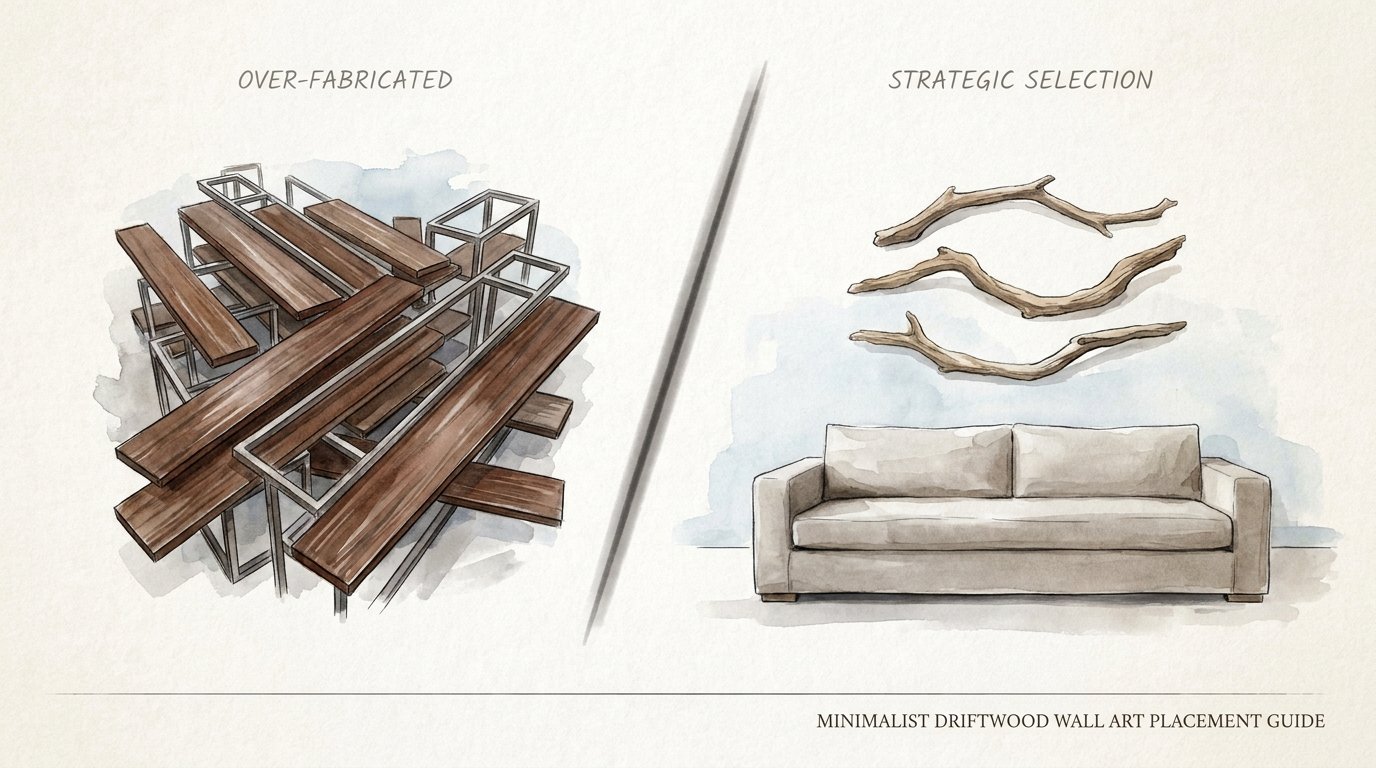
Strategic selection is the hallmark of a seasoned curator. It means having the discipline to wait for the ocean to provide the perfect form. Over-fabrication occurs when a designer tries to force a piece of wood to be something it isn’t through excessive cutting, carving, and sanding. The goal is to reveal the beauty already present, not to manufacture a new shape.
| Feature | Strategic Selection | Over-Fabricated Decor |
|---|---|---|
| Visual Texture | Complex, organic, salt-bleached. | Smooth, uniform, artificial. |
| Level of Effort | High effort in finding; low in labor. | Low effort in finding; high in labor. |
| Aesthetic Value | Authentic, high-end, timeless. | Mass-produced, trendy, dated. |
| Sustainability | 100% reclaimed/zero waste. | Often uses new timber and chemicals. |
Practical Tips for Immediate Application
Start by looking for “ghostwood” or cedar. These species weather into beautiful silver-white tones and are naturally resistant to rot. They provide the most consistent results for indoor decor. If you find a piece you love that is too dark, a light application of wood bleach can help achieve that sun-washed minimalist look.
Use a “mock-up” before you drill. Tape a large piece of brown kraft paper to the wall and trace the outline of your driftwood. This allows you to visualize the placement and adjust the height without damaging your walls. It is a simple step that saves hours of repair work later.
Focus on the “S-curve” or Hogarth’s curve of beauty. Humans are naturally drawn to serpentine shapes. When selecting your pieces, look for wood that has a natural flow or tension. A piece that looks like it is in motion will always be more engaging than a straight, static branch.
Clean your driftwood regularly with a soft duster or compressed air. Dust tends to settle in the deep crevices of the wood grain, which can dull the color over time. Avoid using water or liquid cleaners once the piece is mounted, as this can raise the grain and change the texture.
Advanced Considerations for Practitioners
Serious collectors should consider the “LuRon” method of wood sculpture. This technique involves scraping away only the soft, rotted outer layers to reveal the “skeleton” of the wood. It requires specialized carving routers or hand scrapers. This method honors the natural growth patterns of the tree while providing a more refined, sculptural finish.
Integration with other natural materials can elevate your installation. Consider mounting your driftwood on a backing of raw linen or within a recessed wall niche lined with stone. Mixing textures like “hard” wood and “soft” fabric creates a sophisticated, layered look that defines high-end modern coastal homes.
Lighting temperature is a critical detail. For silver and gray driftwood, use “cool” or “neutral” white LED bulbs (around 3500K to 4000K). This enhances the ashy, salt-bleached tones. Avoid very warm “yellow” lighting, which can make the wood look muddy or dirty rather than aged.
Think about the “negative space” within the wood itself. The holes, cracks, and voids in a piece of driftwood are just as important as the wood fibers. High-end pieces often have “see-through” moments that allow the wall color to peek through. This creates a sense of lightness and helps the art integrate into the room’s architecture.
Design Scenarios
Imagine a wide, minimalist entryway with white oak flooring and plaster walls. A single, 6-foot-long bleached cedar log is mounted horizontally at eye level. It acts as a bridge between the outside world and the sanctuary of the home. The shadow cast by the log changes throughout the day as the sun moves across the foyer.
In a master bedroom, a cluster of three smaller, vertically oriented ghostwood pieces is arranged above the headboard. They are spaced precisely 3 inches apart. This creates a sense of rhythm and calm. The natural curves of the wood contrast with the crisp, linear lines of the linen bedding and the platform bed frame.
Consider a modern bathroom with slate tiles and glass partitions. A weather-worn piece of driftwood is used as a functional “ledge” for candles or small air plants. The wood brings an organic warmth to a space that is otherwise dominated by hard, cold surfaces. It transforms a functional room into a spa-like retreat.
For a living room with a vaulted ceiling, an oversized, multi-branched root system is mounted as a central sculpture. It is lit from below with recessed floor lamps. This turns the natural piece into a dramatic, architectural element that draws the eye upward and emphasizes the height of the room.
Final Thoughts
The beauty of the ocean is that it does the heavy lifting for you. By embracing strategic selection, you move away from the “work” of art and toward the “soul” of it. You are not trying to conquer the material; you are simply providing it a gallery where it can be appreciated. This shift in perspective is the key to creating a truly high-end coastal interior.
Experiment with different species and shapes. Do not feel pressured to “finish” the wood to a high shine. Trust that the sun and the salt have already created the perfect patina. Your job is simply to find the right wall and the right light to let that story be told.
Take your time on the beach and in your home. Curating a space takes more than a weekend of shopping. It takes a series of long walks and a keen eye for the hidden treasures that the tide leaves behind. Once you master the art of placement, your home will feel less like a showroom and more like a part of the landscape.
Sources
1 legacyhomesbybillclark.com (https://legacyhomesbybillclark.com/blog/2025-coastal-design-trends) | 2 instructables.com (https://www.instructables.com/Driftwood-into-art/) | 3 tailorwoodhaven.com (https://tailorwoodhaven.com/blogs/wood-wall-art/driftwood-wall-art-diy-ideas-to-transform-your-space) | 4 northwestdriftwoodartists.org (https://www.northwestdriftwoodartists.org/lesson-center/about-the-art/art-and-driftwood/) | 5 tailorwoodhaven.com (https://tailorwoodhaven.com/blogs/wood-wall-art/how-high-to-hang-art-on-wall-perfect-placement-tips-for-every-room) | 6 homify.com.my (https://www.homify.com.my/diy/52765/preserve-driftwood-with-5-things-and-make-a-decorative-object-out-of-it) | 7 specialeditionart.com (https://specialeditionart.com/blogs/theoracle/how-to-hang-driftwood-on-your-wall-a-comprehensive-guide) | 8 dksstores.com (https://dksstores.com/blog-post49) | 9 pnwflyfishing.com (https://pnwflyfishing.com/forum/index.php?threads/driftwood-for-home-decor.3550/page-2) | 10 hometalk.com (https://www.hometalk.com/diy/upcycle/q-how-to-preserve-large-driftwood-piece-44401954) | 11 treecarving.co.uk (https://treecarving.co.uk/when-and-how-to-adapt-your-sculpture-designs/) | 12 dksstores.com (https://dksstores.com/blog-post67) | 13 northwestdriftwoodartists.org (https://www.northwestdriftwoodartists.org/lesson-center/about-the-art/basic-luron-guidelines/) | 14 theroomsart.com (https://theroomsart.com/driftwood-wall-decor-guide/) | 15 cornell.edu (https://www.law.cornell.edu/regulations/california/14-CCR-4306) | 16 lhswfl.com (https://www.lhswfl.com/2025/08/01/modern-coastal-design-trends-for-2025-fresh-ideas-for-your-marco-island-dream-home/) | 17 dfluxuryhomes.com (https://dfluxuryhomes.com/coastal-design-trends/) | 18 coco-papaya.com (https://www.coco-papaya.com/en/blog/ethnic-decoration-handicrafts-from-around-the-world/driftwood-decoration-a-unique-and-natural-choice-to-beautify-your-interior)