reduce screen time for kids
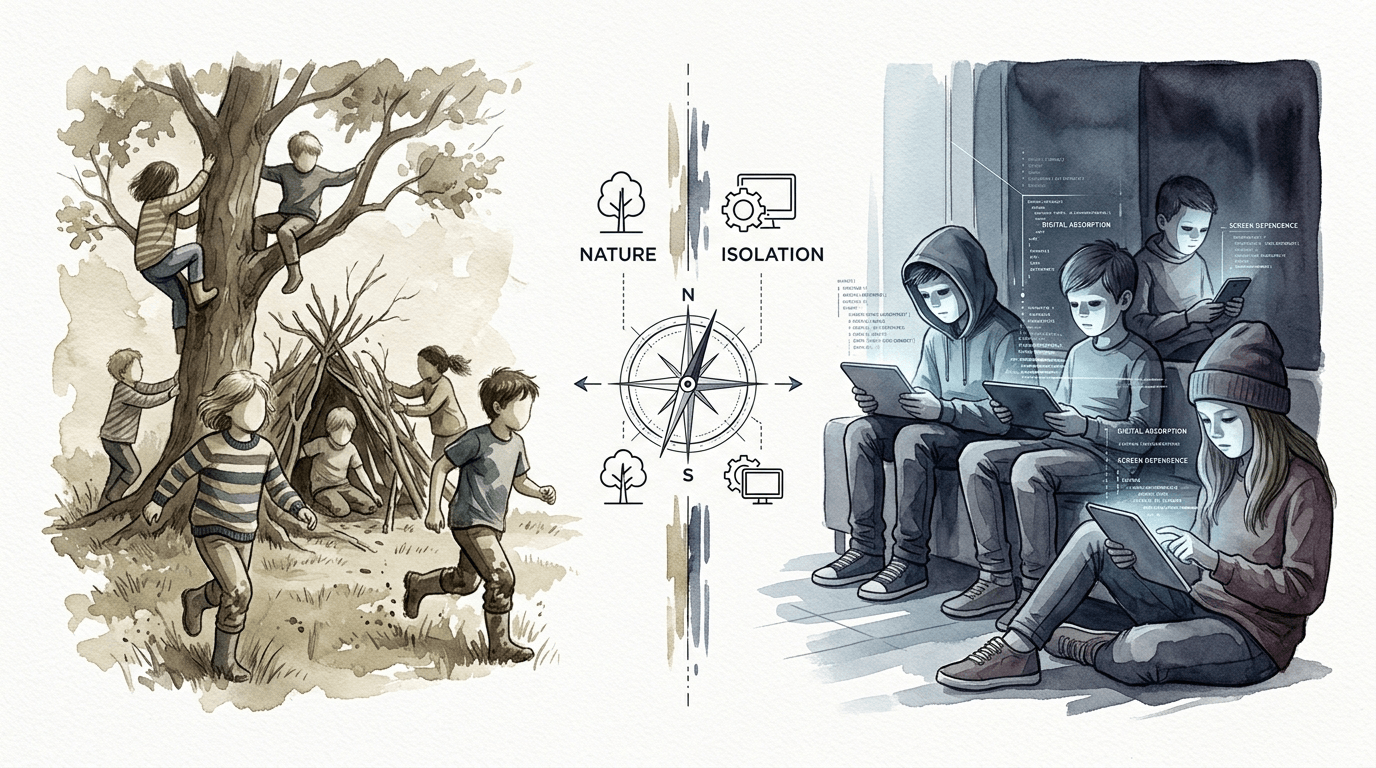
We’ve traded dirty knees for digital eyes. It’s time to bring back the movement. Childhood used to be a full-body experience. Now, it’s often reduced to a thumb movement. We aren’t anti-tech, we are pro-experience. Here is how we are bridging the gap.
[affiai]The modern living room has become a quiet place. In previous decades, it was the sound of crashing blocks and backyard shouts that filled the air. Today, it is the low blue glow of tablets and the rhythmic tap of glass. This shift didn’t happen overnight, but its impact is being felt in every pediatrician’s office and classroom across the country.
Parenting in the digital age feels like a constant tug-of-war. You want your child to have the technological skills needed for the future. You also want them to experience the raw, unscripted joy of climbing a tree or building a fort. Balancing these two worlds isn’t just about setting a timer; it’s about reclaiming the essence of childhood.
This guide isn’t a lecture on why technology is “bad.” It is a roadmap for parents who are tired of the “zombie stare.” We are looking at practical, science-backed ways to reintegrate physical movement into a high-tech world. Let’s explore how we can turn “screen time” back into “green time.”
reduce screen time for kids
Reducing screen time for kids is the practice of intentionally limiting the hours spent on digital devices to prioritize physical, social, and cognitive development. It is not about a total ban. Instead, it is about creating a “digital diet” that emphasizes high-quality engagement over passive scrolling. Experts now suggest that the quality of what children watch is just as important as the quantity of time they spend watching it.
Research from the American Academy of Pediatrics (AAP) and the World Health Organization (WHO) provides a clear framework for these limits. For children under 18 months, screen media should be avoided entirely, with the exception of video chatting with family. For children ages 2 to 5, the recommendation is one hour or less of high-quality programming. For older children, the focus shifts to ensuring that screens do not replace sleep, exercise, or face-to-face interaction.
In the real world, screens often serve as a “digital babysitter” during high-stress moments like long car rides or grocery store trips. While this provides short-term relief, excessive reliance can lead to a “Stimulation Loop.” This is where the brain becomes accustomed to the high-dopamine rewards of digital games and struggles to focus on slower, real-world tasks. Reducing screen time is the process of breaking this loop and retraining the brain to appreciate “low-stimulation” activities like reading or drawing.
Think of digital media like sugar. A little bit in a balanced diet is fine. A diet consisting only of sugar leads to health crises. Reducing screen time is about bringing the “vegetables” of childhood—physical play, boredom, and social friction—back to the table.
How to Implement a Sustainable Digital Balance
Creating a tech-balanced home requires a strategic approach rather than a sudden crackdown. Abruptly taking away devices often leads to “digital withdrawal,” characterized by intense tantrums and family stress. Use these steps to phase in a healthier lifestyle.
Conduct a Family Digital Audit
Start by tracking how much time everyone—including the adults—spends on devices. Most smartphones have built-in “Screen Time” or “Digital Wellbeing” settings that provide weekly reports. You might be shocked to find that your “quick check” of email adds up to hours of distracted parenting. Use this data to set a baseline for the whole family.
Establish “No-Go” Zones and Times
Designate specific areas of the house as tech-free. The dining table and bedrooms are the most critical zones. Keeping screens out of the bedroom is essential for protecting sleep hygiene. Establish “Screen-Free Sundown,” where all devices are placed in a central charging station one hour before bed. This reduces blue light exposure, which is known to suppress melatonin and disrupt the circadian rhythm.
Use the “Signal and Transition” Technique
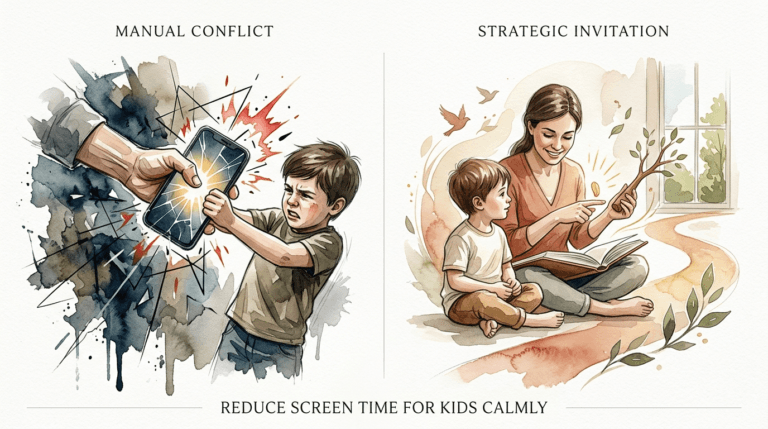
Moving a child from a high-dopamine activity like a video game to a low-dopamine activity like homework is a recipe for conflict. Give them a “landing strip.” Instead of saying “Turn it off now,” give five-minute and two-minute warnings. Better yet, physically sit with them for the last two minutes of their game to acknowledge their achievement before the transition. This signals to their brain that the high-intensity stimulation is coming to an end.
Introduce High-Energy Alternatives
You cannot simply remove an activity; you must replace it. If you take away the tablet, have a “Boredom Box” ready. This box should contain novel items like kinetic sand, complex puzzles, or new art supplies. When the screen goes off, the Box comes out. This prevents the “I’m bored” vacuum that usually leads back to the iPad.
The Measurable Benefits of Movement
The transition away from screens isn’t just about avoiding negatives; it’s about gaining massive developmental advantages. When children move their bodies, they are building more than just muscle.
Brain Structure and Connectivity: Recent studies using MRI imaging have shown that children who adhere to screen time guidelines have better-developed white matter in their brains. White matter is responsible for the “cables” that connect different brain regions, facilitating language, literacy, and executive function. Excessive screen time, particularly in toddlers, has been linked to a thinning of the brain’s cortex, the area responsible for critical thinking.
Eye Health and Myopia: There is a direct correlation between the rise in childhood nearsightedness (myopia) and the increase in “near-work” activities like gaming. Being outdoors provides “distant vision” practice and exposes the eyes to natural light, which is thought to release dopamine in the retina, slowing the elongation of the eye that causes myopia.
Emotional Regulation: Physical play is a natural stress-reliever. When kids run, jump, and climb, they are practicing “risky play.” This teaches them how to manage fear, assess danger, and handle frustration. In contrast, the “undo” button in a video game prevents children from experiencing the natural consequences of mistakes, which can lead to lower resilience in the real world.
Challenges and Common Pitfalls to Avoid
Every parent will face resistance. Understanding why these challenges occur can help you stay the course without losing your cool.
The Convenience Trap
Screens are incredibly convenient. They make a fussy child quiet instantly. The pitfall occurs when we use screens as the *first* response to a child’s discomfort rather than the *last* resort. Over time, this prevents the child from developing their own “self-soothing” mechanisms. They never learn how to sit with their own thoughts or entertain themselves in a waiting room.
The “Educational” Label Fallacy
Marketing for “educational” apps is a billion-dollar industry. However, for very young children, the “Transfer of Learning” from a 2D screen to a 3D world is very poor. A child might learn to swipe a ball on a screen but fail to understand how a physical ball rolls under a couch. Do not assume an app is “good” just because it features letters and numbers; human interaction is still the gold standard for early learning.
The Parent Mirroring Effect
Children do what we do, not what we say. If you are lecturing your teen about TikTok while your own thumb is scrolling Facebook, the message is lost. The biggest predictor of a child’s screen use is their parent’s screen use. Modeling “Digital Silence”—putting your phone in a drawer when you walk through the door—is the most powerful tool you have.
Limitations of a “Zero-Tech” Approach
While the goal is reduction, a total “dark age” approach is often unrealistic and potentially counterproductive. It is important to understand where the boundaries of this method lie.
Social Isolation in Adolescents: For teenagers, the digital world is the “town square.” It is where they plan social events, discuss schoolwork, and form identities. Stripping away all tech can lead to social alienation. The goal for older kids should be “Digital Literacy” and “Time Management” rather than total abstinence.
Educational Necessity: In 2024 and beyond, much of the school curriculum is delivered via portals like Google Classroom or Canvas. You cannot realistically cut out screen time that is required for academic success. Distinguishing between “School Screens” and “Recreational Screens” is a vital distinction parents must make.
Environmental Constraints: Not every family has access to a safe backyard or a local park. Urban living or extreme weather can make outdoor play difficult. In these cases, parents must get creative with indoor “active tech” or community centers to fill the gap.
Passive Scrolling vs. Active Play
Not all screen time is created equal. Understanding the spectrum of digital engagement helps you make better choices for your family.
| Factor | Passive Consumption | Active/Creative Engagement |
|---|---|---|
| Example | YouTube Shorts, TikTok, Netflix | Minecraft (Creative Mode), Geocaching, Stop-Motion Apps |
| Brain State | “Lean-Back” / Low Focus | “Lean-Forward” / Problem Solving |
| Physicality | Sedentary / Recumbent | Hand-Eye Coordination / Spatial Awareness |
| Social Value | Isolated / Voyeuristic | Collaborative / Communicative |
Practical Tips for Immediate Improvement
You don’t need a PhD to start making changes today. These “quick wins” can shift the energy in your home almost immediately.
- The “Phone Bed”: Create a physical wooden box or basket where all phones “go to sleep” at 7:00 PM. Seeing the devices tucked away reduces the visual cue to check them.
- Audio Books and Podcasts: Switch from visual media to auditory media. Listening to a story engages the imagination and allows children to move around, draw, or play with Legos while they listen.
- Gamify the Outdoors: Use apps like Seek by iNaturalist or Geocaching. These use the phone as a *tool* to interact with nature rather than a *barrier* to it. It turns a boring walk into a high-tech scavenger hunt.
- The “Activity Menu”: Post a list of 20 non-screen activities on the fridge. When a child says they are bored, they must choose two things from the menu before they can ask for a screen.
Advanced Considerations: The Neurobiology of the “Hook”
For parents who want to go deeper, it is helpful to understand *why* apps are so addictive. Most modern platforms use “Variable Reward Schedules”—the same psychological mechanism used in slot machines. You never know if the next swipe will reveal a funny video or a boring one, so you keep swiping. This creates a powerful dopamine loop.
Digital Literacy Training: Instead of just being a gatekeeper, become a coach. Explain to your children how algorithms work. Show them how YouTube tries to keep them watching with “Auto-Play.” When kids understand that they are being “hacked” by a company to make money, they often develop a healthy sense of rebellion against the screen.
Scaling Boundaries: As your child matures, move from “Restrictive Mediation” (limiting time) to “Active Mediation” (discussing content). Ask questions like, “How did you feel after watching that for an hour?” Help them identify the “Post-Screen Grumpiness” that often follows a long session. Self-awareness is the ultimate long-term goal.
Real-World Scenario: The Saturday Morning Swap
Consider the typical Saturday morning. In many homes, kids wake up and immediately head for the TV or game console while parents try to sleep in. This often results in 3-4 hours of high-intensity screen time before noon.
The Strategy: Flip the script. Set a rule that Saturday morning is “Outside First.” No screens are allowed until after lunch. In the morning, the family goes to a local park, a farmer’s market, or simply plays in the yard. By the time lunch rolls around, the children have burned off their physical energy and are often less “desperate” for the screen. When they finally do get their tech time in the afternoon, they are more likely to use it for a shorter period because they’ve already had a “full-body” morning.
The Result: Parents report fewer afternoon meltdowns and better sleep on Saturday night. The children learn that screens are a “supplement” to a fun day, not the main event.
Final Thoughts
We are the first generation of parents navigating a world where the library, the arcade, and the playground all live in a pocket-sized rectangle. It is a massive experiment, and the results are showing us that our children need us to set the boundaries they cannot set for themselves. Movement is not an “extra” activity; it is a biological requirement for a healthy brain and body.
Start small. You don’t have to throw away every tablet today. Pick one zone, one hour, or one day to be tech-free. Watch how the energy in your home changes when the glow of the screen is replaced by the light of conversation and the chaos of physical play. Bringing back the movement is a gift that will serve your child for the rest of their life.
Encourage your children to explore the “offline” world with the same curiosity they bring to the “online” one. Experiment with new hobbies, embrace the occasional “I’m bored” tantrum, and remember that the best memories aren’t made in high-definition—they’re made in the dirt, the sun, and the shared moments of a family fully present with one another.
Sources
1 connectedfamilies.org (https://connectedfamilies.org/limit-screen-time/) | 2 childrenandscreens.org (https://www.childrenandscreens.org/learn-explore/research/what-are-the-most-effective-digital-parenting-strategies/) | 3 mayoclinichealthsystem.org (https://www.mayoclinichealthsystem.org/hometown-health/speaking-of-health/6-tips-to-reduce-childrens-screen-time) | 4 youtube.com (https://www.youtube.com/watch?v=jLkKdtWdn4I&vl=en-US) | 5 chop.edu (https://www.chop.edu/news/health-tip/benefits-outdoor-play-why-it-matters) | 6 nationwidechildrens.org (https://www.nationwidechildrens.org/family-resources-education/700childrens/2013/12/limiting-your-childs-screen-time) | 7 medlineplus.gov (https://magazine.medlineplus.gov/article/7-tips-for-managing-screen-use) | 8 biglifejournal.com (https://biglifejournal.com/blogs/blog/benefits-of-outdoor-play-less-screen-time) | 9 cedars-sinai.org (https://www.cedars-sinai.org/newsroom/back-to-school-how-screen-time-affects-childrens-developing-brains/) | 10 benq.com (https://www.benq.com/en-us/knowledge-center/knowledge/5-tech-activities-outdoors-with-kids.html) | 11 bluecrossnc.com (https://vertexaisearch.cloud.google.com/grounding-api-redirect/AUZIYQEs9QAZ2HHgu99T8ystT9pWvfux-xy8_2202bjhpQomhN2MXZURVBajPOyUONyjeVtECJiDZ3UqwD0A9wUhOV121pac0FAqwu-yE1xptQ0I8fiVhPMrQxKI8o08uuUZRLf1VMzY3gMyY7cO90XZZ3-2OqqUXfdVjVC2YJKrUiN0CQgZDv-Eny1T_lgGXaJdCMfEG87YTvZD4cCs-UFVKPWwiwfJd6Fe) | 12 cbwchc.org (https://www.cbwchc.org/news/guide-to-healthy-screen-time) | 13 beehiiv.com (https://selfctrl.beehiiv.com/p/5-mistakes-parents-make-trying-to-regulate-screen-time) | 14 childrenandscreens.org (https://www.childrenandscreens.org/learn-explore/research/does-screen-use-affect-early-cognitive-development/) | 15 healthykidshealthyfuture.org (https://healthykidshealthyfuture.org/5-healthy-goals/reduce-screen-time/) | 16 runwildmychild.com (https://runwildmychild.com/nature-technology/) | 17 nih.gov (https://pmc.ncbi.nlm.nih.gov/articles/PMC12183056/) | 18 aap.org (https://www.aap.org/en/patient-care/media-and-children/center-of-excellence-on-social-media-and-youth-mental-health/qa-portal/qa-portal-library/qa-portal-library-questions/screen-time-guidelines/) | 19 nih.gov (https://pmc.ncbi.nlm.nih.gov/articles/PMC10353947/) | 20 sbm.org (https://www.sbm.org/healthy-living/how-to-cut-down-screen-time-for-kids) | 21 nih.gov (https://pubmed.ncbi.nlm.nih.gov/41352335/) | 22 childrensmercy.org (https://news.childrensmercy.org/new-us-report-card-on-physical-activity-for-children-and-youthreveals-continued-low-levels-of-physical-activity/) | 23 harvard.edu (https://hms.harvard.edu/news-events/publications-archive/brain/screen-time-brain) | 24 todaysdietitian.com (https://www.todaysdietitian.com/new-us-report-card-on-physical-activity-for-children-and-youth-reveals-continued-low-levels-of-physical-activity/) | 25 paamovewithus.org (https://paamovewithus.org/wp-content/uploads/2024/10/2024-US-Report-Card-Executive-Summary_FINAL.pdf) | 26 ozobot.com (https://ozobot.com/blogs/news/taking-tech-outside-4-fun-ways-families-can-plug-nature)