Timeless Coastal Wall Decor Ideas
Are you decorating for this year’s Instagram feed, or are you installing a piece of history that will outlive the house? We are drowning in ‘fast furniture’ and peel-and-stick trends that end up in a landfill within five years. Driftwood is the ultimate antidote. A piece of timber that survived 50 years in the Pacific isn’t worried about next season’s color palette. It’s a permanent architectural anchor that grows more valuable as it ages.
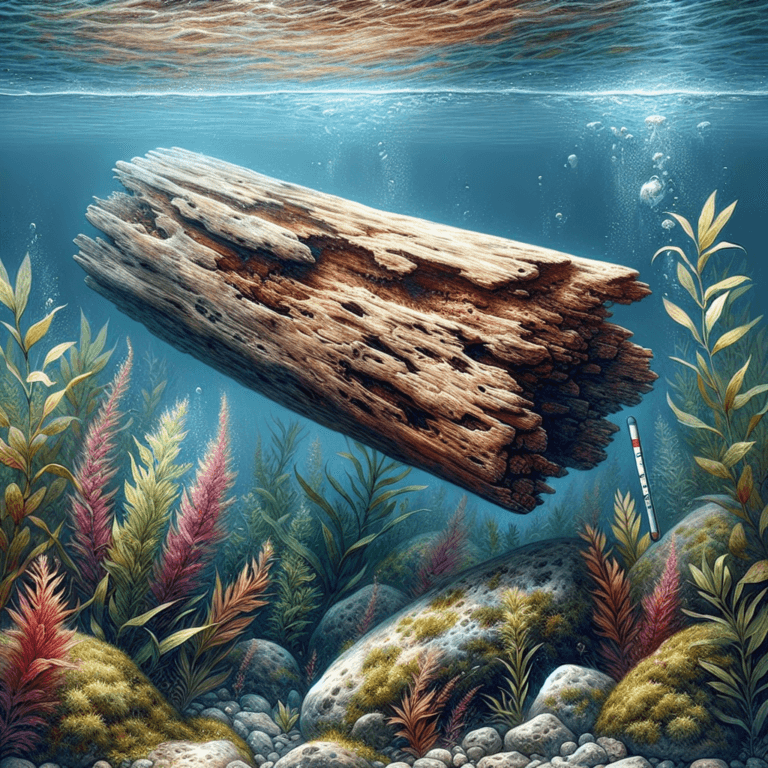
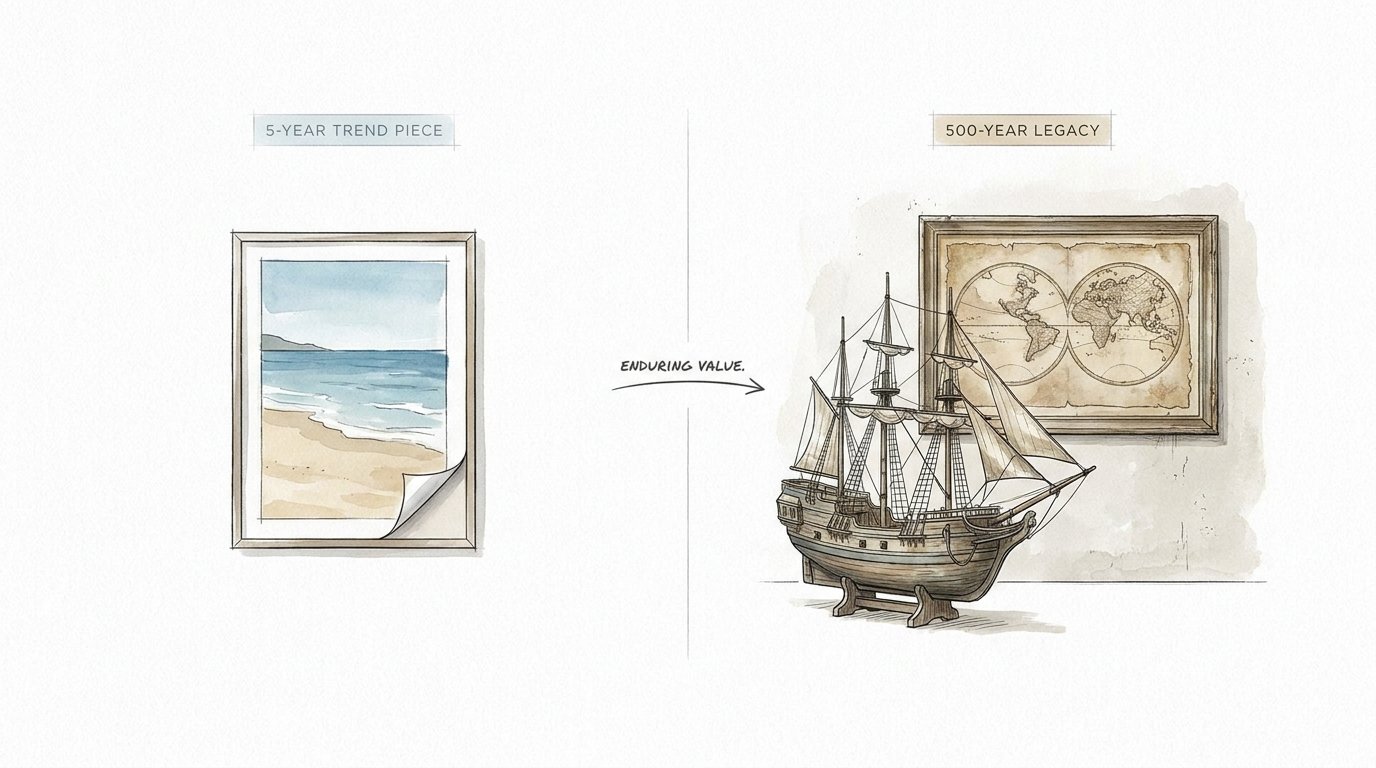
[affiai]There is a rugged honesty in wood that has been tumbled by the sea. While a 5-year trend piece might look dated before the paint is dry, a driftwood installation represents a 500-year legacy of natural resilience. It is the intersection of biology, geology, and art.
When you bring driftwood into a room, you aren’t just adding a shelf or a frame. You are introducing a story of survival. This guide will show you how to source, treat, and mount these coastal relics to create a home that feels grounded and eternal.
Timeless Coastal Wall Decor Ideas
Timeless coastal wall decor is about more than just “beachy” aesthetics. It is a design philosophy that prioritizes organic textures and muted, natural tones over synthetic materials. At its core, driftwood wall decor is the practice of using water-weathered timber as a sculptural or functional element within an interior space.
In the real world, this looks like a massive cedar root mounted above a fireplace or a series of silver-gray branches acting as a gallery wall. These pieces work because they break the rigid lines of modern architecture. Most houses are built of boxes—rectangles and squares that can feel sterile. Driftwood introduces the “S-curve” of nature, a visual relief that makes a room feel lived-in and authentic.
Common examples of this decor style include sculptural wall hangings, where a single large branch serves as a focal point. Others use driftwood to create floating shelves, where the irregular edge of the wood provides a contrast to the items placed upon it. In more intricate designs, smaller pieces are assembled into mosaics or mirrors, creating a sunburst effect that mimics the movement of the tides.
Think of driftwood as “nature’s sculpture.” Just as a museum places a statue on a pedestal to command attention, you can use your walls to elevate these found objects. Whether your home is a minimalist loft or a rustic cabin, the silver patina of weathered wood fits because it doesn’t compete with other colors; it complements them through sheer texture.
The Sculptural Focal Point
A single, large-scale piece of driftwood can replace traditional paintings. Look for “architectural” wood—pieces with deep grooves, hollows, or interesting branch intersections. When mounted alone on a neutral wall, the shadows cast by the wood become part of the art itself.
Functional Coastal Elements
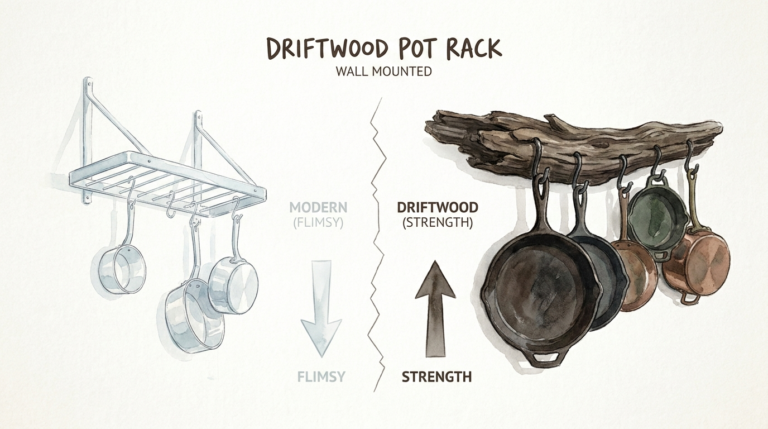
Coastal decor doesn’t have to be purely decorative. Flat-topped driftwood can be converted into rustic wall shelves or coat racks. By adding heavy-duty forged iron hooks, you blend the softness of the sea with the grit of the forge, creating a piece that is both useful and beautiful.
How to Source and Prepare Your Driftwood
Bringing a piece of the coast into your home requires a process of “curing” the wood. You cannot simply pull a log off the sand and nail it to your drywall. Raw driftwood often carries salt, moisture, and biological hitchhikers that can damage your home if not addressed properly.
The first step is sourcing. While it is tempting to take the largest log you find, check local regulations first. In many parts of the United States, collecting driftwood from National Parks or protected refuges is prohibited to preserve the local ecosystem. In the United Kingdom, small-scale personal collection is generally permitted, but removing large amounts for commercial use often requires a permit.
Once you have your wood, the “Death to Critters” phase begins. You must sanitize the piece to ensure no termites or mold spores enter your living space. For smaller pieces, a 24-hour soak in a solution of one part bleach to nine parts water is standard. For massive architectural pieces that won’t fit in a tub, you can use a garden sprayer to saturate the wood with the same solution multiple times over several days.
After sanitizing, the wood must dry completely. This is the “patience phase.” Depending on the thickness of the timber, this can take anywhere from a few weeks to several months in a well-ventilated, dry area. Rushing this step leads to “weeping,” where the wood releases internal moisture and salt, potentially ruining your wall paint or causing the wood to rot from the inside out.
Finally, consider the finish. Most purists prefer the natural, sun-bleached silver of raw driftwood. However, if you want a deeper look, a coat of linseed oil or a matte clear sealer can protect the fibers and make the grain “pop.” Sanding with a high-grit sandpaper (220 or higher) will remove any dangerous splinters without destroying the weathered texture.
Benefits of Decorating with Driftwood
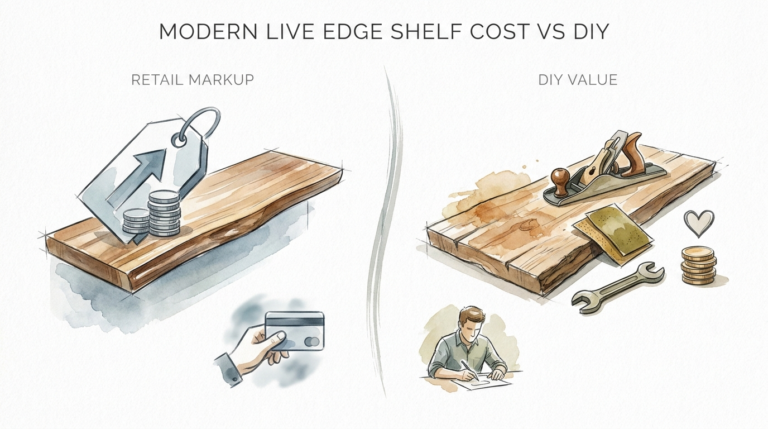
The primary benefit of driftwood is its unparalleled uniqueness. No two pieces of wood are shaped by the ocean in the same way. When you install a driftwood piece, you are guaranteed to have a one-of-a-kind installation that cannot be replicated by a mass-market retailer.
From an environmental standpoint, driftwood is one of the most sustainable decor options available. It is “reclaimed” by nature. By using wood that has already been discarded by the forest and tumbled by the sea, you are participating in a circular economy. There is no carbon footprint associated with its manufacturing, only the effort of your own two hands.
Psychologically, driftwood supports biophilic design. Studies in interior wellness suggest that incorporating natural textures—wood, stone, and water—can lower blood pressure and reduce stress. The tactile nature of driftwood provides a sensory connection to the outdoors that synthetic materials simply cannot provide.
Additional advantages include:
- Visual Weight: Driftwood adds a sense of “heaviness” and stability to a room without needing bulky furniture.
- Color Neutrality: The natural grays, tans, and creams of weathered wood work with any color palette.
- Durability: Wood that has survived the ocean is incredibly dense and stable; it is unlikely to warp or shrink further once properly dried.
Challenges and Common Mistakes
The most common mistake is improper mounting. Driftwood is often much heavier than it looks. Using standard picture wire or small nails will eventually lead to the piece falling, potentially damaging your floor or injuring someone. You must use hardware rated for the specific weight of the timber.
Another pitfall is neglecting the salt content. Driftwood is saturated with sea salt. If the wood is not thoroughly rinsed and dried, that salt will “leach” out over time. This shows up as a white, powdery residue on the wood or, worse, as bubbling and peeling paint on the wall behind the installation.
Many beginners also fail to check for rot. Just because wood looks cool doesn’t mean it is structurally sound. Use a screwdriver to poke at the underside of the wood. If it sinks in easily, the wood is “punky” or rotting. This wood will continue to crumble and may attract pests even after cleaning.
Avoid these common errors:
- Over-finishing: Applying a glossy polyurethane can make driftwood look like cheap plastic. Stick to matte or oil finishes.
- Ignoring the “Critters”: Skipping the bleach soak is a recipe for a termite infestation.
- Bad Lighting: Placing a flat light directly in front of driftwood washes out the texture. Use “grazing” light from the side to highlight the ridges.
Limitations and Constraints
Driftwood is not a universal solution for every space. In ultra-minimalist or “High Modern” homes, the chaotic shape of a large root can feel like “visual noise” rather than art. It requires a certain amount of “white space” around it to breathe. If your walls are already crowded with patterns, adding driftwood may make the room feel cluttered.
There are also structural limitations. Mounting a 50-pound cedar log onto a thin lath-and-plaster wall in an old house requires professional-grade reinforcement. You cannot simply use a drywall anchor; you must find the studs or install a mounting plate behind the wall surface.
Environmental limitations must also be considered. If you live in a high-humidity environment, even “preserved” driftwood can absorb moisture and become a breeding ground for mildew if not sealed properly. Furthermore, sourcing large-scale pieces can be geographically difficult if you don’t live near a coastline or a major river basin.
Driftwood vs. Reclaimed Barn Wood
While both are popular “rustic” choices, they serve different aesthetic and functional purposes. Understanding the difference helps you choose the right material for your specific project.
| Feature | Driftwood | Reclaimed Barn Wood |
|---|---|---|
| Texture | Smooth, rounded, sculptural edges. | Rough-hewn, straight lines, saw marks. |
| Color | Silver-gray, sun-bleached cream. | Brown, amber, deep charcoal. |
| Internal Strength | High (densified by water pressure). | Moderate (varies by age and exposure). |
| Best Use | Organic Focal Points, Accents. | Flooring, Large Furniture, Siding. |
Practical Tips and Best Practices
When you are ready to hang your piece, the gold standard for heavy wood is the French Cleat system. This involves two interlocking metal or wood strips—one attached to the wall stud and the other to the back of the driftwood. This distributes the weight evenly across the wall and prevents the wood from “leaning” forward.
For smaller, lighter branches, heavy-duty D-rings or keyhole hangers are sufficient. If you want the mounting hardware to be invisible, you can drill “blind holes” into the back of the wood and slip them over reinforced screws protruding from the wall. This creates a “floating” effect that looks incredibly professional.
Consider these best practices:
- Use a Stud Finder: Never guess where your support is. A heavy log falling can rip a hole in your drywall and cost hundreds in repairs.
- Balance the Scale: A small twig on a giant wall looks like an accident. Aim for a piece that occupies at least 1/3 of the visual width of the furniture below it (like a sofa or console).
- Pair with Greenery: Driftwood and air plants (Tillandsia) are a classic pairing. The wood provides the structure, and the plants provide the life.
Advanced Considerations for Large-Scale Installations
If you are planning a massive installation—such as a driftwood “wall” or a ceiling-mounted fixture—you need to think like an engineer. Large timber expands and contracts slightly with seasonal humidity. If you bolt it too rigidly to a wall without allowing for tiny movements, you may see cracks develop in your drywall over time.
Lighting is the “secret sauce” of advanced decor. To truly make a driftwood piece feel like a gallery installation, use adjustable track lighting or recessed puck lights. By positioning the light at a steep angle (70-80 degrees) relative to the wood, you create deep shadows in the crevices. This technique, known as “grazing,” emphasizes the three-dimensional nature of the wood.
For those interested in acoustic design, driftwood is an excellent natural diffuser. The irregular surface area of the wood breaks up sound waves, reducing echo in large rooms with high ceilings. This is why you often see driftwood installations in high-end spas or recording studios—it serves a functional acoustic purpose while looking beautiful.
Examples and Real-World Scenarios
Scenario 1: The Living Room Anchor
Imagine a living room with white walls and a navy blue sofa. A 6-foot long piece of silver-gray ghostwood is mounted 12 inches above the back of the sofa. To the left, a small spotlight is tucked into the corner, casting long, dramatic shadows across the grain. This single piece of wood replaces the need for a gallery wall, creating a clean, sophisticated “Coastal Modern” look.
Scenario 2: The Spa-Inspired Bathroom
In a small powder room, a vertical piece of driftwood is mounted next to the mirror. Instead of a standard towel bar, the homeowner has used the natural “hooks” of the branches to hold hand towels. The wood has been treated with a marine-grade sealer to protect it from steam, and the organic shape softens the hard lines of the tile and porcelain.
Final Thoughts
Decorating with driftwood is a commitment to a slower, more intentional way of living. It is a rejection of the “fast furniture” culture that treats home decor as a disposable commodity. By choosing to source and install a piece of history, you are creating a space that feels permanent, grounded, and deeply connected to the natural world.
Whether you find your next masterpiece on a walk along the shore or purchase a curated piece from a specialist, remember that the “imperfections” are the point. The cracks, the salt-faded color, and the irregular shapes are what make the wood beautiful. They are the marks of a journey that spanned decades and thousands of miles.
Start small if you must, but don’t be afraid to go bold. A home filled with natural elements is a home that breathes. By following the steps in this guide, you can ensure that your coastal wall decor is not just a trend for today, but a legacy for the future of your home.
Sources
1 homedit.com (https://www.homedit.com/driftwood-decor-ideas/) | 2 circawarehouse.com (https://circawarehouse.com/blog/why-reclaimed-wood-tells-a-better-story-than-new-timber/) | 3 northernlogsupply.com (https://www.northernlogsupply.com/blog/rustic-design-reclaimed-wood-vs-distressed-wood/) | 4 hackrea.net (https://www.hackrea.net/stories/driftwood-wall-art-ideas/) | 5 lakewedoweelife.com (https://www.lakewedoweelife.com/lake-life/driftwood-art-and-treasures-by-tammy-lovvorn) | 6 homify.com.my (https://www.homify.com.my/diy/52765/preserve-driftwood-with-5-things-and-make-a-decorative-object-out-of-it) | 7 parklanejewelry.com (https://www2.parklanejewelry.com/how-to-wash-driftwood/) | 8 cleanthebeachbootcamp.com (https://cleanthebeachbootcamp.com/driftwood-art-ideas/) | 9 ekaurr.com (https://ekaurr.com/blogs/news/reclaimed-wood-vs-new-wood) | 10 bungalow.com (https://bungalow.com/articles/how-to-hang-heavy-pictures-and-other-wall-decor) | 11 medium.com (https://medium.com/@aonestopflooring/solid-wood-vs-reclaimed-wood-which-is-more-sustainable-9dc587c9c15e) | 12 oceanicwoodstore.com (https://oceanicwoodstore.com/reclaimed-wood-vs-new-timber-which-is-better-for-home-decor/) | 13 etwoodcrafts.com (https://etwoodcrafts.com/blogs/news/how-to-hang-heavy-wooden-art) | 14 woodburncorner.com (https://www.woodburncorner.com/burnblog/the-best-hanging-options-for-wood-art-and-pyrography-pieces)