ways to reduce screen time for kids
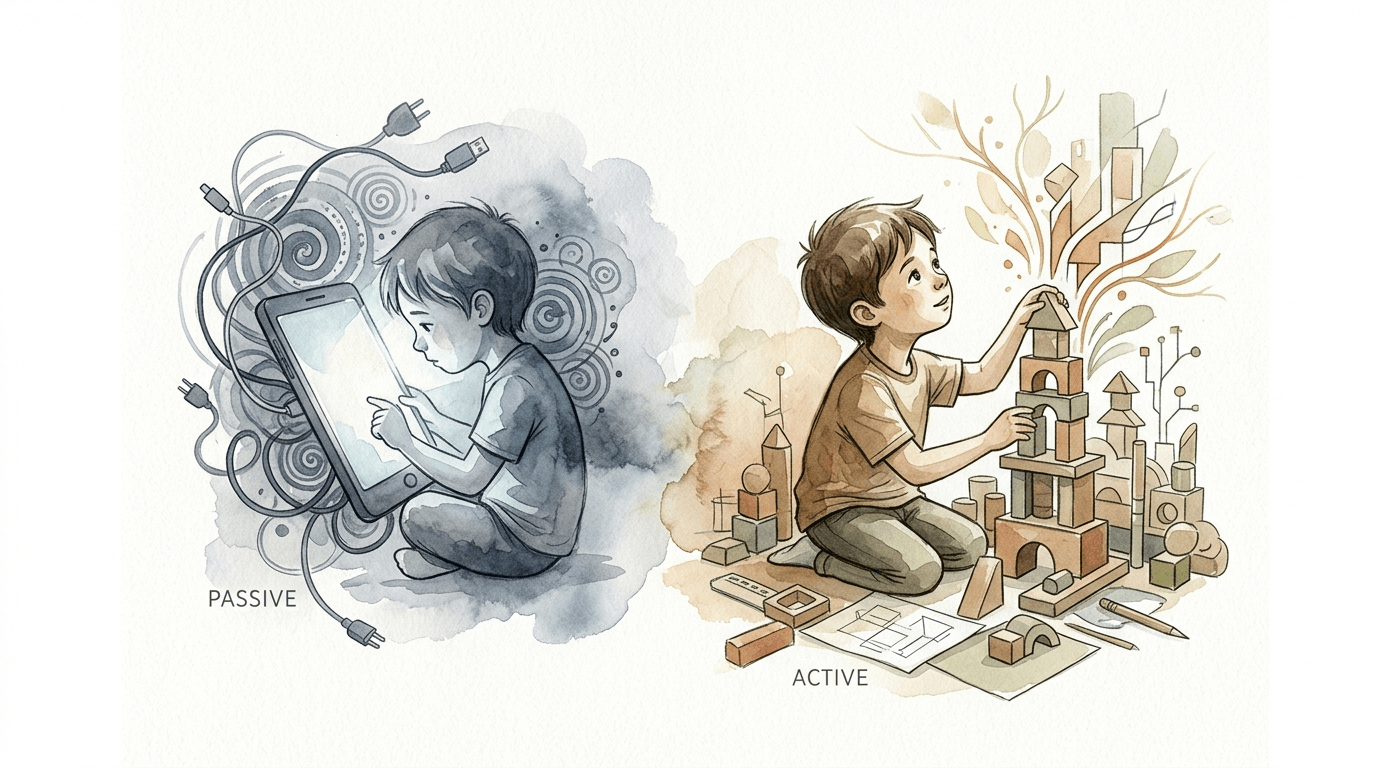
Watching someone else live is a shadow of the real thing. Turn off the viewer, turn on the doer. Why watch a video of someone playing when you can just… play? Passive consumption drains energy; active creation builds it. These 5 ‘active’ hobbies will make them forget the tablet exists.
[affiai]Modern childhood is often lived through a five-inch glass pane. Children today spend an average of 5 to 8 hours daily on screens, a staggering jump that often replaces the “loose parts” play essential for brain development. This shift toward passive consumption—scrolling, watching, and reacting—often leaves kids irritable and drained.
Active creation offers the opposite. It builds resilience, fosters deep focus, and provides a “slow dopamine” reward that tablets simply cannot match. When a child creates something from nothing, they aren’t just passing time; they are building a self-concept as a capable human being.
Finding the right alternative is not about banning technology. It is about offering something better. These five hobbies are designed to bridge the gap between the digital and the physical, turning your child from a spectator into a protagonist.
ways to reduce screen time for kids
Reducing screen time is more than just taking away a device. It is about intentionally restructuring the environment to make real-world engagement more attractive than digital scrolling. Parents must understand that screens are designed to be “sticky,” using variable reward schedules that mimic slot machines to keep young brains hooked.
Effective reduction starts with defining the difference between Passive Consumption and Active Creation. Passive consumption involves sitting still while content is fed to the brain—think YouTube marathons or endless TikTok scrolls. Research links excessive passive use to shorter attention spans, disrupted sleep, and increased emotional dysregulation.
Active creation, however, involves using the brain to manipulate the environment. This includes building, drawing, coding, or exploring. These activities engage the prefrontal cortex, the part of the brain responsible for executive function and emotional control. To reduce screen time, families should aim to “crowd out” the bad with the good rather than focusing solely on the “no.”
Real-world examples of screen reduction include establishing “Screen-Free Zones” like the dining table or bedrooms. Another strategy involves using the “1-to-1 Rule,” where every hour of screen time must be earned with an hour of active, physical, or creative play. The goal is to move from a “viewer” mindset to a “doer” mindset.
1. The Edible Laboratory: Culinary Arts for Kids
Teaching a child to cook is one of the most effective ways to replace passive screen time with a high-sensory, high-reward hobby. Cooking is essentially a edible chemistry experiment. It requires math for measurements, science for understanding heat and leavening, and fine motor skills for chopping and stirring.
How to Start
Begin by treating the kitchen as a workshop rather than a chore zone. Start with “safety-first” tools like nylon knives that can cut vegetables but not skin. Focus on “skills over recipes.” Instead of following a rigid set of instructions, teach them the concept of sautéing, boiling, or whisking.
- Ages 3–5: Tearing lettuce, washing vegetables, and “painting” sauces onto pizza dough.
- Ages 6–9: Measuring dry and liquid ingredients, peeling potatoes, and using a toaster oven with supervision.
- Ages 10+: Following complex multi-step recipes, learning basic knife safety, and managing heat on the stove.
The “slow dopamine” of cooking comes from the anticipation. A child who watches bread rise in the oven for 30 minutes experiences a different neurological reward than the instant gratification of a video game. They learn that effort leads to a tangible, delicious result.
2. Urban Gardening: From Seeds to Supper
Gardening provides a direct connection to the natural world that screens can never replicate. It teaches the concepts of stewardship and patience. For children accustomed to “on-demand” entertainment, waiting for a sunflower to bloom is a masterclass in emotional regulation.
The Step-by-Step Setup
You do not need a massive backyard to start. A few pots on a windowsill or a single raised bed is enough to spark a lifelong hobby. Focus on high-success, fast-growing plants to keep their interest high early on.
Sunflowers are excellent because they grow visibly taller every few days. Radishes are another great starter crop, often ready for harvest in as little as 25 days. For older kids, give them their own “micro-plot” where they have total control over what is planted and how it is decorated.
Use tools like “eggshell planters” for starting seeds indoors. It’s a tactile, messy project that feels like play but results in life. When children are part of every step—planting, watering, and weeding—they are significantly more likely to eat the vegetables they produce, solving two parenting challenges at once.
3. Engineering and The Maker Movement
The “Maker Movement” is about reclaiming the ability to build and repair. This hobby replaces the passive consumption of toys with the active creation of inventions. It encourages “tinkering,” a process where failure is viewed as data rather than a mistake.
Building a Makerspace
Designate a corner of the house as a “Tinkering Station.” Fill it with “loose parts”—cardboard boxes, PVC pipes, duct tape, old electronics for dismantling, and basic fasteners. Kits from companies like Tinkering Labs or KiwiCo can provide structured starts, but the real magic happens in open-ended play.
Challenge your child to solve problems. “Can you build a machine that delivers a snack from the kitchen to the living room?” or “Can you build a bridge out of straws that holds a glass of water?” These challenges require spatial reasoning and persistence. They turn the child into an engineer, a role that feels far more powerful than being a “subscriber.”
4. Active Digital Creation: Stop-Motion and Coding
Not all technology is the enemy. The goal is to move the child from the “user” side of the screen to the “creator” side. This is where active hobbies leverage the power of the tablet for good. Instead of watching an animation, they make one.
The Creator Workflow
Stop-motion animation is a perfect entry point. Using a simple app and a tripod, children can use LEGOs, clay, or action figures to tell a story. This requires planning, patience (taking 12 photos for every one second of film), and creative writing.
Coding is another “active” digital hobby. Platforms like Scratch (developed by MIT) use “block coding” to help kids build their own games. This flips the script: they aren’t playing a game designed to hook them; they are designing the mechanics and logic themselves. This builds computational thinking and a sense of digital agency.
5. Bushcraft and Nature Exploration
Nature is the ultimate low-stimulation, high-engagement environment. Bushcraft—the art of surviving and thriving in the wild—builds self-reliance like no other hobby. It takes the “adventure” seen in video games and puts it into the local woods or park.
Core Skills to Teach
Start with basic knot tying. The bowline knot is a “master knot” that is easy to learn and incredibly useful. Move on to shelter building using fallen branches and a tarp. For older children, supervised fire-building using a ferrocerium rod (flint and steel) is a milestone of responsibility.
Nature journaling is another facet of this hobby. Using a physical notebook to sketch leaves, track animal prints, or record the weather encourages deep observation. Apps like Merlin Bird ID can be used as tools to identify what they hear, turning the phone into a scientific instrument rather than a distraction.
Benefits of Active Hobbies
Moving from passive screens to active hobbies provides measurable advantages for a child’s development. These benefits span physical, cognitive, and emotional domains, creating a well-rounded foundation for adulthood.
- Executive Function: Planning a garden or building a robot requires working memory and impulse control.
- Resilience: When a cake falls or a seed fails to sprout, children learn how to troubleshoot and try again.
- Physical Health: Gardening and outdoor exploration improve gross motor skills and combat the sedentary lifestyle linked to obesity.
- Reduced Anxiety: Tactile activities like kneading dough or whittling wood have a grounding effect, reducing the overstimulation caused by high-speed digital content.
Challenges and Common Mistakes
The transition from screens to hobbies is rarely seamless. Parents often make the mistake of expecting immediate enthusiasm. Remember, screens provide “cheap dopamine”—high rewards for zero effort. Real-world hobbies require effort, which can feel frustrating to a child used to instant gratification.
A common pitfall is over-scheduling or being too “outcome-oriented.” If a parent critiques the messy kitchen or the crooked birdhouse too harshly, the child will retreat to the “safety” of the screen where they cannot fail. Focus on the process, not the product.
Another mistake is the “Boredom Panic.” When a child says they are bored, many parents immediately suggest a screen to stop the whining. However, boredom is the essential precursor to creativity. It is the brain’s way of searching for a new task. Let them be bored until their internal drive kicks in.
Limitations and Realistic Constraints
Not every hobby is ideal for every family. Practical boundaries such as budget, space, and safety must be considered. While bushcraft is excellent, it may not be feasible for a family in a high-rise apartment without easy access to green space.
Cost can also be a barrier. High-end STEM kits or premium gardening supplies add up. However, the best hobbies often use “trash” or household items. Cardboard engineering costs nothing, and cooking involves food you are already buying. Adaptation is key to making these hobbies sustainable.
Passive Consumption vs. Active Creation
| Factor | Passive Consumption (Screens) | Active Creation (Hobbies) |
|---|---|---|
| Neurological Impact | Spikes “Cheap” Dopamine; drains focus. | Builds “Slow” Dopamine; improves focus. |
| Skill Acquisition | Surface-level knowledge; reactive. | Deep mastery; proactive. |
| Social Interaction | Often isolated or anonymous. | Collaborative; family-oriented. |
| Emotional State | Prone to “Post-Screen Irritability.” | Sense of accomplishment and calm. |
Practical Tips for Success
Implementing these changes requires a strategic approach. Use these best practices to ensure the new hobbies “stick” and the screens stay at bay.
Model the Behavior: You cannot expect a child to put down their tablet if you are constantly scrolling through yours. Engage in your own active hobbies—whether it’s woodworking, knitting, or reading—and let them see your focus and enjoyment.
Use the “Yes, After” Method: Instead of a flat “no” to screens, use “Yes, after you’ve spent 30 minutes in the garden/kitchen/makerspace.” This positions the hobby as a priority and the screen as a secondary reward.
Keep Supplies Accessible: If the art supplies or building blocks are tucked away in a high cupboard, the child will choose the easier option (the screen). Keep a “boredom box” of active hobby supplies in plain sight and easy reach.
Advanced Considerations: The Dopamine Loop
For serious practitioners of “digital minimalism” in parenting, understanding the dopamine loop is essential. Screen-based entertainment provides a “variable reward,” meaning the brain doesn’t know when the next “hit” (a funny video, a like, a game win) is coming. This creates an addictive cycle.
Active hobbies break this loop by requiring a “cost of entry”—effort. By consistently encouraging these hobbies, you are retraining your child’s brain to value long-term rewards over short-term spikes. This “neuroplasticity” is most flexible during childhood, making this the critical window for habit formation. Over time, the child’s brain will naturally begin to prefer the deep satisfaction of a finished project over the empty calorie of a 15-second clip.
Example: An Active Weekend Scenario
Consider how a typical Saturday can be transformed. Instead of waking up and reaching for an iPad, the family routine shifts toward active engagement.
9:00 AM: The family heads to the kitchen. The child is tasked with making “Mystery Ingredient Omelets.” They use math to double the recipe and fine motor skills to crack eggs and chop bell peppers.
11:00 AM: Gardening hour. The child checks their “pizza garden” (tomatoes, basil, and peppers). They pull three weeds and water the soil, observing the growth of the first green tomato. This provides a sensory “reset” before the day gets busy.
2:00 PM: The Maker Challenge. Using a pile of delivery boxes from the week, the child is challenged to build a “cat castle.” They must use geometry to ensure the structure is stable and creative problem-solving to build a working drawbridge.
4:00 PM: Nature Walk. The family goes to a local trail. The child carries a “scavenger hunt” list: find a jagged rock, a piece of moss, and a yellow leaf. They use a physical compass to practice basic navigation, building a sense of orientation and confidence.
Final Thoughts
Watching someone else live is a shadow of the real thing. When we provide children with active hobbies, we are giving them the tools to interact with reality rather than just observe it. These five hobbies—cooking, gardening, making, creating, and exploring—are not just ways to pass the time. They are the building blocks of a capable, resilient, and focused human being.
The transition away from screens is not a battle to be won in a single day. It is a gradual shift in culture within the home. By prioritizing active creation over passive consumption, you are helping your child build a life that is rich in texture, flavor, and accomplishment.
Experiment with these activities. Follow your child’s natural curiosity. Some may love the heat of the kitchen, while others prefer the quiet of the garden or the logic of code. Whatever the path, the destination is the same: a child who knows that they are a doer, not just a viewer.
Sources
1 reddit.com (https://www.reddit.com/r/parentingteenagers/comments/um6xik/hobbies_that_can_be_done_at_home_without_a_screen/) | 2 sparklestories.com (https://www.sparklestories.com/blog/post/77-things-to-do-instead-of-screens/) | 3 jerseyjackpinball.com (https://jerseyjackpinball.com/blogs/pinball-culture/hobbies-for-kids-off-screens) | 4 jerseyjackpinball.com (https://jerseyjackpinball.com/blogs/pinball-culture/hobbies-for-kids-off-screens) | 5 birdbraintechnologies.com (https://www.birdbraintechnologies.com/blog/26-hands-on-stem-activities-and-projects-to-keep-your-students-engaged/) | 6 reddit.com (https://www.reddit.com/r/Bushcraft/comments/15twhrh/childrens_bushcraft_ideas/) | 7 youtube.com (https://www.youtube.com/watch?v=Ettd1mMRWPU) | 8 thevoiceofearlychildhood.com (https://thevoiceofearlychildhood.com/active-vs-passive-screen-time/) | 9 kidoschools.com (https://kidoschools.com/in/in-blog/blogs/active-kids-happy-minds-balancing-screen-time-and-physical-play-for-kids/) | 10 substack.com (https://technosapiens.substack.com/p/102-screen-free-activities-for-kids) | 11 jaxdragonfly.org (https://www.jaxdragonfly.org/post/20-bushcraft-activities-for-the-whole-family)