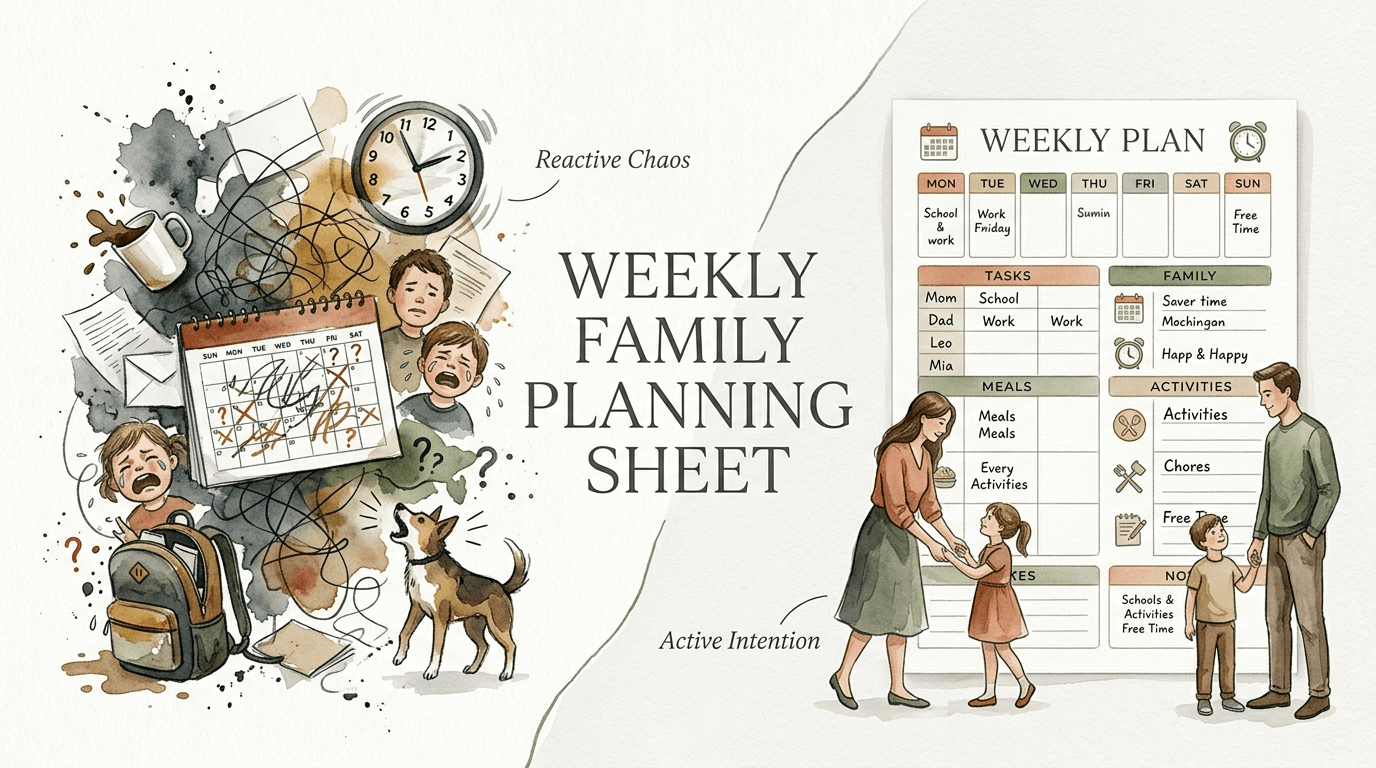
weekly family planning sheet
If you don’t have a plan, you’re just reacting to life’s noise. Chaos is passive; peace is active. By spending 10 minutes filling out this weekly planning sheet, you move from ‘putting out fires’ to leading your family with intention.
[affiai]Most families live in a state of constant survival. You wake up, check your phone, and immediately start responding to the world’s demands. Someone needs a permission slip. The fridge is empty. There is a soccer practice you forgot about. This reactive cycle drains your energy and steals your joy.
Intentional living changes the game. It starts with a simple document that centralizes your family’s life. This guide will show you how to master the weekly family planning sheet to reclaim your time and sanity.
weekly family planning sheet
A weekly family planning sheet is a centralized dashboard for your household. It acts as the single source of truth for every member of the family. Instead of scattered sticky notes or endless text threads, everything lives in one place.
This tool typically includes sections for daily schedules, meal plans, chore assignments, and financial tracking. It is a visual representation of your family’s values and priorities. When you write something down, you give it weight. You decide that your family’s peace is worth more than the random distractions of the week.
Real-world households use these sheets to bridge the communication gap between parents and children. For example, a refrigerator-mounted planner allows a child to see exactly when their piano lesson is without asking you ten times. It shifts the burden of “knowing everything” from the parents’ brains to the paper.
Think of it like a flight plan for a pilot. A pilot doesn’t just take off and hope for the best. They map out the route, check the fuel, and prepare for turbulence. Your weekly sheet is that map. It ensures everyone knows the destination and what their role is in getting there.
How to Use Your Planning Sheet Effectively
Setting up a system is only half the battle. You need a process that your family can actually stick to without feeling overwhelmed. Follow these steps to turn a blank piece of paper into a powerful management tool.
The Sunday Reset Meeting
Schedule a 15-minute meeting every Sunday evening. This is the most critical step in the process. Gather everyone around the kitchen table. Keep it light and positive. You are not there to lecture; you are there to coordinate.
During this meeting, review the upcoming week’s schedule. Identify any “pinch points” where someone might need extra help with a ride or a meal. This proactive discussion prevents the 7:00 AM Monday morning panic.
Assigning Specific Roles
Clear expectations prevent resentment. Use your planning sheet to assign chores and responsibilities. Instead of saying “someone needs to do the dishes,” write a name next to the task on the sheet.
Visual accountability is powerful. When kids see their names next to a task, they understand their contribution to the family’s success. It fosters a sense of belonging and responsibility.
Mapping Out the Menu
Meal planning is the ultimate time-saver. Use a section of your sheet to list breakfast, lunch, and dinner for the week. This eliminates the “what’s for dinner” stress that usually hits at 5:00 PM.
Base your meal plan on your schedule. If Tuesday is a late soccer night, plan for a slow-cooker meal or leftovers. Aligning your food with your availability ensures you actually stick to the plan and save money on takeout.
The Practical Benefits of Planning
Intentional planning offers more than just a tidy house. It provides measurable improvements to your mental health and family dynamics.
Reduced Decision Fatigue
Every decision you make during the day consumes mental energy. By planning your meals and schedule in advance, you preserve that energy for more important things. You no longer have to decide what to cook or who is picking up the kids while you are exhausted from work.
Improved Financial Health
A planning sheet often includes a grocery list or a small budget tracker. Knowing what you need before you go to the store prevents impulse buys. Families who plan their meals consistently spend significantly less on groceries and unplanned dining out.
Consistency for Children
Children thrive on routine and predictability. When they know what to expect, their anxiety levels drop. A visible planning sheet helps them feel secure in their environment. They understand that their needs are being met and that the family is a cohesive unit.
Stronger Family Bonds
The act of meeting weekly to plan creates a dedicated space for connection. It allows you to check in on each other’s emotional states and celebrate small wins. This habit builds a culture of communication that lasts a lifetime.
Common Mistakes to Avoid
Many families start strong but fall off the wagon within a few weeks. Understanding these pitfalls will help you maintain your momentum.
Making the Plan Too Rigid
Life happens. A child gets sick, or a meeting runs late. If your planning sheet is too detailed, one small change can derail the entire week. Leave white space in your schedule. A “buffer zone” allows you to absorb surprises without losing your mind.
The “Dictator” Trap
The planning sheet should not be a list of demands from one parent to the rest of the family. If others feel like they have no say, they will resist the system. Involve everyone in the decision-making process. Ask the kids what meals they want or what fun activity they would like to do on the weekend.
Ignoring the Plan Mid-Week
A planning sheet is useless if you don’t look at it. Place it in a high-traffic area like the kitchen or the mudroom. Make it a habit to check the sheet every morning and every evening. This keeps the plan fresh in your mind and allows you to make quick adjustments.
Limitations and Realistic Constraints
While a weekly planning sheet is a game-changer, it is not a magic wand. There are situations where it might not work perfectly.
Environmental factors can disrupt even the best plans. Natural disasters, sudden power outages, or global events can make a paper-based plan obsolete in minutes. In these cases, the plan serves as a baseline that you can pivot from, rather than a strict law.
Practical boundaries also exist for families with very young children. A toddler cannot read a chore chart or participate in a complex scheduling meeting. For families in this stage, the planning sheet is primarily a tool for the parents to stay aligned, with simplified visual cues for the children.
High-conflict households may also find the “meeting” aspect difficult initially. If communication is already strained, the planning session might turn into a confrontation. In these scenarios, it is better to start small. Focus only on logistics like meals and rides before moving into more collaborative goal-setting.
Paper vs. Digital Planning Systems
Choosing the right medium is essential for long-term success. Both paper and digital systems have unique advantages.
| Feature | Paper Planning Sheet | Digital Apps (Cozi, Google) |
|---|---|---|
| Visibility | High (on the fridge/wall) | Low (hidden in phone) |
| Accessibility | Physical location only | Anywhere with a signal |
| Collaboration | Hands-on for everyone | Requires individual devices |
| Cost | Very low (printing) | Free to moderate (subs) |
| Reminders | Manual check required | Automatic notifications |
Paper sheets are often better for families with children because they are tactile and always visible. Digital systems are superior for parents who are on the go and need to sync schedules across multiple locations. Many successful families use a hybrid approach: a paper sheet for the home “command center” and a shared digital calendar for real-time updates.
Best Practices for Success
Follow these tips to optimize your planning routine and keep your family engaged.
- Use Color Coding: Assign a specific color to each family member. This makes the sheet easy to scan at a glance.
- Keep it Fun: Add a “Family Fun” section. This could be a movie night, a trip to the park, or a board game session.
- Audit Your Time: At the end of the week, look at what didn’t get done. This helps you set more realistic goals for the next week.
- Use Stickers: For younger kids, stickers are a great way to mark completed tasks and provide instant positive reinforcement.
Consistency is more important than perfection. If you miss a week, don’t give up. Simply start again the following Sunday. The goal is progress, not a flawless record.
Advanced Planning Strategies
Once you have mastered the basics, you can expand your planning sheet to include deeper life management tools.
Long-Term Goal Integration
Dedicated planners often include a section for “Big Wins” or “Monthly Goals.” Use your weekly sheet to break these large goals into small, actionable steps. If your family wants to save for a vacation, include a weekly “savings check-in” on the sheet.
Emotional Temperature Checks
Advanced users add an “Emotional Check-in” box. During the Sunday meeting, ask everyone to rate their stress level from 1 to 10. This allows parents to identify who might need extra support or a lighter chore load during a busy school week.
Integrating Financial Tracking
Move beyond simple grocery lists by adding a “Weekly Spend” limit. Tracking your variable expenses in real-time on your family dashboard creates a shared sense of financial responsibility. It teaches children the value of money and the importance of staying within a budget.
Example Scenario: The “Busy Season” Shift
Imagine a family during the height of the spring sports season. Without a plan, Tuesday nights are a disaster. Parents are frantic, kids are eating fast food in the car, and homework is forgotten.
With a weekly planning sheet, the family identifies the Tuesday conflict on Sunday night. They see that Mom is working late and Dad is taking the oldest to baseball. They decide to pre-prep sandwiches on Monday evening. They also assign the youngest child to pack their own gear.
Because the plan is on the fridge, the youngest knows exactly what to do when they get home from school. Dad knows where the sandwiches are. Mom doesn’t have to field five phone calls while in a meeting. The chaos is replaced by a coordinated sequence of events.
Final Thoughts
A weekly family planning sheet is more than just a piece of paper. It is a commitment to lead your life rather than simply following it. It provides the structure necessary for freedom. When you know the chores are handled and the meals are planned, you are free to actually enjoy your family.
Success with this system requires patience and a willingness to adapt. Your first few weeks might feel clunky or forced. Stick with it. The clarity and peace that follow are worth the initial effort.
Encourage your family to see this as a team effort. You are building a household where everyone is seen, everyone is heard, and everyone contributes. Start your first sheet this Sunday and watch how quickly your home transforms from a place of reaction to a place of intention.
Sources
1 printablesforlife.com (https://printablesforlife.com/weekly-family-planner/) | 2 susanlandersmd.com (https://susanlandersmd.com/family-schedule-for-everyone-10-tips-for-better-planning/) | 3 vertex42.com (https://www.vertex42.com/calendars/family-planner.html) | 4 doinggoodtogether.org (https://www.doinggoodtogether.org/bhf/familymeeting) | 5 desertspringsmc.org (https://desertspringsmc.org/family-planning-strategies-for-a-healthy-future/) | 6 famplan.org (https://www.famplan.org/Resources/Docs/adult_rhp_busy_woman.pdf) | 7 pocketinformant.com (https://www.pocketinformant.com/digital-planner-vs-paper-planner-whats-best-in-2026/) | 8 cornerstoneschools.org (https://cornerstoneschools.org/the-benefits-of-a-family-schedule/) | 9 childrensmercy.org (https://www.childrensmercy.org/parent-ish/2025/09/family-meetings/) | 10 attotime.com (https://attotime.com/blog/paper-planners-vs-digital-planners) | 11 erincondren.com (https://www.erincondren.com/inspiration-center-how-to-use-digital-planners-and-paper-planners) | 12 posypaper.com (https://posypaper.com/blogs/news/can-t-decide-between-digital-or-paper-planning-here-s-what-you-need-to-know) | 13 wisc.edu (https://fonddulac.extension.wisc.edu/files/2011/10/Family-Meeting-handout.pdf) | 14 thegirlcreative.com (https://www.thegirlcreative.com/free-printablefamily-planner/) | 15 doinggoodtogether.org (https://www.doinggoodtogether.org/bhf/familymeeting)