Cost Of Large Driftwood Wall Art Vs Diy Sourcing
Why are you paying a gallery markup for a masterpiece the Atlantic delivers to your feet for free every morning? The difference between a boutique price tag and a weekend adventure is just a pair of work gloves. While high-end designers are charging a premium for ‘curated’ timber, the ocean is currently washing up industrial-scale architectural focal points for exactly zero dollars. Here is how to spot the museum-quality pieces hidden in the beach debris.
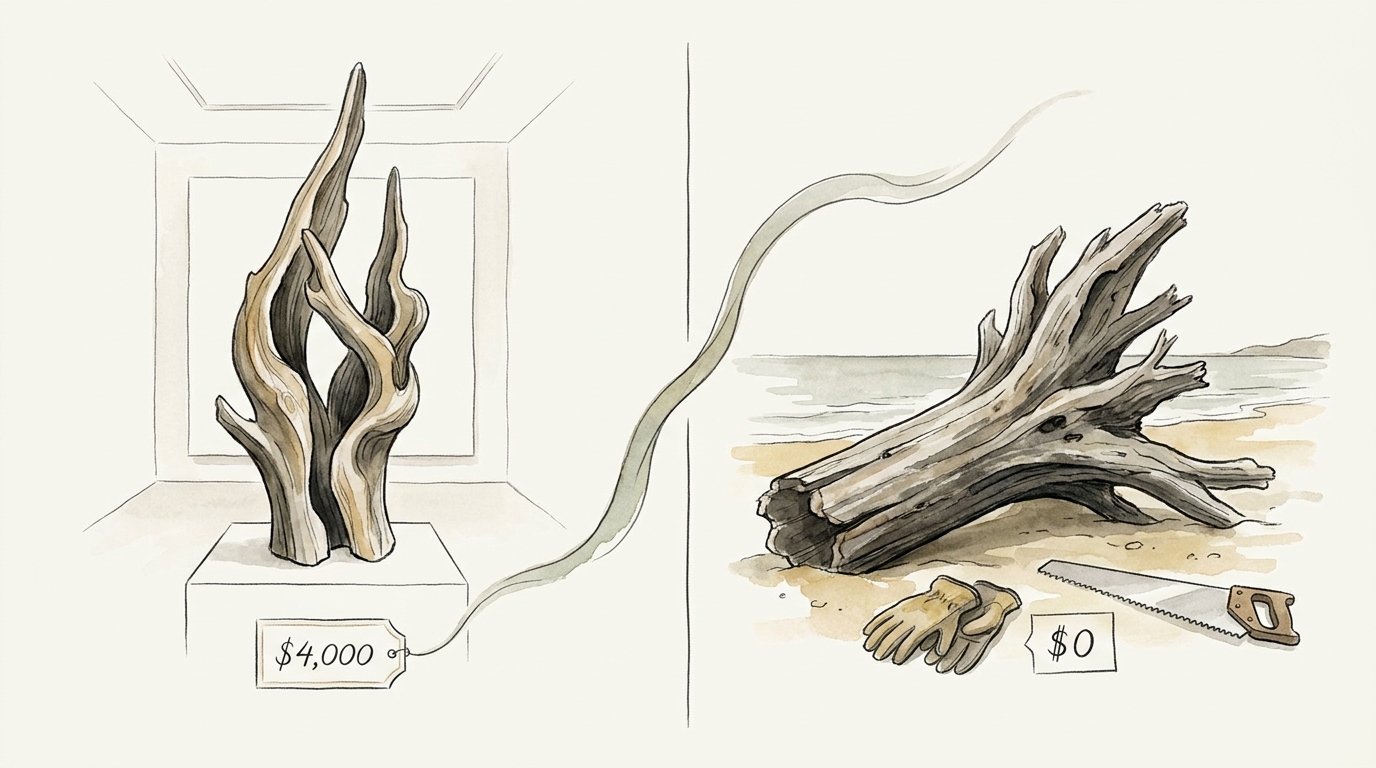
[affiai]Walking the shoreline after a heavy storm is more than a casual stroll; it is a search for the $4,000 gallery piece vs $0 shoreline monolith. Nature spends decades sandblasting, sun-bleaching, and salt-curing these fragments of cedar, oak, and redwood until they possess a texture no factory can replicate. Bringing a massive piece of the coast into your home creates an immediate, grounding focal point that bridges the gap between raw nature and modern architecture.
Successful sourcing requires more than just a keen eye. You need to understand the lifecycle of timber in the water, the legalities of the shoreline, and the mechanical requirements of hanging fifty pounds of weathered history on your living room wall. This guide will walk you through the grit and the glory of reclaiming ocean-born art.
Cost Of Large Driftwood Wall Art Vs Diy Sourcing
High-end interior design galleries often list large driftwood wall art at prices that seem detached from reality. A single, well-proportioned redwood root or a salt-bleached cedar limb can easily fetch between $1,500 and $4,500 in a Manhattan or Los Angeles showroom. These “boutique” pieces are often marketed as “curated timber,” a fancy term for wood someone else picked up off the ground and sprayed with a sealant.
The markup exists because of the logistics of transport and the perceived “exclusivity” of the find. When you buy from a gallery, you are paying for their truck, their warehouse space, and their marketing. You are also paying for the professional cleaning and mounting systems they have already installed. However, for the person willing to put in a few hours of “pioneer grit,” those costs vanish into thin air.
Sourcing your own architectural driftwood costs exactly the price of a tank of gas and a pair of sturdy rigger gloves. Even if you factor in the cost of high-quality wood preservative and heavy-duty mounting hardware, your total investment rarely exceeds $50. The value of a DIY shoreline monolith is not just in the money saved, but in the story of the hunt—the cold morning air, the smell of the salt spray, and the physical effort of hauling a 60-inch sculpture back to your vehicle.
How To Source And Transport Your Find
Finding the right piece of large driftwood wall decor starts with timing. The best beachcombing happens in the 24 to 48 hours following a major storm or an exceptionally high tide. This is when the deep-water “sleeper logs” are pushed onto the upper sandbanks, far above the typical high-water mark. Look for river mouths or rocky inlets where debris naturally collects in eddies.
Identification is the next hurdle. Not all wood is worth the effort of hauling. Look for hardwoods like oak or dense softwoods like cedar and redwood. These species resist rot more effectively than pine or poplar. You can identify them by the weight and the grain; if the wood feels light as air and the surface is “mushy,” leave it for the crabs. You want timber that feels solid and exhibits “checking”—the natural cracks that form as the wood dries in the sun.
Transporting a six-foot monolith requires planning. Never attempt to drag a large piece through the sand alone; you will likely damage the wood’s delicate weathered patina or injure your back. Use a specialized beach dolly or a simple heavy-duty tarp as a sled. Wrap the wood in old moving blankets to protect the silver-grey finish from being gouged by truck beds or tie-down straps during the drive home.
Understanding Beachcombing Legalities
Legalities vary wildly depending on which stretch of coast you are stalking. In many states, such as Oregon, the law allows the removal of small amounts of driftwood for personal use, but requires a permit for anything that would require a vehicle on the beach. In California, state parks often limit collection to 50 pounds or one piece per person, per day. Always check local regulations to ensure you aren’t “poaching” from a protected marine sanctuary.
Benefits Of Reclaimed Shoreline Art
The primary benefit of DIY driftwood art is its absolute uniqueness. No two trees grow the same, and no two pieces of wood are weathered by the sea in the same way. When you bring an ocean-born monolith into your home, you are installing a piece of art that cannot be duplicated by any mass-market retailer. It is a one-of-one sculpture that brings a sense of “Wabi-sabi”—the beauty of imperfection—into your space.
From a design perspective, large driftwood provides an organic counterpoint to the sharp lines of modern furniture. The silver-grey patina of salt-cured wood pairs perfectly with neutral palettes, concrete floors, and glass walls. It adds texture that feels prehistoric and permanent, grounding a room in a way that canvas prints or plastic decor never could.
Environmental sustainability is another significant advantage. By reclaiming wood that has already been discarded by nature, you are practicing the ultimate form of upcycling. There is no carbon footprint associated with harvesting new timber, and no toxic chemicals used in factory manufacturing. You are simply moving a piece of the earth from one location to another.
Challenges And Common Mistakes
One of the most frequent errors beginners make is failing to treat the wood for pests. Driftwood is a prime habitat for termites, carpenter ants, and marine borers. If you bring a raw piece of beach debris directly into your home without a quarantine period, you risk introducing wood-destroying organisms into your structure. This mistake can turn a “free” piece of art into a $10,000 pest control bill.
Weight management is another serious challenge. A waterlogged piece of redwood can weigh twice as much as it will once it is fully dried. Many DIYers attempt to mount their find while it is still “green” or damp. As the wood dries indoors, it will shrink and warp, which can pull screws out of the wall or cause the wood to split. Patience is mandatory; large pieces should air-dry in a garage or workshop for at least four to six weeks before being finished.
Aesthetic “over-working” is a common pitfall. Beginners often get overzealous with sandpaper or varnish, stripping away the very patina that makes the wood special. The goal of driftwood preservation is to protect the wood while leaving the natural, sun-bleached texture intact. Avoid shiny, “wet-look” glosses that make the wood look like a cheap plastic replica.
Limitations Of Natural Driftwood
While driftwood is beautiful, it has realistic constraints. The wood’s structural integrity has been compromised by years of exposure to salt, water, and sun. Research from the University of Dubrovnik indicates that driftwood has significantly reduced mechanical properties compared to fresh timber. It should never be used as a structural support or a load-bearing element in furniture unless it has been reinforced with steel.
Environmental trade-offs are also a factor. In some ecosystems, driftwood plays a vital role in preventing beach erosion and providing habitat for shorebirds. Taking massive amounts of timber from a fragile dune system can have a negative impact on the local environment. It is best to collect from high-traffic public beaches or river mouths where wood is often cleared as a navigational hazard.
Comparing Sourcing Methods
| Feature | High-End Gallery | Etsy / Small Maker | DIY Sourcing |
|---|---|---|---|
| Average Cost | $2,000 – $4,500 | $400 – $1,200 | $0 – $50 |
| Time Investment | Low (Purchase only) | Medium (Shipping/Search) | High (Hunt/Treat/Dry) |
| Customization | Fixed | Limited | Total Control |
| Weight Risk | Professional Assured | Variable | High (Must handle yourself) |
Practical Tips For Preservation And Cleaning
Before the wood enters your house, it needs a thorough cleaning. Start by pressure washing the piece at a low setting to remove sand, salt, and loose bark. Use a stiff nylon brush to get into the deep crevices and “checks.” This mechanical cleaning is vital for removing the salt that naturally attracts moisture and can cause the wood to feel “sticky” in humid weather.
- Sanitization Soak: For smaller pieces, submerge the wood in a solution of 1 part bleach to 9 parts water for 24 hours. This kills mold and bacteria.
- Borate Treatment: For large monoliths that cannot be submerged, spray the wood liberally with a borate-based wood preservative (like Tim-Bor). This creates a barrier against future pest infestations.
- Slow Drying: Store the wood in a shaded, well-ventilated area. Avoid direct sunlight during the drying phase, as rapid evaporation causes extreme cracking.
- Salt Removal: If the wood was found in the ocean, it is saturated with salt. Occasional misting with fresh water during the drying process helps draw the salt out via osmosis.
When the wood is bone-dry (test it with a moisture meter—you want under 10%), apply a penetrating oil finish. Linseed oil or tung oil are excellent choices. They darken the wood slightly but maintain the matte, organic feel. If you prefer the light, silver-grey look, use a “dead flat” water-based polyurethane to seal the surface without adding any sheen.
Advanced Considerations For Structural Mounting
Hanging a 50-pound piece of wood is a feat of engineering. Standard picture hooks will fail immediately. For large driftwood wall art, you must secure your hardware directly into the wall studs. A French Cleat system is the gold standard for heavy timber. This involves attaching one angled bracket to the wood and a matching bracket to the wall studs, allowing the piece to “lock” into place under its own weight.
If the wood has a complex, spindly shape, you may need to use dowel screws or “stand-offs.” These are metal rods that screw into the back of the wood and the wall studs, creating a “floating” effect. This is particularly effective for large root systems where you want the shadows to play against the wall behind the sculpture.
Always consider the center of gravity. Driftwood is rarely symmetrical. Before drilling your mounting points, find the balance point of the wood by supporting it with a single hand or a rope. Marking this “sweet spot” ensures the art hangs level and doesn’t put uneven torque on your wall anchors.
Example Scenario: The Great Lakes Monolith
Imagine a homeowner on the shores of Lake Superior who finds a six-foot-long piece of cedar root after the spring thaw. The piece is gnarled, gnarled, and gnarled, but it is currently waterlogged and weighs over 80 pounds. Using a sled, they transport it to their garage.
First, they pressure wash the mud out of the root ball and treat it with a borate solution. Over the next two months, the wood air-dries, eventually dropping to a manageable 35 pounds. They sand the rough tips with 120-grit paper just to remove the splinters but leave the main trunk untouched. After a coat of matte sealant, they use a 24-inch aluminum French cleat to mount the root above their fireplace. What would have been a $3,500 “found object” art piece at a gallery is now a personal landmark, installed for the price of the hardware and a few weeks of patience.
Final Thoughts
Reclaiming the ocean’s debris is a way to bring the raw, unyielding power of the coast into the refined atmosphere of a home. It requires a willingness to get your hands dirty and a patience for the slow drying of the timber, but the results are unparalleled. No boutique can sell you the feeling of the hunt or the specific history of a piece of wood that has survived a thousand miles of current.
Building your own large driftwood wall art is a testament to the value of “pioneer grit” in a world of mass production. It challenges you to look at a “dead” piece of timber and see the architectural potential hidden beneath the salt and sand. Whether you are a beginner looking for a weekend project or an experienced practitioner of interior design, the shoreline is waiting with your next masterpiece.
Start your search after the next big tide. Bring the gloves, bring the truck, and keep your eyes on the high-water mark. The ocean is ready to deliver your next focal point—you just have to be there to pick it up.
Sources
1 cornell.edu (https://www.law.cornell.edu/regulations/california/14-CCR-4306) | 2 dksstores.com (https://dksstores.com/blog-post49) | 3 youtube.com (https://www.youtube.com/watch?v=ZaB93Z_pPME) | 4 lakewedoweelife.com (https://www.lakewedoweelife.com/lake-life/driftwood-art-and-treasures-by-tammy-lovvorn) | 5 parklanejewelry.com (https://www2.parklanejewelry.com/how-to-wash-driftwood/)