Driftwood Cat Climbing Wall Diy
Why force your cat onto a carpeted plastic pole when they could be reclaiming their predatory instincts on ocean-hewn timber? Typical cat furniture is a visual eyesore that takes up precious floor space. By integrating the ‘bones of the ocean’ into your home’s vertical architecture, you create a high-performance habitat that looks like a gallery installation. Your cat gets the wild; you get the wall space back.
[affiai]Building a habitat for a modern predator requires more than just a trip to the local pet store. It requires an understanding of the pioneer-grit needed to source and secure materials that have survived the relentless battering of the sea. Natural wood provides a tactile experience that synthetic materials simply cannot replicate. Every knot and salt-bleached curve offers a new challenge for a climbing feline.
Coastal timber is not just a decorative choice; it is a structural commitment to the longevity of your home’s ecosystem. Standard cat trees fray, wobble, and eventually end up in a landfill. A well-constructed driftwood highway remains steadfast for decades. This guide explores how to transform raw, weathered wood into a functional vertical masterpiece.
Driftwood Cat Climbing Wall Diy
A driftwood cat climbing wall is the intentional use of salvaged, water-weathered timber to create a vertical pathway for domestic felines. This approach rejects the “disposable” culture of modern pet ownership in favor of permanent, architectural enrichment. Instead of hiding a carpeted tower in a corner, you are installing a series of natural perches that follow the studs of your home.
Coastal wood has been stripped of its softest fibers by salt and tide, leaving behind a dense, hardened core. This makes it an ideal substrate for cats who need a reliable grip during a high-velocity ascent. These structures exist where interior design meets ethology, providing the high-vantage points that cats crave for security and territorial oversight.
Real-world applications of this project vary from minimalist single-perch installations to sprawling forest-canopy systems that span entire rooms. Every piece of wood is a unique artifact of the natural world, meaning no two climbing walls will ever be identical. This project is for the individual who views their living space as a shared territory, rather than a human-only domain.
The Selection and Preparation Process
Forging a natural highway starts with the hunt for the right timber. Not all wood that washes up on the shore is suitable for supporting the weight of a leaping ten-pound predator. You must look for hardwoods like oak, maple, or cedar that have been thoroughly seasoned by the elements. Soft, pulpy wood or pieces showing signs of active rot must be discarded.
Cleaning the wood is the most critical stage of the preparation. Natural driftwood often harbors salt, microscopic organisms, or lingering pests that have no place in a clean home. Start by scrubbing the piece with a stiff-bristled brush and fresh water to remove surface sand and loose bark. Avoid using soaps that could leave a chemical residue.
Sterilization ensures the safety of your feline companions. If the piece is small enough, boiling it for several hours is the gold standard for killing deep-seated bacteria. Larger pieces require a soak in a diluted bleach solution—one part bleach to ten parts water—for at least twenty-four hours. Follow this with a thorough freshwater rinse and several days of drying in a well-ventilated area until all scent of chlorine has vanished.
Curing the wood involves patience. Place the timber in a low-humidity environment to allow the core moisture to escape. Baking smaller pieces in an oven at 250°F for two hours can speed up this process and provide a final heat-treatment against wood-boring insects. Once the wood is bone-dry and scent-free, sand down any particularly sharp or splintery edges to protect soft paw pads.
Mounting and Structural Integrity
Securing heavy, irregular timber to a vertical surface demands more than just standard drywall anchors. The impact force of a cat launching itself upward can exert three to four times its body weight on the mounting point. This project requires you to locate the structural studs behind your drywall using a reliable stud finder.
Heavy-duty lag screws or structural timber screws are the preferred fasteners. These should penetrate at least two inches into the center of the wall stud. If the shape of the driftwood makes a direct-to-stud connection impossible, you must utilize heavy-duty metal brackets or L-shaped supports. These brackets should be rated for at least fifty pounds to account for the dynamic force of a jumping cat.
Leveling an irregular piece of wood requires a keen eye and a spirit level. While the wood itself may be crooked, the lounging surface must be stable enough to prevent the cat from sliding off during a nap. You can create flat landing zones by carefully chiseling out a section of the wood or by attaching small, level plywood platforms to the top of the drift-logs.
Benefits of a Natural Wood Highway
Natural wood offers a hygienic advantage over traditional carpeted furniture. Carpet fibers trap dander, fur, and odors, making them nearly impossible to sanitize fully. Wood surfaces can be wiped clean with a damp cloth and a pet-safe disinfectant, ensuring a much higher standard of cleanliness in the home.
Durability is the hallmark of the driftwood approach. While a cat can shred a carpeted pole in a matter of months, the hardened grain of seasoned timber stands up to years of scratching. The natural textures of the bark and weathered grain provide superior claw resistance, which is essential for feline muscle health and shedding old claw sheaths.
Aesthetics play a significant role for the homeowner. A driftwood climbing wall functions as a sculptural installation that complements rustic, coastal, or modern decor. It removes the “pet clutter” from the floor, reclaiming square footage and making the room feel larger and more intentional.
Challenges and Common Mistakes
Failing to anchor into studs is the most frequent error made by novice builders. A cat shelf that pulls out of the drywall is a danger to the cat and a disaster for your walls. Always double-check your stud locations and use fasteners that are appropriate for the weight of the specific timber you have chosen.
Ignoring the “descent path” can lead to injuries. Many owners focus on how the cat will get up, but they forget that the cat must eventually come down. If the perches are too steep or too far apart, a cat may be forced to jump from a dangerous height. Ensure that each “up” route has a clear and manageable “down” route.
Over-sanding the wood can be a mistake. While you want to remove dangerous splinters, the natural texture of the wood is what provides the cat with grip. If the surface is sanded to a glass-like finish, it will be too slippery for a cat to navigate safely. Maintain a balance between smoothness and tactile traction.
Limitations of the Driftwood Method
Rental properties often present a significant barrier. Installing heavy timber requires large screws that leave substantial holes in the wall. While these can be patched, some landlords may not allow the structural modifications necessary for a safe installation. Always check your lease before drilling into the studs.
Senior cats or those with mobility issues may struggle with irregular natural shapes. Traditional stairs are predictable and easy for an arthritic cat to manage. Driftwood is inherently unpredictable. If your cat is older, you must carefully select flatter pieces and space them closer together to reduce the physical strain of the climb.
Environmental factors in the home can affect the wood over time. In extremely dry climates, driftwood can become brittle and may eventually crack. Conversely, in very humid environments, poorly cured wood can attract mold. Regular inspections are necessary to ensure the structural integrity of each piece remains sound.
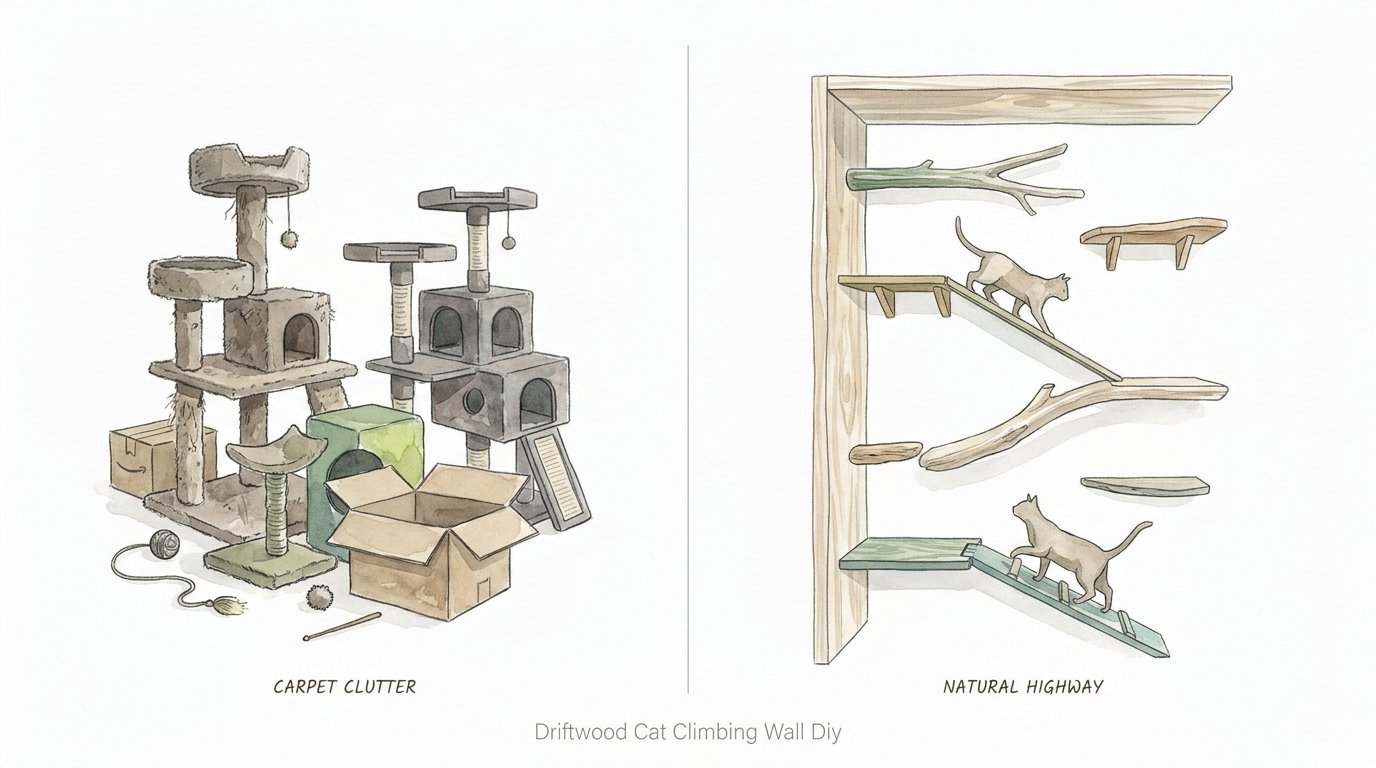
Comparison: Natural Highway vs. Carpet Clutter
| Feature | Driftwood Wall (Natural Highway) | Carpeted Cat Tree (Carpet Clutter) |
|---|---|---|
| Lifespan | 15-30+ Years | 2-5 Years |
| Cleanliness | Wipeable, non-porous | Traps fur, dander, and odors |
| Floor Space | Zero (Wall-mounted) | Large footprint |
| Claw Traction | High (Natural grain) | Variable (Fibers can snag) |
| Aesthetics | Artistic, organic | Visual clutter, “pet store” look |
Practical Tips for Success
Use a “mock-up” phase before you commit to the wall. Tape cardboard cutouts of your driftwood pieces to the wall to visualize the path. This allows you to test the spacing and ensure the route makes sense for your cat’s jumping ability. Standard spacing is usually 12 to 18 inches horizontally and 10 to 12 inches vertically.
Incorporate “soft zones” for lounging. While the wood is excellent for climbing, most cats appreciate a soft place to sleep. You can attach removable, washable cushions to the widest parts of the driftwood using industrial-strength hook-and-loop fasteners. This gives you the best of both worlds: rugged durability and feline comfort.
Observe your cat’s preferred “high spots” before you build. If your cat already loves the top of the refrigerator, aim your driftwood highway toward that area. Building a path to a place they already value will ensure they use the new structure immediately.
Advanced Considerations for the Serious Practitioner
Integrating sisal wraps into the driftwood can provide dedicated scratching zones. While the wood itself is durable, a section of tightly wound sisal rope gives the cat a familiar texture to sink their claws into. Use non-toxic wood glue and small stainless steel staples to secure the ends of the rope so they do not unravel over time.
Lighting can transform the installation into a true gallery piece. Small, battery-operated LED puck lights or recessed strip lighting installed behind the wood can highlight the weathered textures. This not only looks impressive but also helps cats gauge depth during nighttime activity, though their natural night vision is already exceptional.
Consider the “escape route” philosophy for multi-cat households. In a territory shared by several cats, a dead-end perch can become a point of conflict. Designing a continuous loop or a path with multiple exits ensures that a dominant cat cannot “corner” a more submissive one. This reduces household stress and promotes a peaceful environment.
Scenario: The Living Room Forest
Imagine a living room with twelve-foot ceilings and a large, blank wall. A series of four large, salt-bleached cedar logs are anchored into the studs in a staggered diagonal pattern. The lowest log starts near a sturdy bookshelf, providing an easy entry point.
Each log is approximately five feet long and varies in thickness. The cat uses the natural curves of the wood to “spiral” around the logs as they ascend. At the highest point, eight feet above the floor, a wide, flat piece of Mopani wood serves as a lookout perch. A small, gray wool cushion is fastened to this perch with velcro for comfort.
The owner has used heavy-duty black steel brackets that remain hidden behind the thickest parts of the wood. From the perspective of a guest, it looks like a curated collection of ocean artifacts. From the perspective of the resident feline, it is a high-altitude highway that offers a perfect view of the entire territory.
Final Thoughts
Building a driftwood cat climbing wall is an exercise in both craftsmanship and feline advocacy. It requires a willingness to get your hands dirty—foraging for timber, scrubbing away the brine, and drilling into the heart of your home’s structure. The reward is a habitat that respects the true nature of your cat while enhancing the beauty of your living space.
Natural materials provide a connection to the wild that plastic and synthetic carpet can never emulate. By following the logical steps of sourcing, sanitizing, and structural mounting, you create a permanent architectural feature. This is not just furniture; it is a legacy piece for your home.
Experiment with different wood types and configurations as your cat grows or as your household needs change. The modular nature of wall mounting allows you to expand the system over time. Embrace the grit, find your timber, and give your cat the vertical kingdom they deserve.
Sources
1 fishtankadvisor.net (https://fishtankadvisor.net/index.php/2024/06/29/aquarium-driftwood/) | 2 reddit.com (https://www.reddit.com/r/DIY/comments/13kgake/best_drywall_anchors_for_cat_wall_climbers/) | 3 hometalk.com (https://www.hometalk.com/diy/decorate/rooms/q-how-to-hang-a-large-heavy-driftwood-piece-42096700) | 4 vivianneyiwei.nl (https://vivianneyiwei.nl/cats/diy-climbing-wall-for-cats/) | 5 therefinedfeline.com (https://www.therefinedfeline.com/why-wooden-cat-trees-last-longer/) | 6 therefinedfeline.com (https://www.therefinedfeline.com/how-to-build-a-cat-wall-catwalk/) | 7 reddit.com (https://www.reddit.com/r/bluetongueskinks/comments/13uqo98/how_to_clean_and_sanitize_driftwood/) | 8 microaquaticshop.com.au (https://microaquaticshop.com.au/blogs/bonsai-driftwood/27-best-driftwoods-for-aquarium-types) | 9 rshpets.com (https://rshpets.com/en-ca/blogs/cat-health-wellness/safety-guidelines-for-installing-wall-mounted-cat-furniture) | 10 therefinedfeline.com (https://www.therefinedfeline.com/wood-vs-carpet-cat-trees/) | 11 petproducts.com.cn (https://petproducts.com.cn/do-cats-prefer-carpet-or-wood-cat-towers/) | 12 specialeditionart.com (https://specialeditionart.com/blogs/theoracle/how-to-hang-driftwood-on-your-wall-a-comprehensive-guide) | 13 bogoten.com (https://bogoten.com/diy-cat-wall-shelves/) | 14 petomg.com (https://petomg.com/blogs/pet-raising-knowledge/designing-your-cat-wall) | 15 petbarnkw.com (https://petbarnkw.com/paw-academy/best-cat-walls-for-climbing-exploration) | 16 thearkpet.com (https://thearkpet.com/blogs/all-you-want-to-know-of-cat/material-matters-comparison-of-pet-supplies) | 17 fearfreehappyhomes.com (https://www.fearfreehappyhomes.com/go-cat-crazy-how-to-craft-an-engaging-environment-for-feline-fun/) | 18 homestyler.com (https://www.homestyler.com/article/designing-safe-and-engaging-vertical-cat-climbing-walls?lang=de_DE)