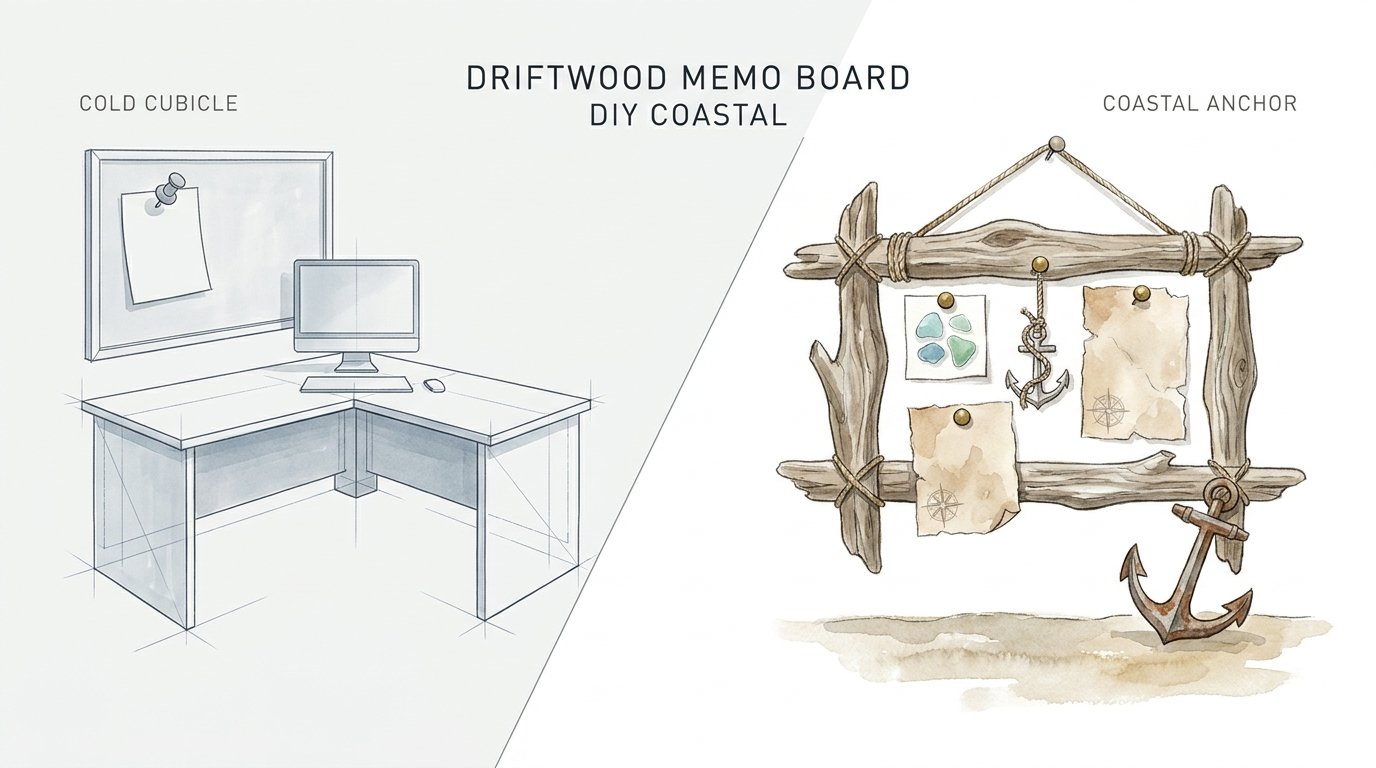
Driftwood Memo Board Diy Coastal
Is your inspiration trapped in a digital folder, or is it anchored to the physical history of the coast? The modern home office is a desert of straight lines and sterile surfaces. A driftwood memo board breaks the monotony, providing an organic grid for your ideas. Stop pinning your dreams to a flat screen and start anchoring them to a piece of the world that actually survived the storm.
[affiai]Writing a plan on a glass screen feels like shouting into a void; pinning it to a salt-crusted piece of cedar feels like making a promise to the earth. There is a specific kind of pioneer-grit required to take a piece of ocean debris and turn it into a command center. This isn’t about mere decoration; it is about bringing the “Coastal Anchor” into your “Cold Cubicle” to remind you that work is part of a larger, wilder cycle.
Driftwood Memo Board Diy Coastal
A driftwood memo board is a functional piece of wall art constructed from wood salvaged from shorelines, riverbanks, or beaches. Unlike store-bought corkboards, these boards utilize the weathered, silver-grey patina of timber that has been tumbled by tides and bleached by the sun. It exists as a bridge between the chaotic beauty of nature and the structured needs of a professional workspace.
In a real-world setting, these boards serve as visual anchors. In a coastal home office, they provide a place to display tide charts, sketches, or urgent reminders without the soul-sucking glow of a monitor. They are used by designers who need to see fabric swatches against natural textures and by organized homeowners who want a family command center that doesn’t look like it belongs in a middle-school classroom.
Think of it as a vertical workbench for your thoughts. While a digital app might store your data, a driftwood memo board holds your intent. The wood itself—often cedar, pine, or oak—has already been tested by the elements. By repurposing it, you are choosing a substrate that carries the weight of history and the resilience of the Atlantic or Pacific.
The Architecture of the Build: How to Do It
Creating a professional-grade driftwood memo board requires more than just finding a stick and some tape. It is a process of preparation, preservation, and assembly.
1. Sourcing and Legalities
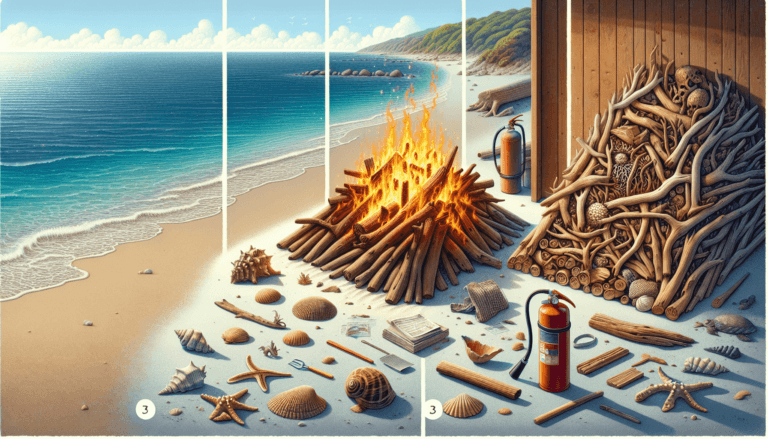
Before you set foot on the sand, know the law. In many regions, such as Oregon, driftwood removal for personal ornamental use is permitted only for wood that can be loaded by hand without mechanized equipment. Always check with local wildlife agencies to ensure you aren’t disturbing protected habitats or intertidal marine life. Look for “dead and down” wood that is already detached from the dunes.
2. Sanitizing the Salvage
The ocean is full of life, and some of it wants to live in your office. You must clean the wood thoroughly. Start by scrubbing the surface with a stiff wire brush to remove loose sand, salt, and decaying bark.
- The Bleach Soak: Submerge the wood in a solution of 2 teaspoons of bleach per gallon of distilled water for at least 15 to 30 minutes. For larger pieces, a 24-hour soak in a stronger solution (1 cup of bleach per gallon) is recommended to kill fungal spores and insects.
- The Drying Phase: This is where most beginners fail. Wood must be bone-dry before you apply any finish or hardware. Leave it in the sun for several days or in a low-humidity indoor area. If the wood is waterlogged, it can take weeks to dry completely from the inside out.
3. Structuring the Grid
There are three primary ways to build your board:
- The Single Anchor: A large, sturdy branch with eye-hooks screwed into the bottom. Twine or copper wire is draped between the hooks, and photos are attached with small clothespins.
- The Raft Method: Several flat planks of driftwood are aligned horizontally or vertically and braced together from the back with scrap lumber and wood glue. This creates a solid surface similar to a traditional board.
- The Framed Net: Four pieces of driftwood are mitered or overlapped to create a frame, with chicken wire or a decorative fishnet stretched across the center.
The Practical Benefits of the Coastal Anchor
Choosing a driftwood memo board over a plastic or digital alternative isn’t just an aesthetic choice; it’s a productivity strategy.
Tactile Memory Retention: Studies show that the physical act of writing and handling paper improves memory and comprehension. When you pin a note to a textured piece of wood, the multi-sensory experience helps your brain prioritize that information over a notification on a phone.
Focus in the Cold Cubicle: Digital tools are designed to distract. Every time you open a planning app, you are one click away from an email or a social media rabbit hole. A physical board provides a “distraction-free zone” where the only thing competing for your attention is the grain of the wood.
Aesthetic Durability: Unlike cheap office furniture that chips or fades, driftwood has already been “pre-distressed.” It is essentially immortal in a climate-controlled home environment. It adds warmth to the “Cold Cubicle,” making the workspace a place of inspiration rather than just a place of labor.
Challenges and Common Pitfalls
The most frequent mistake is impatience during the cleaning phase. If you skip the bleach soak, you may find “hitchhikers”—wood-boring beetles or spiders—emerging in your office months later. Furthermore, if the wood is not completely dry, it will warp or rot once it is hung against a wall, potentially damaging your drywall.
Another common error is over-sanding. The beauty of driftwood lies in its “pioneer-grit”—the rough edges and swirling whorls created by the water. Using a heavy-grit power sander can strip away the silvered patina, leaving you with wood that looks like a common 2×4 from a hardware store. Use fine-grit sandpaper (220 grit or higher) only to smooth out sharp splinters that might snag your skin or your notes.
Lastly, improper weight distribution can lead to disaster. Driftwood can be deceptively heavy, especially if it is a dense hardwood like oak. Ensure you are using heavy-duty wall anchors or screwing directly into a stud. A falling board is a hazard to your equipment and your toes.
Limitations and Constraints
A driftwood memo board is not a universal solution. If you work in a high-security environment where physical documents are prohibited, or if you are a “digital nomad” who changes locations every month, a 10-pound piece of timber is a liability.
Environmental constraints also play a role. In extremely humid climates, untreated driftwood can act like a sponge, absorbing moisture and becoming a breeding ground for mildew. In these cases, a matte lacquer or a clear sealant is mandatory, even if it slightly alters the natural look of the wood.
Cold Cubicle vs. Coastal Anchor
The choice between digital and physical organization is often framed as “efficiency vs. beauty,” but the reality is more nuanced.
| Feature | Digital App (Cold Cubicle) | Driftwood Board (Coastal Anchor) |
|---|---|---|
| Visibility | Hidden behind tabs and screens. | Always present; impossible to ignore. |
| Maintenance | Subscription fees and updates. | Zero maintenance once sealed. |
| Sensory Input | Flat glass and blue light. | Natural scent and organic texture. |
| Longevity | Obsolete in 5 years. | Grows more beautiful with age. |
Practical Tips and Best Practices
- Use Copper Wire: Instead of traditional twine, use copper or brass wire for your “grid.” It won’t sag over time, and the warm metal tones look stunning against the grey wood.
- The “Invisible” Magnet Trick: If you don’t want to use pins or clips, drill small holes into the back of a flat driftwood plank and glue in Neodymium magnets. The wood will look like magic as it holds your metal clips and keys.
- Shell Tacks: To stay within the coastal theme, glue small, sturdy seashells to the heads of standard thumb tacks. It turns a mundane office supply into a piece of the shoreline.
- Orientation Matters: If your office has low ceilings, hang a long, thin piece of driftwood vertically to draw the eye upward and create the illusion of space.
Advanced Considerations for the Serious Maker
For those who want to move beyond the basic “branch and string” model, consider joinery. Using a dremel or a chisel to create mortise and tenon joints between pieces of driftwood allows you to create complex, architectural frames without the need for visible screws.
If the natural color of the wood doesn’t match your decor, you can use a “driftwood wash.” This is a diluted mixture of grey and white chalk paint applied and then immediately wiped away. This allows the grain to show through while unifying the color palette of several different pieces of wood. For a deeper finish, woodworkers often prefer Danish Oil or Boiled Linseed Oil, which hardens within the wood fibers to provide a subtle, non-glossy sheen.
Scenario: The Coastal Executive’s Command Center
Imagine a home office in a high-rise city apartment. The furniture is all steel and glass—a classic “Cold Cubicle.” The executive hangs a 4-foot piece of ghost-white cedar driftwood above their desk. They use thick, black waxed cord to create a zig-zag pattern across the wood.
Pinned to this board are three things: a hand-written quarterly goal, a photo of the beach where the wood was found, and a physical copy of a contract. This isn’t just “decor.” It is a mental boundary. It reminds the executive that while the work is digital, the results and the inspiration are grounded in the physical world. The board becomes a conversation piece during video calls, signaling a person who values heritage and grit over sterile trends.
Final Thoughts
A driftwood memo board is more than a DIY project; it is a declaration of independence from the sterile, digital-only lifestyle. It forces you to interact with your ideas in a physical space, using materials that have been forged by the very forces of nature. By taking the time to clean, dry, and assemble your own coastal anchor, you are investing in a workspace that actually breathes.
Do not be afraid of the wood’s imperfections. The cracks, the salt-bleached knots, and the uneven edges are exactly what make it a better tool for creativity than a perfectly smooth plastic board. Start with a single piece of wood from your next trip to the shore. Treat it with the respect it earned during its time at sea, and it will serve you faithfully for decades.
As you look at your new board, remember that like the driftwood itself, your best ideas often need to be tumbled by challenges before they find their true shape. Stop pinning to the cloud and start anchoring to the coast. Experiment with different wire tensions, add a few stenciled coordinates of your favorite beach, and let your office become a place where the storm meets the strategy.
Sources
1 makeandtakes.com (https://makeandtakes.com/diy-driftwood-sign) | 2 beachblissliving.com (https://beachblissliving.com/driftwood-beach-decor/) | 3 cornell.edu (https://www.law.cornell.edu/regulations/oregon/Or-Admin-Code-SS-736-026-0015) | 4 homify.co.uk (https://www.homify.co.uk/diy/12998/5-things-used-to-preserve-driftwood-and-make-it-home-decor) | 5 thecountrychiccottage.net (https://www.thecountrychiccottage.net/driftwood-monogram-art/) | 6 wikihow.com (https://www.wikihow.com/Clean-Driftwood) | 7 hometalk.com (https://www.hometalk.com/diy/upcycle/q-how-to-preserve-large-driftwood-piece-44401954) | 8 lakewedoweelife.com (https://www.lakewedoweelife.com/lake-life/driftwood-art-and-treasures-by-tammy-lovvorn) | 9 kyugo.app (https://app.kyugo.app/blog/digital-vs-paper-planners_what-are-the-pros-and-cons/) | 10 griffithproductivitysolutions.com (https://griffithproductivitysolutions.com/digital-vs-paper-choosing-the-right-time-management-tool-for-you/) | 11 luxafor.com (https://luxafor.com/5-science-backed-reasons-why-paper-planners-are-better-than-digital-planners-and-calendars/) | 12 welcometonanas.com (https://welcometonanas.com/diy-crafts-made-from-driftwood/)