Driftwood Foundation Skirting Ideas
While plastic lattice crumbles under the first winter gale, this ocean-hardened timber provides a biological shield that only grows stronger with time. Stop replacing your porch skirting every three years. Modern materials fight the coastal elements and lose. Driftwood has already spent decades winning that battle. Discover how to turn ‘beach junk’ into a permanent, salt-proof armor for your home’s most vulnerable structures.
[affiai]Most homeowners view the space beneath their porch or deck as a secondary concern, usually slapping on a sheet of thin vinyl lattice and calling it a day. Within a few seasons, that plastic becomes brittle from UV exposure and shatters when a weed whacker or a stray branch touches it. Coastal dwellers face an even harsher reality: salt air eats through galvanized staples and causes standard wood to rot from the inside out. This is where the concept of driftwood armor changes the game.
Using scavenged, salt-saturated timber isn’t just about a rustic aesthetic. It is a functional decision based on the physics of survival. Wood that has survived years in the surf has undergone a natural preservation process where salt replaces the organic sugars that typically attract fungi and pests. By repurposing this material, you are installing a foundation shield that was literally forged in the environment that destroys most other building materials.
Driftwood Foundation Skirting Ideas
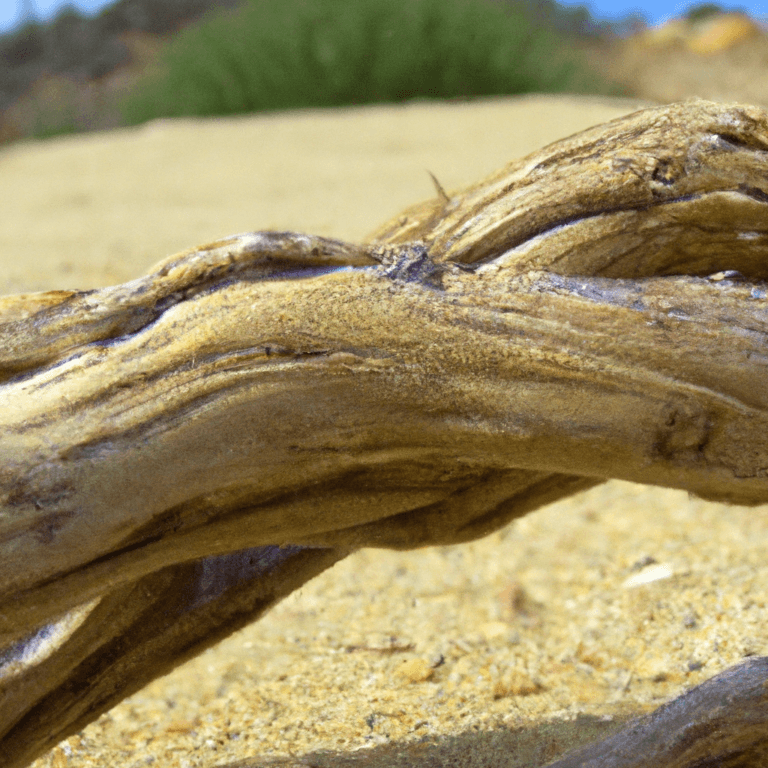
Driftwood foundation skirting is the practice of using weathered, water-tossed timber to enclose the open crawl space or foundation of a structure. In the real world, this is common in high-salt environments where traditional lumber fails prematurely. It serves as a breathable barrier that allows for the necessary ventilation of the crawl space while preventing large pests and debris from accumulating under the home. Unlike uniform factory panels, driftwood skirting relies on the irregular shapes and varying densities of ocean-cured wood to create a rugged, non-linear barrier.
Think of this skirting as a “biological armor.” Just as a sea wall breaks the energy of a wave, a driftwood skirt breaks the force of wind-driven rain and prevents the scouring effect of coastal winds. It is most frequently used on beach cottages, elevated coastal decks, and even inland rustic homes where the owner wants a material that looks like it belongs to the landscape rather than a hardware store shelf.
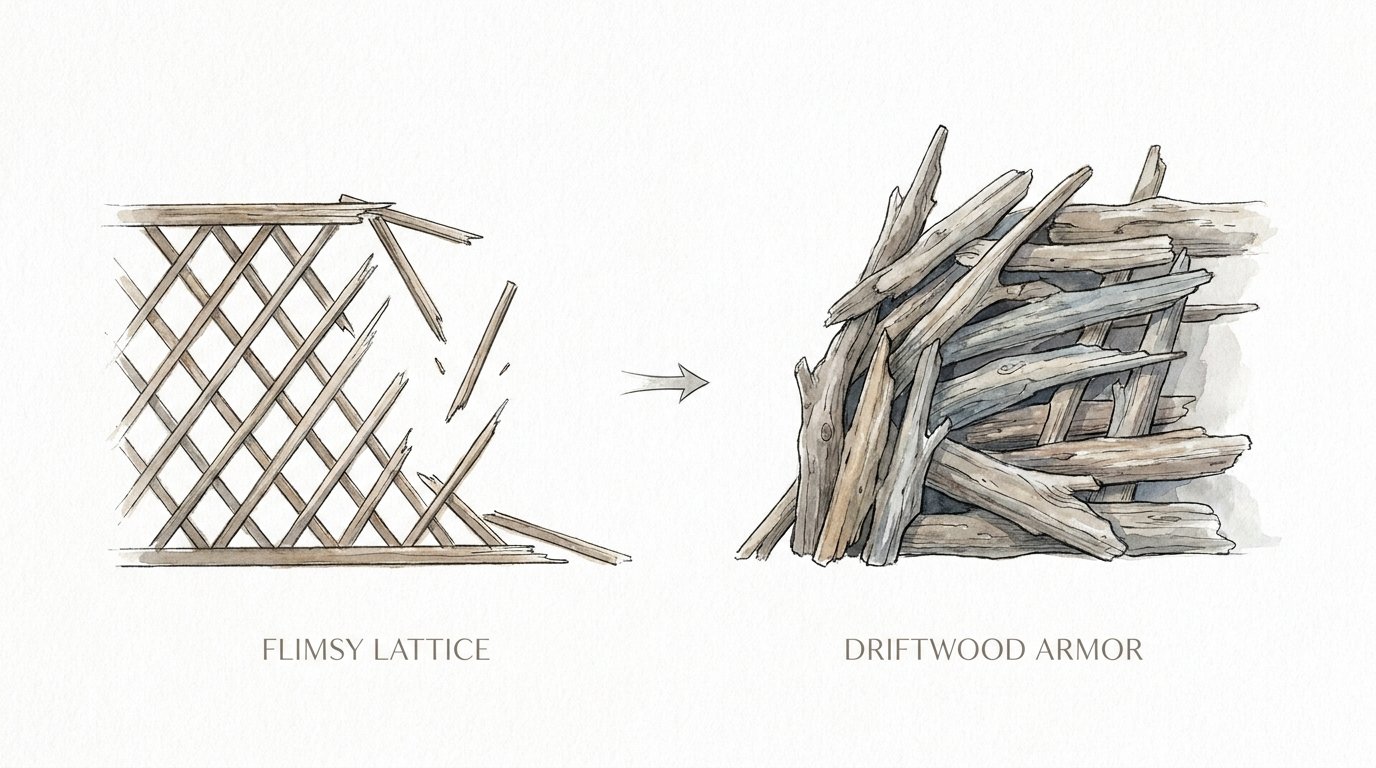
Visualizing this requires moving away from the “grid” mindset of lattice. Imagine a series of sun-bleached cedar or oak limbs, hand-selected for their girth and curvature, installed either vertically or horizontally. The result is a structure that mimics the natural shoreline, providing a heavy-duty enclosure that hides unsightly concrete piers while offering superior impact resistance compared to any synthetic alternative.
How to Build Your Driftwood Armor
Building a driftwood skirt requires more planning than simply nailing boards to a frame. Because driftwood is irregular, your supporting structure must be rock-solid to handle the weight and the unique attachment points of each piece. The process begins with a pressure-treated “skeleton” that will disappear behind the wood.
First, you must establish a mounting frame. Use 2×4 pressure-treated lumber rated for “ground contact.” If you are mounting to concrete piers, use a hammer drill and 316 stainless steel Tapcon screws to secure vertical “nailer” studs every 24 to 36 inches. It is essential to keep this framing at least two inches above the soil to prevent “wicking” of moisture, even if your driftwood will touch the ground.
Once the frame is set, you have two primary installation styles:
- The Vertical Palisade: This involves standing driftwood pieces upright, side-by-side. This is the best method for uneven ground because you can “scribe” the bottom of each piece to the contour of the rocks or dirt.
- The Horizontal Stack: This mimics the look of a log cabin or a woven fence. It works best with longer, straighter pieces of driftwood. You overlap the ends on the vertical studs to create a heavy, layered shield.
Securing the wood is the most critical step. Never use standard deck screws or galvanized nails. The salt content in the driftwood will react with zinc and cause “black streak” rot or fastener failure within twelve months. Only use Grade 316 stainless steel screws. These are specifically designed for marine environments and will not corrode when in contact with the salt-heavy fibers of the wood. Pre-drill every hole to prevent the sun-dried wood from splitting.
Benefits of Driftwood Over Flimsy Lattice
The practical benefits of choosing driftwood armor over a standard lattice kit are measurable in both durability and structural health. While lattice is often the “default,” it offers almost zero protection against the physical realities of a coastal yard.
Impact Resistance: Driftwood is dense. If a heavy storm throws a branch against your house, or if a lawnmower kicks up a stone, a driftwood skirt will deflect the impact without a scratch. Vinyl lattice, conversely, will shatter, leaving a hole that allows rodents to enter your crawl space.
Natural Pest Deterrence: Wood that has spent years at sea is often unpalatable to common land-based pests. The salt saturation acts as a natural desiccant. Many wood-boring insects find the high chloride content of driftwood toxic, making it a “passive” pest control system for the perimeter of your home.
Superior Ventilation: Because no two pieces of driftwood are identical, the “gaps” between the logs are natural and varied. This allows for excellent cross-ventilation. Proper airflow is the only way to prevent mold and wood rot in the structural floor joists of your home. Driftwood provides this airflow without the “see-through” cheapness of plastic mesh.
Challenges and Common Mistakes
One of the most frequent errors in driftwood construction is failing to account for the wood’s “living” history. Just because it is dry now doesn’t mean it won’t move. Driftwood has a high “hyroscopic” potential, meaning it can swell significantly when hit by rain and shrink during a heatwave.
Another pitfall is the “Zero-Gap” mistake. Homeowners often try to fit the pieces so tightly together that they create a solid wall. This is a disaster for crawl space health. Without at least 15% to 20% open area for air to move, moisture will build up under your house, eventually rotting the very foundation you are trying to protect. Always maintain a “finger-width” gap between pieces.
Ignoring the law is also a common hurdle. Collecting driftwood is not a “free-for-all.” In many regions, driftwood is considered part of the coastal ecosystem, providing habitat for birds and preventing beach erosion. Always check local regulations. For example, in many parts of British Columbia, you can take wood under three meters long for personal use, but in U.S. National Parks, taking even a small twig can result in a heavy fine.
Limitations and Environmental Constraints
While driftwood is an incredible material, it is not a universal solution for every property. One major limitation is sourcing volume. Building a skirt for a 40×60-foot home requires a massive amount of timber. If you don’t live near a high-yield beach or have a way to transport hundreds of pounds of water-logged wood, the logistics can become overwhelming.
Furthermore, driftwood is not “structural.” It should never be used to support the weight of the porch or deck. It is a decorative and protective screen only. If your house is in a high-velocity flood zone, local building codes may actually prohibit heavy, solid skirting like driftwood logs because the skirting must be able to “break away” during a storm surge to prevent the house from being lifted off its pilings.
Comparison: Flimsy Lattice vs. Driftwood Armor
To understand the trade-offs, it helps to look at how these materials perform over a ten-year cycle. Most homeowners focus on the first day of installation, but the real cost of skirting is measured in maintenance and replacement cycles.
| Feature | Standard Vinyl Lattice | Driftwood Armor |
|---|---|---|
| Lifespan | 3–5 Years (UV brittle) | 20+ Years (Salt-hardened) |
| Maintenance | Low (until it breaks) | Zero (Natural patina) |
| Impact Strength | Very Low | Very High |
| Cost (Materials) | $30 – $60 per panel | Free (Scavenged) |
| Install Time | 2 – 4 Hours | 2 – 3 Days |
Practical Tips for Long-Term Success
The secret to a project that looks better after a decade than it did on day one is in the “weathering strategy.” If you want that classic silver-grey coastal look, you must resist the urge to apply heavy varnishes or oil-based stains. These coatings trap moisture inside the salt-hardened wood, which can lead to internal rot. Instead, let the wood breathe. The sun will naturally bleach it to a uniform silver that matches the coastal sky.
Use a sacrificial base layer. If you are worried about the bottom of your driftwood logs rotting where they touch the soil, lay down a three-inch bed of crushed oyster shells or gravel before installation. This provides a “capillary break,” allowing rainwater to drain away instantly rather than pooling around the base of your skirting.
- Only use 316-grade stainless steel fasteners to avoid rust bleed.
- Spray-paint your background framing black before attaching the driftwood; this makes the gaps look like deep shadows rather than visible 2x4s.
- Incorporate an “access hatch.” You will eventually need to get under your porch for plumbing or electrical work. Build one section of the driftwood skirt on a hidden hinge or a simple “hook-and-eye” lift-off system.
Advanced Considerations: The Physics of Salt-Hardened Wood
For the serious practitioner, understanding the “why” behind driftwood’s durability is essential. When wood floats in the ocean, it undergoes a process called leaching. The highly soluble sugars and starches—the primary food source for rot-causing fungi—are washed away. In their place, sodium chloride (salt) is absorbed into the cellular structure of the wood.
This creates a material that is naturally fire-retardant and highly resistant to decay. However, it also makes the wood extremely abrasive. If you plan to cut or sand your driftwood to fit, expect to dull your saw blades quickly. It is often better to leave the wood “as found” rather than trying to mill it into clean shapes. The rough, bark-free surface is a result of years of sand-blasting in the surf; trying to recreate that in a workshop is nearly impossible.
Think about the wind load. In hurricane-prone areas, a solid wall of driftwood can act like a sail. If your porch is not heavily anchored, the wind pressure against the skirting could theoretically compromise the structure. In these zones, keep your gaps wider—at least two inches—to ensure wind can pass through the skirting without creating a pressure differential.
Example Scenarios
Consider a typical 10-foot by 20-foot coastal deck. Using standard vinyl lattice, the homeowner would spend roughly $250 on materials and two hours of labor. By year four, the lattice is yellowed, cracked, and has a hole where the neighbor’s dog pushed through it. The area underneath is filled with blown-in leaves and plastic trash caught in the mesh.
Now, consider the same deck with a driftwood palisade. The homeowner spends three weekends beachcombing with a trailer, collecting silvered cedar limbs. They spend $100 on 316 stainless screws and pressure-treated framing. The installation takes twenty hours of careful fitting. Ten years later, the skirt is still standing, rock-solid. It has survived three major storms without moving an inch. The wood has silvered beautifully, and the heavy logs prevent light debris from blowing under the house, keeping the crawl space clean and dry.
Final Thoughts
Moving away from mass-produced solutions requires a shift in perspective. It means trading the convenience of a Saturday morning hardware store run for the grit of a multi-week scavenge. But for those who live where the air smells of salt and the wind never stops, the effort pays for itself ten times over. A driftwood foundation skirt is more than just an architectural choice; it is a commitment to building something that respects the environment it inhabits.
The beauty of this system lies in its resilience. While modern engineering tries to “fight” the ocean with chemicals and plastics, driftwood has already reached a state of equilibrium with the elements. It doesn’t need paint, it doesn’t need poison, and it doesn’t need to be replaced every few years. It simply exists, getting tougher and more beautiful with every passing storm.
If you are tired of the cycle of rot and replacement, look toward the tide line. The materials for your home’s permanent armor are already there, waiting to be picked up. Start small, build your frame with the best stainless steel you can buy, and let the ocean provide the rest. You aren’t just building a porch skirt; you’re finishing your home with a piece of history that won’t back down from a fight.
Sources
1 youtube.com (https://www.youtube.com/watch?v=kL8RiNO5-04) | 2 decks.com (https://www.decks.com/resource-index/decking/installing-composite-deck-skirting/) | 3 youtube.com (https://www.youtube.com/watch?v=Pkznsw5bV8Q) | 4 quora.com (https://www.quora.com/Is-it-illegal-to-take-driftwood-from-a-beach)