Biophilic Driftwood Wall Cladding
Your home’s exterior could be a biological desert or a thriving coastal sanctuary. Urban design wants your home to be a sterile box. The wild wants it to be part of the cycle. Driftwood cladding doesn’t just look better; it provides the nooks and crannies that beneficial insects and air plants need to survive. Turn your façade into a living, breathing coastal ecosystem.
[affiai]Modern architecture often prioritizes the “envelope”—a sealed, impermeable layer designed to keep the world out. While that keeps the heat in, it severs the ancient connection between human shelter and the surrounding environment. We have traded the grit of the natural world for the flat plastic of vinyl and the cold efficiency of aluminum.
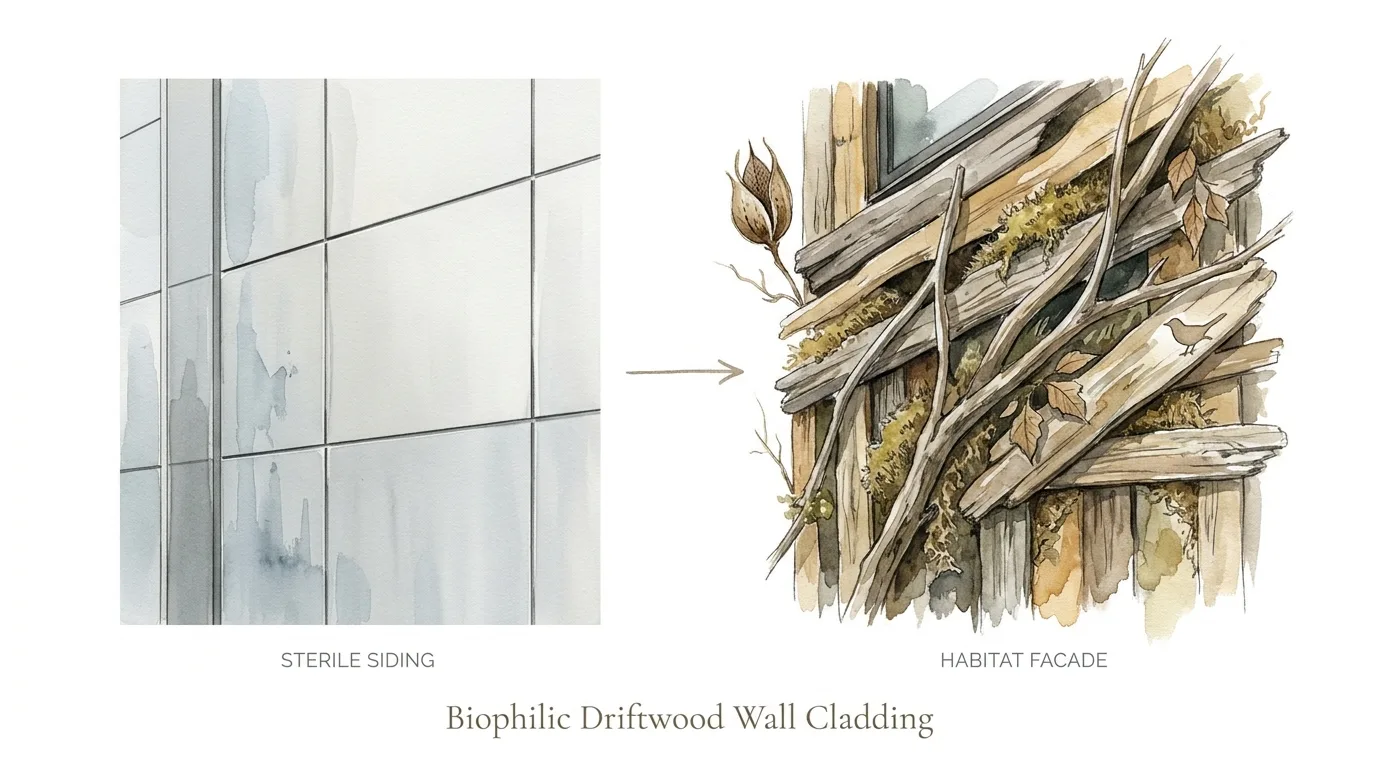
Biophilic driftwood wall cladding rejects this sterile path. It is a method of using weathered, salt-cured, and sun-bleached timber to create an exterior that invites life rather than repelling it. This isn’t just about decoration; it is about building a habitat facade that bridges the gap between the forest, the ocean, and the home.
Biophilic Driftwood Wall Cladding
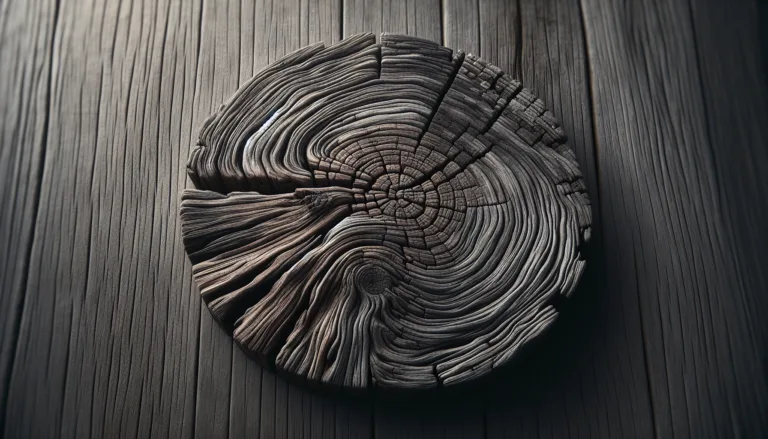
Biophilic driftwood wall cladding is the practice of using reclaimed wood—often salvaged from coastal shorelines or riverbanks—as a functional exterior siding material. Unlike factory-milled cedar or pine, driftwood has undergone a natural “curing” process. Years of exposure to UV radiation, salt spray, and moving water strip away the softest fibers, leaving behind a dense, silvered, and highly textured surface.
In the world of biophilic design, this material represents more than just a recycled resource. It embodies the “Patina of Time,” one of the core principles that links human psychology to the natural world. Seeing the evidence of age and weather on a building’s skin reduces stress and creates a sense of belonging in a landscape.
Architecturally, this cladding is used to break up the monotony of flat urban surfaces. It is found in coastal retreats, high-end sustainable residential projects, and increasingly in “pocket parks” or urban infill where developers want to soften the harsh edges of concrete. It is the antithesis of the sterile siding that characterizes modern subdivisions.
How the Habitat Facade Works
Building a living facade with driftwood requires a shift in how we think about construction. We aren’t just slapping boards onto a house; we are creating a rainscreen system that protects the structure while providing a landing pad for the wild.
The core principle is the Rainscreen System. This involves mounting the driftwood onto furring strips (usually 1×3 or 1×4 pressure-treated or rot-resistant wood) that are attached to the home’s primary weather barrier. This creates an air gap behind the wood. This gap is vital because it allows the driftwood to dry from both sides, preventing the “cupping” and rot that occurs when wood is trapped against a moist surface.
Beyond the structural mechanics, the texture of driftwood serves as a substrate for life. The deep fissures and silvered grain of the wood create micro-climates. These small variations in temperature and moisture allow mosses, lichens, and specific epiphytes to take root. By leaving gaps or overlapping the wood irregularly, you create “refuge” spaces—small hollows that act as natural insect hotels.
Benefits of an Ecological Exterior
Choosing a habitat facade over a sterile one offers measurable benefits for both the homeowner and the local ecosystem. While traditional siding is often a liability that fades and requires replacement, a driftwood wall is an asset that improves with age.
1. Psychological Well-being and Biophilia
Studies have shown that visual exposure to natural wood grain and textures can lower cortisol levels and improve cognitive function. A house clad in driftwood provides a “non-visual connection with nature” through the sounds of wind rustling against the uneven surface and the tactile grit of the weathered grain.
2. Biodiversity Support
A flat vinyl wall is a wall of death for local pollinators. Driftwood cladding provides a home for solitary bees, such as Mason bees and Leafcutter bees. These are non-aggressive, highly efficient pollinators that do not live in hives but instead nest in pre-existing cavities. Your wall becomes a productive part of the neighborhood’s food web.
3. Thermal Performance
Wood has a high R-value and excellent sound-dampening properties. By using a rainscreen method, you also introduce a layer of “thermal buffering.” The air gap helps dissipate heat before it reaches the building’s interior, reducing cooling costs in the summer.
4. Carbon Sequestration
Using reclaimed driftwood means you are utilizing carbon that has already been pulled from the atmosphere. Unlike manufactured siding which requires high energy to produce, driftwood is a low-embodied-energy material that stores carbon for as long as the building stands.
Challenges and Common Mistakes
Working with “wild” wood isn’t the same as working with lumber from a big-box store. The irregularities that make it beautiful also make it difficult to install correctly.
The most common mistake is poor moisture management. If you nail driftwood directly to the house sheathing without an air gap, the wood will trap moisture against the house. This leads to dry rot in the structural framing and mold in your living spaces. Always use furring strips and a high-quality weather-resistive barrier (WRB).
Another pitfall is the lack of fastener integrity. Standard nails will react with the tannins in the wood or the salt embedded in the driftwood, causing black “bleeding” stains. Only use 304 or 316-grade stainless steel fasteners. They are more expensive, but they are the only things that will hold up against the elements and the wood’s chemistry.
Finally, builders often try to “fight” the wood’s natural shape. Attempting to force a crooked piece of driftwood into a straight line will result in split boards and failed joints. You must learn to work with the wood’s natural geometry, using a “scribed” fit or overlapping boards (shiplap or board-and-batten style) to accommodate the curves.
Limitations and Environmental Constraints
While a driftwood sanctuary sounds ideal, it is not a universal solution. There are realistic constraints that a pioneer-grit builder must acknowledge.
Climate Hardiness
In regions with extreme freeze-thaw cycles, the moisture trapped in the deep crevices of the driftwood can expand and cause “spalling” or cracking over time. While this adds to the aesthetic, it can reduce the lifespan of the cladding if the wood isn’t a naturally durable species like cedar or white oak.
Local Regulations and Fire Codes
In high-risk wildfire areas (WUI zones), untreated driftwood may not meet local building codes. Traditional wood siding often requires fire-retardant treatments or a specific density to be legal. Always check your local fire ordinances before committing to a wood-heavy facade.
Availability and Ethics
Sourcing driftwood responsibly is a major constraint. Removing large quantities of wood from public beaches can disrupt local ecosystems, as driftwood is essential for beach stabilization and shorebird nesting. You should look for “salvage” wood from river deltas after storms or purchase from reputable reclaimers who have the permits to harvest responsibly.
Comparison: Sterile Siding vs. Habitat Facade
| Feature | Sterile Siding (Vinyl/Fiber Cement) | Habitat Facade (Driftwood) |
|---|---|---|
| Ecological Value | Zero. Often deters insects. | High. Supports bees, moss, and lichens. |
| Aging Process | Degrades, fades, becomes brittle. | Silvers, textures, and improves over time. |
| Installation Complexity | Low. Standardized systems. | High. Requires custom scribing and rainscreens. |
| Maintenance | Cleaning only. Replacement if damaged. | Annual inspection and occasional moss management. |
| Carbon Footprint | High (Manufacturing and transport). | Very Low (Reclaimed/Salvaged). |
Practical Tips for a Living Facade
If you are ready to take the plunge into biophilic cladding, follow these field-tested best practices to ensure your wall lasts for decades while remaining a sanctuary for wildlife.
- Desalinate Your Wood: If you salvaged wood directly from the ocean, let it sit in the rain for a full season or spray it down regularly to wash away excess salt. High salt content can be toxic to some plants and will accelerate the corrosion of even high-grade metals.
- Select for Density: Look for “heartwood” pieces. Sapwood (the outer rings) will rot quickly once the salt and sun have done their work. The densest parts of the log are where the character and the longevity live.
- Pre-drilling is Non-Negotiable: Weathered driftwood is brittle. Attempting to drive a nail without a pilot hole will cause the wood to shatter. Use a bit slightly smaller than your screw shank for the best grip.
- Design for Solar Aspect: Place your habitat wall on the south or east-facing side of the house. Mason bees and other beneficial insects need the morning sun to warm their bodies before they can fly.
Advanced Considerations: Mounting Air Plants
To truly turn the wall into a living ecosystem, you can integrate Tillandsia (Air Plants). These plants do not require soil; they pull moisture and nutrients directly from the air through specialized scales on their leaves called trichomes.
When mounting air plants to driftwood cladding, avoid using copper wire, as copper is toxic to bromeliads. Instead, use stainless steel wire, fishing line, or a weatherproof floral adhesive (like E6000). Place the plants in the “rain shadows” or crevices where they are protected from the most intense noon sun but still receive adequate airflow.
For those in colder climates (outside USDA Zones 9-13), you can create “removable” driftwood panels. These smaller sections of cladding can be unhooked and brought indoors for the winter, allowing you to maintain a living facade even in the north.
Scenario: The Urban Coastal Infill
Imagine a small, modern home built on a narrow lot near the coast. Instead of the standard fiber-cement panels, the north and east walls are clad in silvered driftwood collected from a nearby river delta.
Between the irregular planks, the builder has inserted small “bee blocks”—hardwood inserts with 5/16-inch holes drilled into them. By the second spring, Mason bees have filled these holes with mud, sealing in their larvae. On the shaded side of the wood, small patches of *Xanthoria parietina* (Sunburst Lichen) begin to appear, adding a vibrant orange hue to the silver wood.
The homeowner doesn’t spend their weekends painting or power-washing. Instead, they spend twenty minutes a month misting the Tillandsia during dry spells. The house doesn’t just sit on the land; it participates in it. It has become an island of biodiversity in a sea of sterile architecture.
Final Thoughts
The transition from a sterile box to a living habitat is a choice to live with integrity. It is an acknowledgment that our homes do not have to be separate from the world around them. Biophilic driftwood wall cladding offers a path for the homeowner who values the grit of the natural world and the long-term health of their local environment.
By choosing weathered wood over factory plastics, you are investing in a story of resilience. You are creating a space where the “poetry of the earth” can take root. Whether it’s the hum of a solitary bee or the slow spread of silver lichen, your home becomes a witness to the cycle of life.
Do not be afraid of the patina or the irregular edge. In the wild, there are no straight lines, and there is no waste. Build your home so that when the wild looks at it, it recognizes it as part of the family. Experiment with a single accent wall, observe the life it attracts, and let the sanctuary grow from there.
Sources
1 biodiversityireland.ie (https://biodiversityireland.ie/the-secret-life-of-solitary-bees/) | 2 midsouthexteriors.com (https://www.midsouthexteriors.com/blog/pests-that-can-damage-your-wood-siding) | 3 wikipedia.org (https://en.wikipedia.org/wiki/Mason_bee) | 4 cornell.edu (https://cals.cornell.edu/integrated-pest-management/outreach-education/whats-bugging-you/wood-destroying-insects) | 5 bestbeebrothers.com (https://bestbeebrothers.com/blogs/blog/bees-to-know-about-as-a-homeowner) | 6 crownbees.com (https://crownbees.com/pages/what-are-solitary-cavity-nesting-bees) | 7 rochdale.gov.uk (https://www.rochdale.gov.uk/pest-control-treatment/identify-control-masonry-bees) | 8 reddit.com (https://www.reddit.com/r/TinyHouses/comments/6k1otp/treating_the_untreated_wood_siding/) | 9 youtube.com (https://www.youtube.com/watch?v=1py-2K25lrA) | 10 novausawood.com (https://www.novausawood.com/thermally-modified-wood-and-pests) | 11 uchicago.edu (https://news.uchicago.edu/explainer/what-is-ecological-succession) | 12 acehardwarepainting.com (https://www.acehardwarepainting.com/blog/how-to-maintain-wood-exterior-siding) | 13 planetdesert.com (https://planetdesert.com/blogs/news/air-plant-types-and-care-guide)